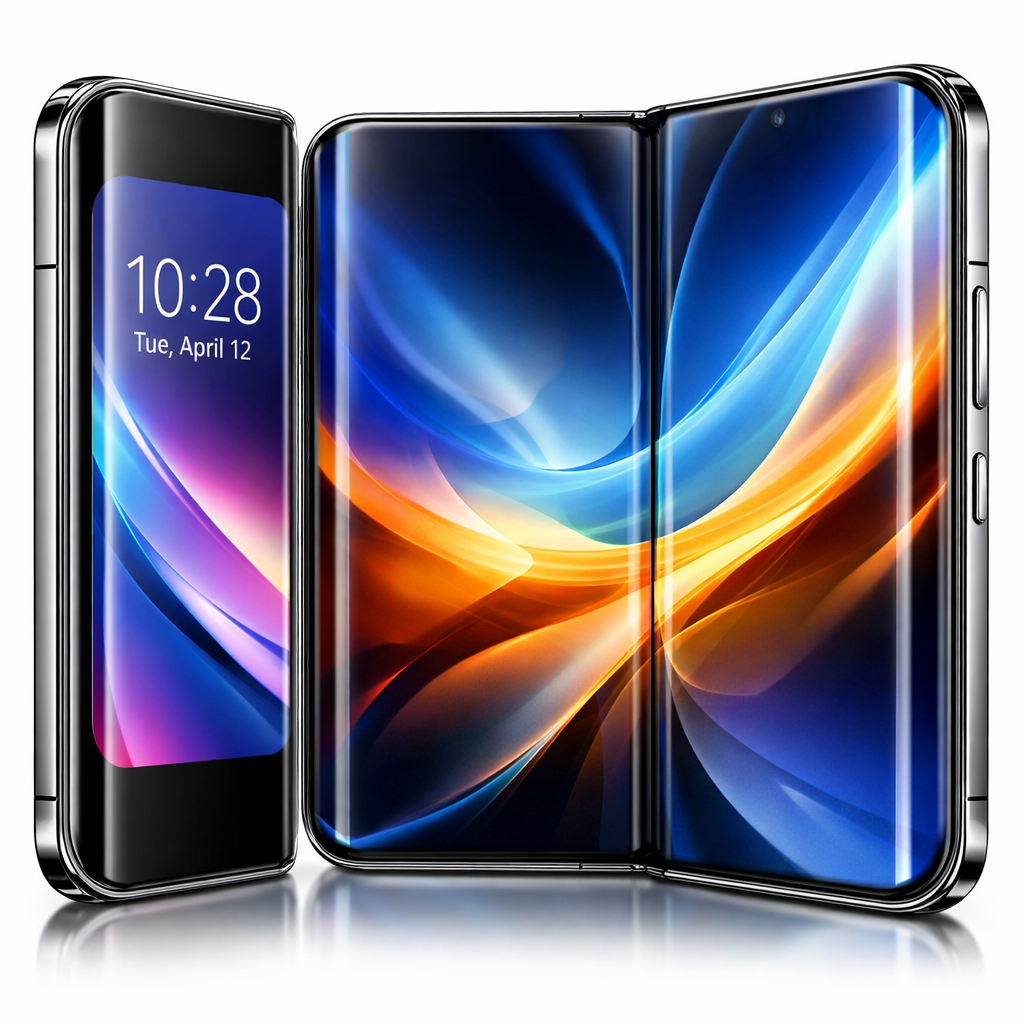
Apple’s next fall lineup—marking the company’s 20th anniversary—looks like it will bring back design cues from earlier days while keeping some bold experiments alive. Leaks from noted Weibo insiders Fixed Focus Digital and Digital Chat Station spill details on the upcoming iPhone 20 Pro models and the second-gen iPhone Duo 2.
Pro Models Get Air-Style Curved Design and Titanium Frame
Leaks point to a major shift in the look of the iPhone 20 Pro. The Pro series is expected to embrace curved edges more like the iPhone Air, moving away from the boxy, flat-edged design of recent Pro models. Additionally, early prototypes reportedly feature a titanium frame—a material that appeared in the iPhone 15 Pro and 16 Pro, but disappeared in later Pro models. This suggests Apple may be returning to titanium, giving the Pro phones a more premium structural feel.
The rumored display will also get bigger and more ambitious. The iPhone 20 Pro series is said to adopt a “quad-curved” screen with minimal bezels, pushing further toward a seamless display experience. It’s part of Apple’s broader strategy to mark this lineup as a design milestone.
What’s Ahead for the iPhone Duo 2
The Duo 2 seems to be sticking close to its original blueprint. Leaks indicate it will use the same 7.6-inch inner display and 5.4-inch outer screen as the first Duo. The side button with embedded Touch ID is also expected to carry over without change.
There’s speculation around integrating Face ID into the Duo 2, but insiders suggest it’s “questionable”—too many one-time changes to internal components would be required, making such a move uncertain. So for now, touch ID remains its primary biometric option.
Both the iPhone 20 Pro and Duo 2 are shaping up to deliver major redesigns in their own ways—one through refreshed styling and materials, the other through refined continuity.
Why These Changes Matter
This will be the first major style revamp for Apple since moving toward flat edges and sharp corners in recent generations—a shift toward curves could signal a broader design reset. Bringing back titanium also has implications: it’s a premium material known for durability and lightweight strength, and its return could restore some high-end distinction to the Pro line.
Meanwhile, maintaining the same screen sizes and core features in the Duo 2 shows Apple isn’t abandoning experimentation with foldable or alternative form factors. Retaining Touch ID instead of switching to Face ID points to cost, space, or technical constraints—even if the Duos are evolving, stability remains a priority.
With Apple’s 20th anniversary iPhones expected next fall, these leaks suggest a balancing act: bold, visible changes for flagship buyers in the Pro line, and cautious refinement for niche models like the Duo. What to keep an eye on: final materials, how aggressively curved the new screens get, and whether Face ID finally makes its way into the Duo series. These moves will define whether Apple’s next generation feels evolutionary or revolutionary.