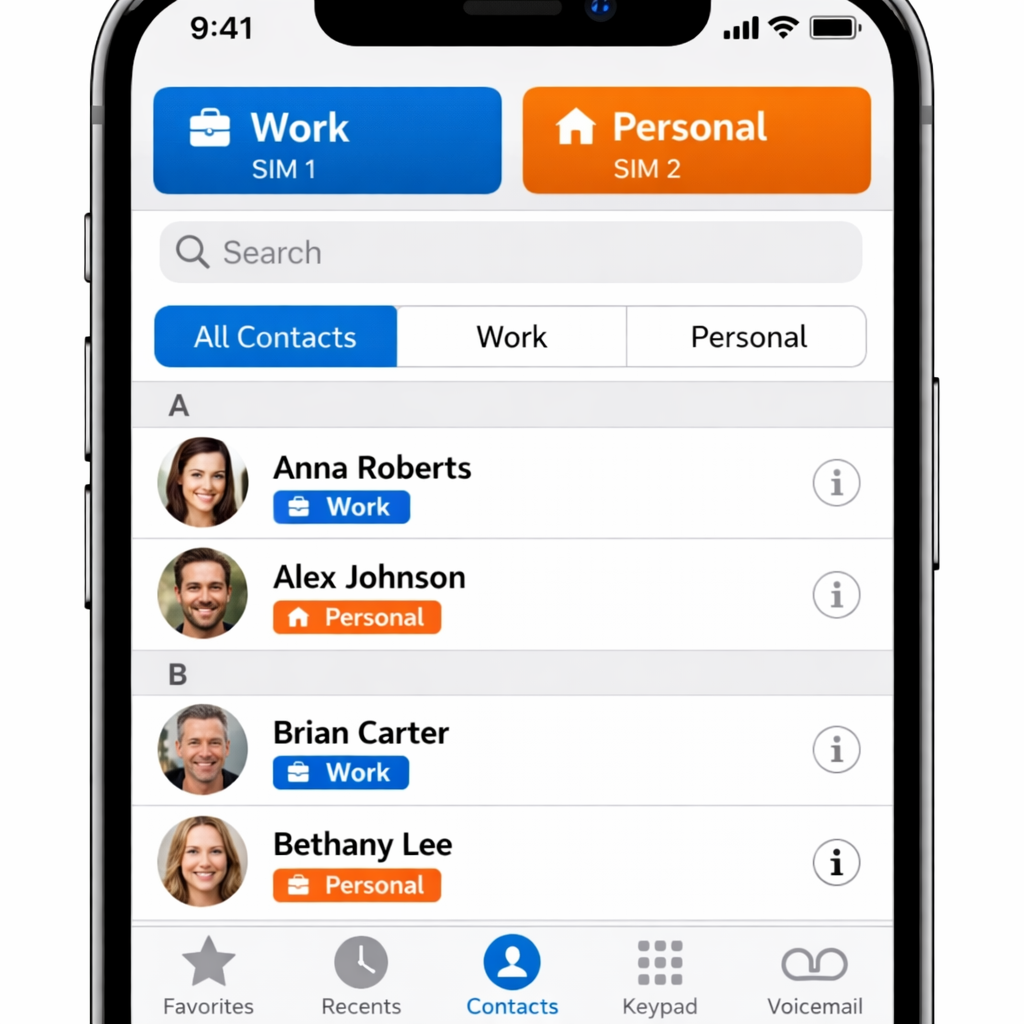
Apple is building new tools that will enable third-party apps to handle dual SIM features more intelligently — especially in regions like the European Union where demand for interoperability is rising. The feature changes today entered “Phase III” of Apple’s process, meaning development is underway, though full availability and timing remain undetermined.
What’s changing and why it matters
Currently, apps outside of Apple’s own Phone and Contacts offerings cannot see or use the custom names iOS users assign to their dual SIM lines — labels like “Work” or “Personal” — nor can they adjust which line is set as preferred for individual contacts. The planned changes will give eligible developers APIs to retrieve those labels and identify each cellular line uniquely, allowing third-party apps to display line names, allow setting preferred lines per contact, and show which line was used in call history. These changes stop short of exposing sensitive SIM identifiers or subscription credentials.
The request, submitted August 9 by a developer named Airelec Clima, has been processed through Apple’s EU interoperability framework. This system was designed to give developers access to iOS features used by Apple’s own apps, in compliance with Article 6(7) of the EU Digital Markets Act (DMA). Since this request ticks the right boxes, Apple has moved it into Phase III — the final stage where implementation and release are in progress.
How this fits into EU law and Apple’s obligations
The DMA requires that large designated digital gatekeepers (like Apple) allow third parties to access features of operating systems when those features are used by Apple’s own services, ensuring fair competition. Apple has provided a process through which developers can submit formal interoperability requests — including this dual SIM feature update — that Apple must evaluate, design solutions for, and in many cases deliver.
Under this process, eligible DMA-compliant requests go through three phases: eligibility assessment, planning, and implementation. Phase III indicates Apple believes the request merits engineering work to build the APIs or tools needed. The dual SIM changes are now in that last stage, although Apple hasn’t confirmed whether all proposed improvements (label visibility, preferred line per contact, call history line info) will ship together or if some will be delayed.
While rooted in EU legislation, these changes are likely to roll out more broadly, subject to technical, regulatory, or security considerations. There’s no public schedule yet for when users worldwide might gain access.
Until now, users have had to rely on Apple’s own apps to manage dual SIM line labels or preferences, while most third-party contact or dialer apps were limited to more generic behavior. These updates promise to level the playing field, allowing third-party apps to behave more like built-in ones in terms of dual SIM handling. The extent of future API access beyond what’s requested (such as dynamic switching of lines mid-call or deeper preferences) remains an open question.
Overall, moving this request into Phase III underscores the real impact of the EU’s Digital Markets Act. What might have been only a minor tweak has become a meaningful expansion of functionality for developers and users alike. Keeping an eye on Apple’s developer documentation and iOS beta release notes will show whether the full set of proposed dual SIM capabilities arrives together or in pieces — and when they reach users outside of EU jurisdictions. Those outcomes will signal how deeply the DMA is reshaping Apple’s platform openness.