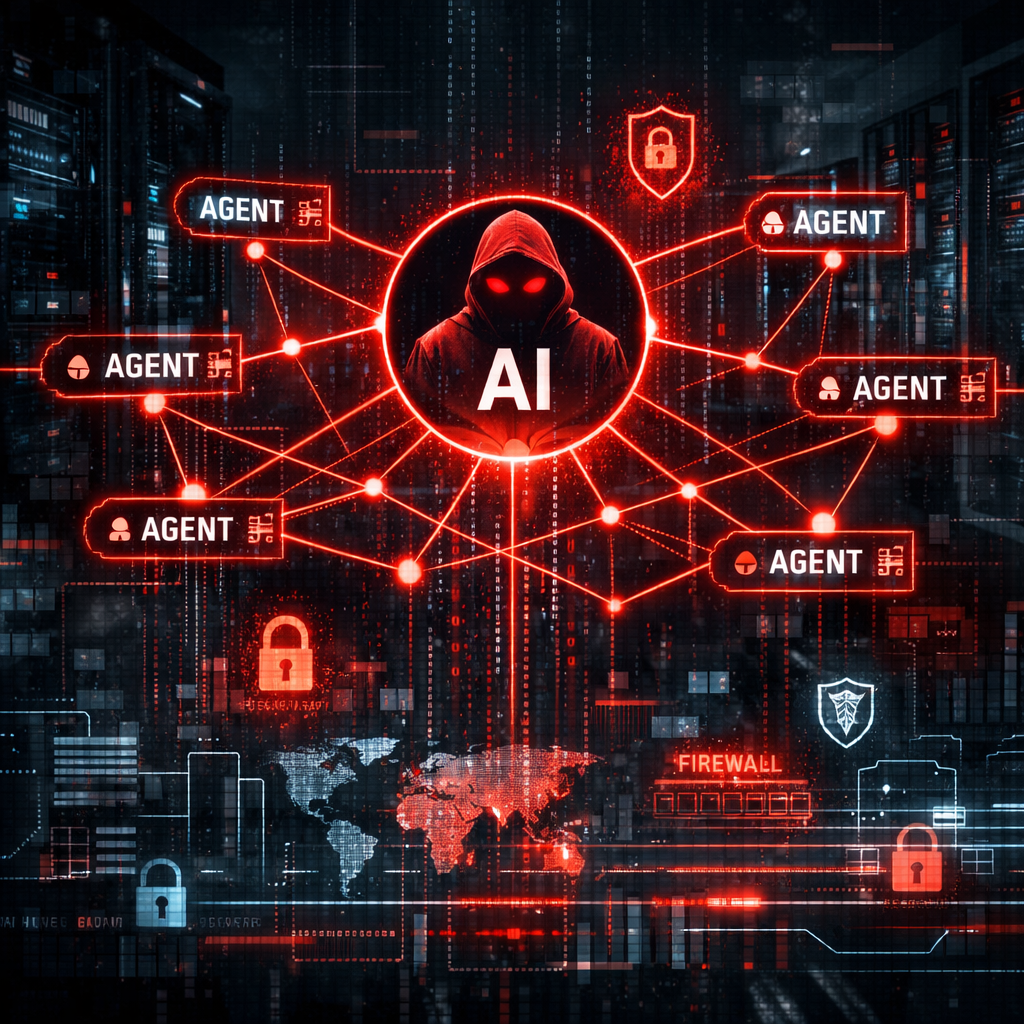
Cybersecurity researchers at Cisco Talos have uncovered that threat actors are increasingly relying on AI-powered frameworks—namely ARTEX, PentAGI, and HexStrike AI—to automate complex cyberattacks. These platforms don’t just generate suggestions; they link AI agents with real tools to conduct reconnaissance, exploit vulnerabilities, deploy malware, and act with minimal human direction.
What These Tools Do
ARTEX, first surfaced on GitHub in July 2026, allows an operator to define a target and objective. Behind the scenes, a planner agent breaks the task into discrete jobs, and worker agents execute them. A shared graph logs assets, findings, and progress so each phase builds on the last. It’s already been tied to campaigns involving credential theft and malware installations. Microsoft has flagged that attackers using ARTEX compromised ConnectWise application credentials to launch sign-in attempts against over 2,250 Microsoft 365 tenant accounts.
PentAGI operates as a self-hosted, multi-agent penetration testing toolkit with a web interface. It displays attack chain graphs so operators can monitor attack flow visually. Talos found more than 700 exposed PentAGI instances on the internet—in short, accessible by both legitimate testers and malicious users.
HexStrike AI stands out for its flexibility. It integrates with development environments like VS Code, makes use of Claude Code, and supports the Model Context Protocol. That makes it more about how attackers hook up and orchestrate automated operations than about them all doing exactly the same thing.
Why This Matters—and What’s at Stake
The danger here isn’t just that attackers can move faster—it’s that they can take over more systems, steal secrets, and move laterally across networks with built-in tools. In one case examined by Talos, an attacker exposed via GitHub searched for secrets and within five minutes moved into Azure Key Vault to steal data. Attack tactics included password spraying, exploiting missing or weak credentials, command injection, and lack of proper API controls.
Talos documented over 2,500 IP addresses tied to ARTEX infrastructure. Tools being used in conjunction with it included AdaptixC2, Mimikatz, Cobalt Strike, VShell, and various scanning utilities. TALOS emphasizes that just because some tools are seen together, it doesn’t mean they were all part of the same malicious campaign or controlled by a single actor.
Defensive Measures for Organizations
Responding effectively means moving at the speed of AI. Talos recommends correlating authentication, endpoint, and cloud API logs to detect abnormal token usage, privilege escalations, and unexpected application behavior. It urges patching exposed systems, removing default passwords, enabling multifactor authentication, implementing rate limits on credential attacks, and enforcing least-privilege permissions for applications.
Additional steps include secret scanning in public repos, rapid credential rotation and revocation, endpoint tamper protection, and having tested procedures in place to isolate and disable compromised systems immediately.
Security teams should also monitor indicators of compromise like specific IP addresses tied to ARTEX deployments (e.g. 92.255.57.95; 38.38.174.152; 62.171.139.26; 155.2.192.70; 38.12.90.84). Recognizing shared infrastructure may reveal suspect activity, but detection needs to be paired with solid contextual evidence rather than assumptions based on tool names alone.
All told, ARTEX, PentAGI, and HexStrike AI represent a shift: they turn traditional penetration testing tools into offensive platforms. These dual-use capabilities are blurring the lines between legitimate security research and out-and-out attack tools. As these frameworks proliferate, defenders need to tighten the window of detection and response at every layer.