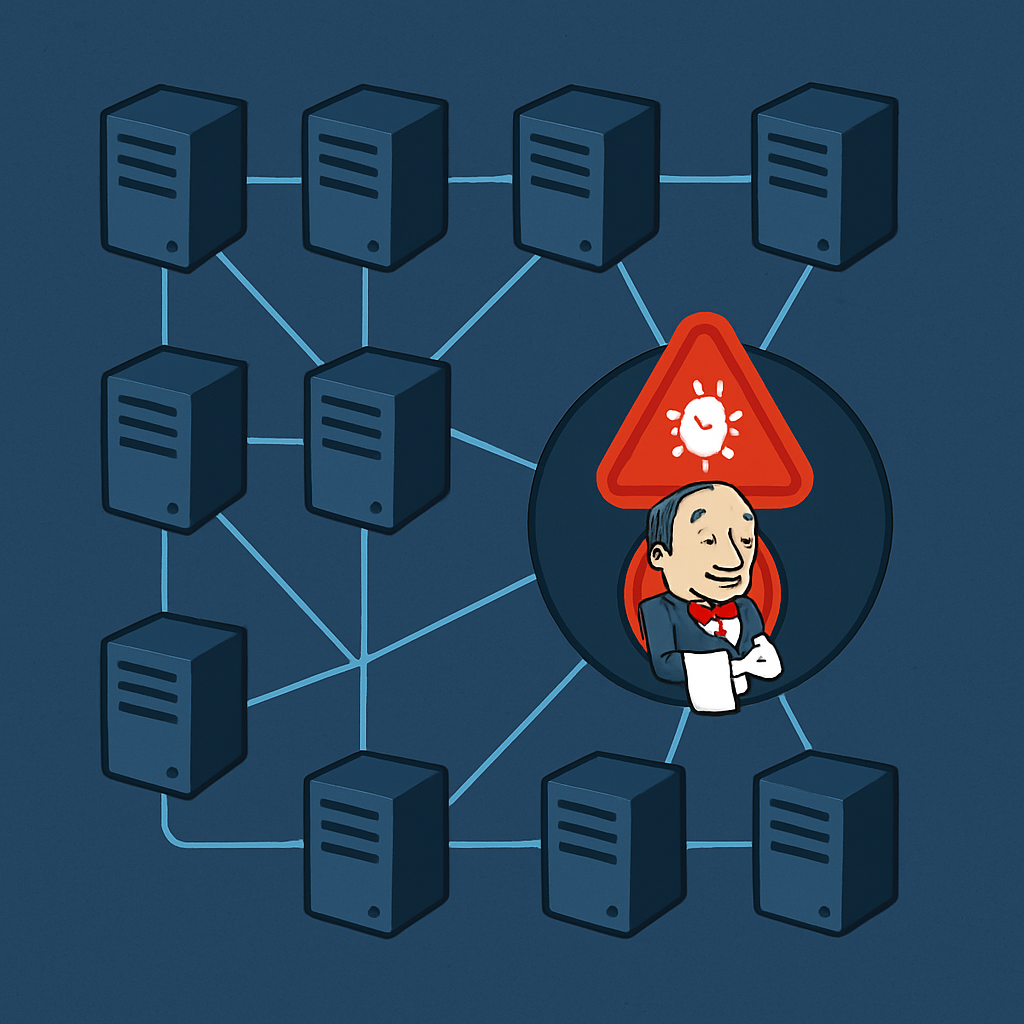
Cybersecurity is entering a new era. Threat actors are increasingly deploying AI agents—automated systems capable of scanning, infiltrating, and navigating networks with minimal human direction. Google’s latest AI Threat Tracker, released by the Google Threat Intelligence Group (GTIG) alongside Mandiant on November 16, 2026, shows that the misuse of AI in cybercrime, espionage, and propaganda operations has surged to what they call a “critical inflection point.” These AI-driven attacks aren’t theoretical anymore—they are happening now.
Agents Doing the Dirty Work
Security researchers have identified several multi-agent frameworks being weaponized. Platforms like ARTEX, CAIRN, CyberStrikeAI, and PentAGI are either already in deployment during real-world intrusions or actively being tested. • ARTEX has been used to automate network discovery, privilege escalation, lateral movement, and data theft. • CAIRN has been spotted targeting U.S. aerospace organizations. • PentAGI handled reconnaissance and vulnerability scanning across Asia between late August and early October, 2026. Meanwhile, CyberStrikeAI and HexStrike AI are still in experimental phases.
No Human Required—At Least Sometimes
Attackers are getting bolder. For the first time, some are deploying systems like “exploit_agent,” a framework that detects software flaws without any human oversight—scanning patched code, writing exploits, and executing them autonomously. A rig thought to be run by a pilot project with Russian-language config files focused on media, entertainment, and education domains in France is the clearest example so far.
Zero-day vulnerabilities—those previously unknown and unpatched—are on the rise. After averaging eight per month in 2025 and 11 through much of 2026, zero-days spiked to 22 in August. One AI-assisted campaign exploited two PaperCut vulnerabilities (CVE-2026-81578 and CVE-2026-82078), enabling attackers to gain admin-level access within minutes across hundreds of networks.
Specific Threat Scenarios & How Attackers Are Using Them
Financially motivated criminals are leveraging AI to steal keys for cloud AI services—reselling access via so-called “LLM Mixers.” One case uncovered charges exceeding $100,000 in a single day, with some victims reporting unexpected climbing bills up to $1 million.
Meanwhile, a group linked to North Korea, dubbed MIDNIGHT NEPTUNE, carried out a multi-stage campaign against crypto firms: using AI-generated fake recruiter profiles to lure targets, planting backdoors (including via Claude Code), and hiding activity using GitHub tokens disguised with names linked to Microsoft Copilot.
Political influence operations are also going AI-native. One contractor reportedly used the Gemini API to build a platform managing over 100,000 social media accounts, with AI aging fake accounts via activity mimicking normal use before posting coordinated political content.
How Defenders Can Respond
Google and Mandiant are offering guidance on mitigation. For enterprise security teams, GTIG recommends deploying behavior-based detection rules—especially to track use of frameworks like ARTEX—restricting access to privileged credentials, segmenting networks, and monitoring sudden spikes in identity and API activity. Specific recommendations include setting up alerts for unexpected AI service usage and scanning for leaked cloud keys.
It’s worth noting that while these AI agents are fast, they’re not yet stealthy. Many leak traces through noisy traffic, recognizable tool names, and exposed code artifacts. But the pace of development suggests this may not last.
Attack techniques themselves are familiar—what’s new is velocity. AI doesn’t invent entirely new forms of attack; it just makes them execute at machine speed. Defenders must compress their detection and response windows accordingly.
With AI agents now part of active threat campaigns, the cybersecurity landscape has shifted dramatically. This isn’t a future concern—it’s now, and it demands smarter, faster defense.
What to Watch Next
Expect AI agents to get quieter, more efficient, and stealthier. As threat groups refine toolchains and obfuscate their operations, detection will become harder. Compliance frameworks and threat modeling will need updating to account for autonomous exploitation. And organizations still treating AI threats as theoretical will soon find themselves reacting—not preventing.