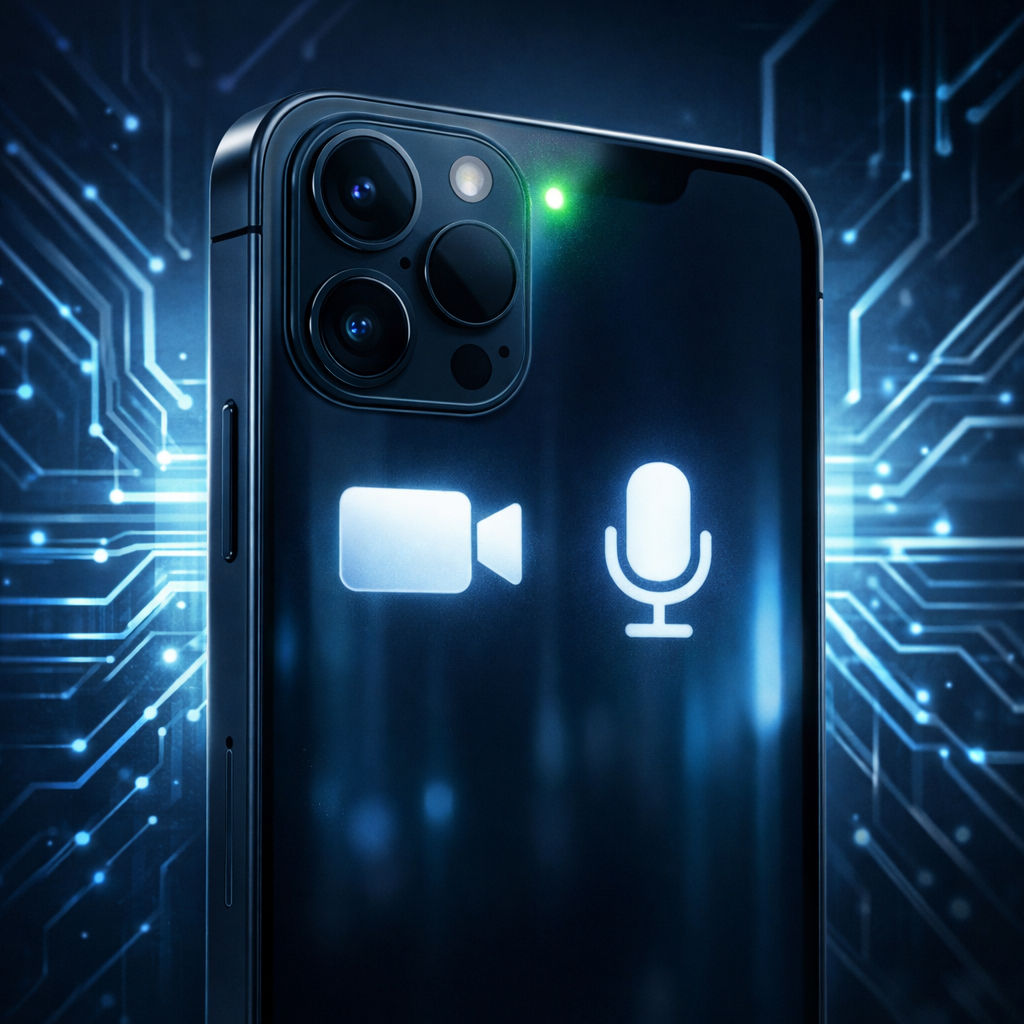
Apple has introduced “Secure Exclaves,” a new security architecture for its iPhone lineup that keeps camera and microphone input safe—even if the main operating system is compromised. The feature is designed to prevent apps or attackers from accessing raw audio or video without user awareness, combining hardware isolation, strict data flow controls, and visible privacy indicators.
Ambient vs. Active Mode: What Gets Shared—and When
Secure Exclaves operate in two separate modes: ambient and active. In ambient mode, the system is capable of processing sensory data—such as voice recognition or identifying a familiar face—but keeps raw input locked within a protected system. Only minimal, abstracted results are shared externally. In active mode, full data streams are made available, such as during FaceTime calls or when Siri is actively listening—but only after confirming a privacy indicator is clearly visible to the user.
Indicator Checks and Microkernel Protections
Before releasing full access to hardware sensors, Apple’s design mandates a confirmation process through the Exclave Indicator Controller. This component ensures that any on-screen privacy signal—light, icon, or dot—is fully visible and unobscured before sensitive streams are exposed. For example, during “Hey Siri” detection, an always-on processor handles wake-word detection, but full audio is only released after the protected software confirms the indicator is visible for at least three seconds.
Under the hood, Secure Exclaves rely on a small operating system architecture built on an Apple microkernel. Instead of giving broad privileges by default, components must request explicit permissions for memory, communication, and other resources. Memory protection is reinforced by a Secure Page Table Monitor that operates above the kernel, safeguarding memory mappings and preventing attackers from manipulating data, even with kernel write access. Exclaves also use a separate “display exclave” to inspect the indicator’s actual pixels—verifying its shape, color, brightness, and ensuring it hasn’t been hidden by other UI elements.
Limitations & What It Doesn’t Guarantee
While Secure Exclaves significantly raise the barrier for stealthy sensor access, Apple makes clear the system doesn’t make devices invulnerable. Formal verification and mathematical proofs are being applied, but their effectiveness depends on established assumptions. Though deep bugs have been uncovered through verification, full coverage remains a future goal. The architecture improves safety against attacks leveraging microphone or camera, but it doesn’t claim to fully prevent all possible compromises of the device.
The Secure Exclave system is currently deployed in iPhone 18 Pro, iPhone 18 Pro Max, and iPhone Duo. It supports background sensing features such as face recognition or wake word detection, with raw data confined within the secure environment until it’s absolutely necessary to release it—always guarded by visible indicators.
These new protections build on Apple’s broader security measures, including Memory Integrity Enforcement and other safeguards targeting memory corruption—frequent attack vectors in advanced cyber threats like spyware.
Why this matters: Hidden camera or microphone access has long been a serious privacy concern. Users may not realize when software is recording until too late. By isolating sensory input, ensuring visible cues, and minimizing exposure of raw data, Secure Exclaves aim to re-establish trust. For enterprises and privacy-conscious users, this could mark a significant step forward. The real test will be whether implementation holds up in all scenarios—especially external attacks or deeply embedded malware—and how Apple expands verification over time.