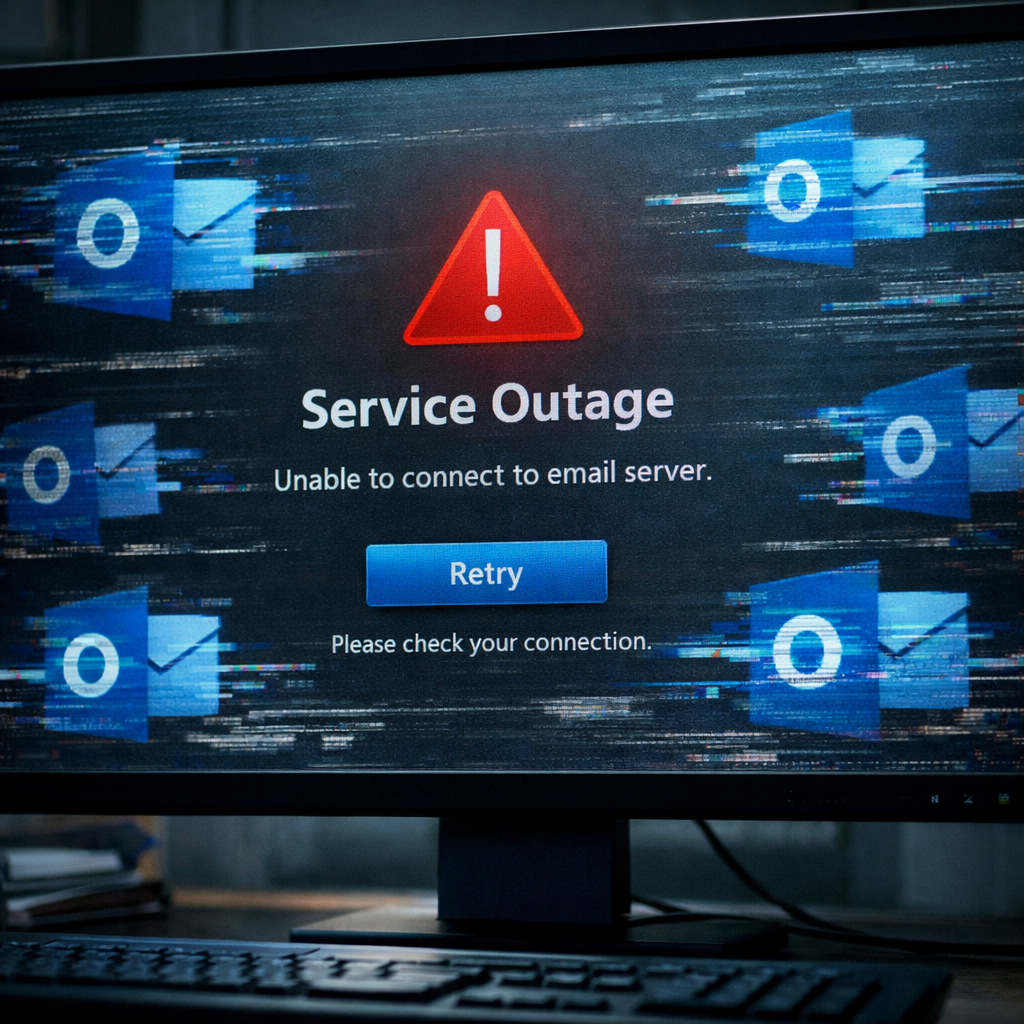
Microsoft Outlook is currently facing a major outage affecting users worldwide. The disruption reportedly began around 9:50 AM Pacific Time today and is ongoing. According to multiple outage trackers, tens of thousands of users have submitted reports—many complaining about failures to send or receive emails or log into the service.
What’s Going On
The incident appears widespread. One outage reporting platform logged over 100,000 incidents connected to Outlook within just one hour, indicating that the issue isn’t isolated to a single region or user group. Microsoft’s status page is also reportedly unavailable, further complicating visibility into the problem.
Impacted Users & Services
Mail delivery, account access, and login functionality seem to be the hardest hit. Many users receive error messages or are unable to connect to Outlook entirely. The statistics suggest both consumer and enterprise clients are experiencing disruption.
Traditional protocols for assessing Microsoft service health—like the Office portal status dashboard—are down, which indicates either a cascading internal failure or a severe issue affecting backbone infrastructure.
Background
Outages of this scale are rare but not unprecedented for email services that billions rely on every day. Microsoft Outlook is a cornerstone of Microsoft 365, supporting both personal communication and enterprise operations globally. When such core services go offline, it not only inconveniences individuals but also hampers businesses depending on email, calendaring, and integrated workflows.
Over the years, Microsoft has faced scrutiny over its response times and transparency during major outages. Users expect status updates and fast resolutions—especially as dependence on cloud email and collaboration tools keeps rising.
What You Can Do
If you’re being impacted, here are a few steps you can take:
- Check outage-tracking sites for reported issues specific to your region or ISP.
- Attempt to access Outlook via web browser, mobile app, or desktop client to see if any workarounds are possible.
- Contact your email administrator if you’re part of a business or educational institution.
- Monitor official Microsoft channels for updates—once the status page is available again, it may provide more detailed diagnostics.
The duration and root cause of the downtime are not clear yet. While user reports point to server-side problems, Microsoft has not provided an official update detailing what triggered the disruption or its expected resolution timeframe.
Why it matters: We rely heavily on digital communication, especially email, for both personal and professional tasks. When a platform as fundamental as Outlook goes offline, every piece of society that leans on email, calendar, and cloud-based productivity is affected. Outages like this expose gaps in resilience and transparency. Going forward, keep an eye on how Microsoft handles remediation, provides transparency, and compensates organizations impacted by these disruptions.