General Compute has raised $100 million in Series A funding as it pushes back against a growing narrative of doom in the neocloud world. Despite market jitters—highlighted by CoreWeave’s stock collapse and Elon Musk’s warning that many neoclouds could face “guppy-level death and consolidation”—General Compute’s leadership insists demand for AI compute remains enormous.
A Niche Strategy in the Cloud Lay of the Land
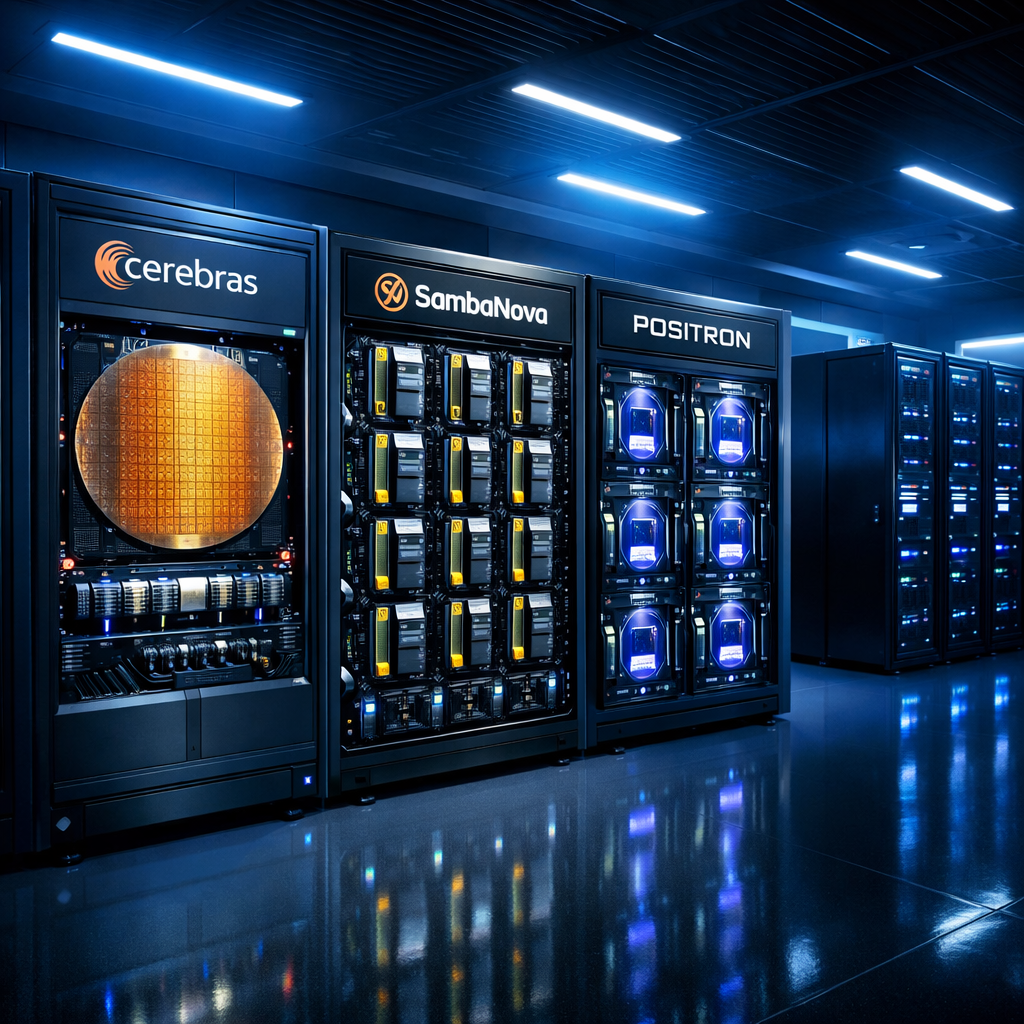
The startup, founded by Finn Puklowski, has carved a path by betting on specialized inference chips rather than double-downing on GPUs, which much of the market continues to embrace. After securing a $400 million debt deal with chipmaker SambaNova to source inference silicon, General Compute added Positron and Cerebras to its hardware roster.
Rather than building massive data centers from scratch—an approach that often comes with weighty fixed costs and scalability challenges—General Compute relies on colocation facilities, smaller power plants, and repurposed infrastructure, including former bitcoin mining sites. This allows the startup to plug in its chips wherever there’s power and space, sidestepping the capital intensity that haunts traditional hyperscale data center builds.
Funding, Customers, and Power Projections
The $100 million round was led by Blackbird Ventures and Abstract Ventures. It follows a seed raise in May at a post-money valuation of $60 million. General Compute is now valued at $800 million. The Series A came after locking in a customer contract worth $100 million in annual recurring revenue.
Power planning is central to the company’s near-term roadmap. In 2027, General Compute aims for 75 megawatts (MW) of deployed capacity, with access to as much as 200 MW—if it can line up funds and hardware. The CEO acknowledges funding will remain a full-time effort, as both equity and debt are needed to fuel growth.
One of the company’s core offerings is “bare metal” compute—servers without software layers—targeted toward inference cloud platforms that themselves serve developers. General Compute provides the underlying infrastructure, letting its customers concentrate on model deployment rather than building out physical hardware. This platform approach is bolstered by its hardware partnerships: SambaNova, Positron, and Cerebras all view General Compute as a key distribution partner capable of scaling their inference solutions.
Countering Neocloud Pessimism
As competitors like CoreWeave suffer valuation drops, and with the cloud compute market awash in warnings, General Compute presents itself as proof that there’s space for divergent strategies. Puklowski argues that warnings of chip-led collapse are overblown, saying that demand for all types of inference compute remains strong. He also cites Anthropic’s bullish S-1 filing as helping to flatten fears among investors and customers.
Unlike hyperscalers or retail cloud giants, General Compute doesn’t expect to leapfrog into top-tier scale overnight. Instead, its advantage comes from flexibility, cost discipline, and hardware diversity. Because it isn’t locked into building its own data center backbone, it says it can deploy broadly and rapidly once capacity is available.
Still, growth comes with trade-offs. The company needs to secure both equity and debt, manage hardware supply, and balance operational demands. Though General Compute has ambitious power and deployment goals, execution risk is significant in an industry where supply chains, energy costs, and infrastructure hurdles can stall even well-backed plans.
From a broader perspective, General Compute’s journey reflects changing priorities in AI infrastructure: inference efficiency, heterogeneous chip stacks, and smaller, distributed compute footprints. If it succeeds, it could establish a new model for AI clouds—one that scales horizontally, optimizes cost, and relies less on monolithic data center builds.