SoftBank Group’s recent $7.1 billion quarterly loss has put its ambitious natural gas power and AI infrastructure plans under new scrutiny. The Tokyo-based investment powerhouse booked a net loss of roughly ¥1.12 trillion (about US$7.1 billion) for the July-to-September quarter, dragged down in large part by write-downs tied to power-generation equipment for its U.S. AI data center projects. The largest single hit—a US$3.7 billion charge—came from money paid in advance for natural gas turbines and related gear now deemed excess or unwanted.
From overbooking turbines to recognizing sunk costs
SoftBank has been aggressively securing natural gas turbines in anticipation of soaring demand from AI and data center expansion. More than 13 gigawatts of turbine orders were in place—nearly 50% more than needed—for its projects in the U.S., including the mammoth PORTS-Pike campus in Ohio, where the plan calls for 8 IT gigawatts of data center capacity supported by 9.2 gigawatts of natural gas generation. But shifts in project scope and evolving equipment requirements rendered much of that excess procurement redundant. Nonrefundable deposits aggregating around US$9.5 billion were paid to reserve manufacturing capacity, yet SoftBank has now written off approximately US$3.7 billion in those upfront payments and contract changes.
Despite the losses, the company insists its broader AI and data center ambitions remain intact. The write-downs reflect realignment—not cancellation—of project procurement plans. A subsidiary named Silver Bands 7 (in which SoftBank and its Vision Fund 2 participate) accumulated the advance payments. After accounting for the write-offs, it still holds about US$6.6 billion in advance commitments, and may benefit from up to US$2.1 billion in future rebates—though none of that is guaranteed.
The big power gamble: 9.2 GW plant and a wider trend
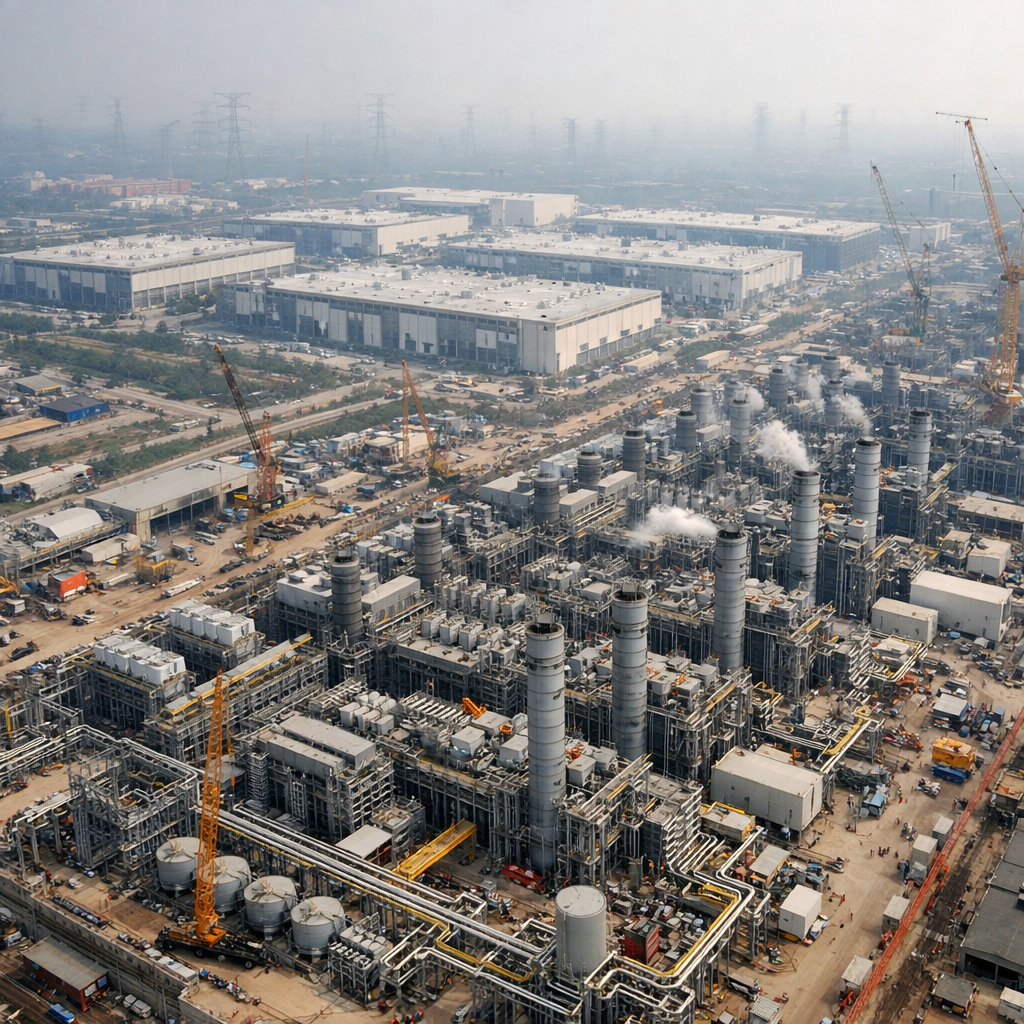
Central to SoftBank’s strategy is a gigantic natural gas-fired power plant in Ohio-Kentucky, led by its SB Energy arm. Valued at roughly US$33 billion, this 9.2 gigawatt facility is meant to power the massive PORTS-Pike Technology Campus, a public-private project on a former U.S. Department of Energy site. The campus is designed to deliver 8 gigawatts of AI computing load while being backed by up to 10 gigawatts of power generation—including the gas plant plus grid upgrades. AEP Ohio is a partner in building the required transmission and infrastructure.
Natural gas has emerged as a default power source for many hyperscale data center operators when grids are overloaded and connection delays stretch into years. But the risk of fuel price volatility, supply squeeze, and winter curtailment remains high. Analytics firm Noreva notes that while tapping gas generation is a logical fallback, rising natural gas exports combined with stagnating domestic supply could sharply drive up prices in some regions over the coming years. In this climate, large batteries and more resilient grid connections are becoming increasingly viable alternatives to large natural gas on-site generation.
SoftBank’s recent losses—primarily the result of early bets that no longer line up with shifting infrastructure or project designs—are unlikely to kill off its natural gas ambitions. AI’s energy appetite is too great. But the scale of these losses may mark a ceiling for how boldly the company leans into fossil fuel power solutions. Market watchers should track whether future quarters reveal more write-downs and how the industry responds to tightening supply chains, rising costs, and regulatory pressure over carbon emissions.