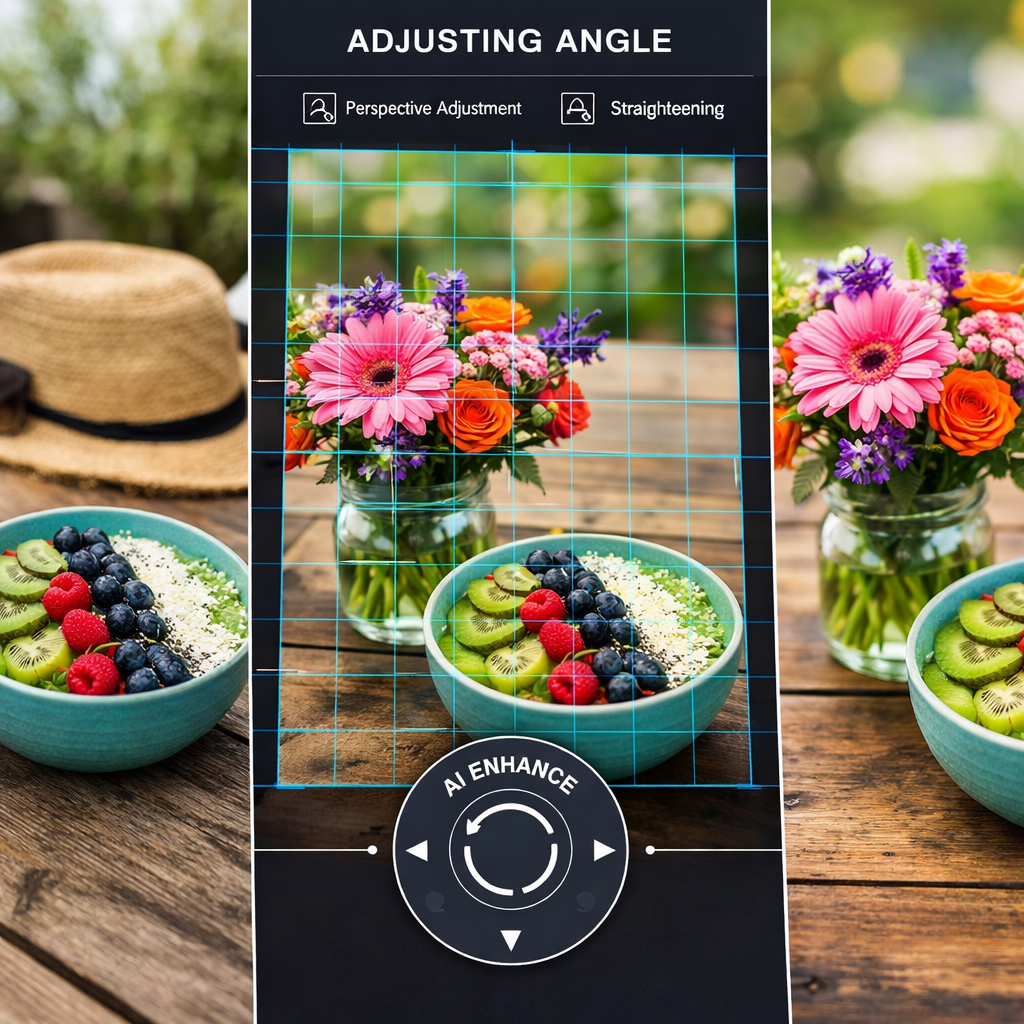
Phota Labs has launched an iOS app designed to turn everyday photos into images that feel like they were shot by a skilled photographer. Instead of relying on users to manually tweak every photo, the app applies AI to enhance shots while preserving the authentic look of people and scenes. The app is free to download.
The company was founded by Cecilia Zhang and Zach Xia, who both previously worked at Adobe on computational photography tools such as Lightroom, Photoshop, and Project Indigo. Frustrated that many editing tools couldn’t salvage poorly framed or poorly shot images, they focused Phota Labs on editing the core image itself—fixing angles, perspective, or composition—rather than just applying filters.
How it Works: Transform, Preserve, Share
Users can upload snapshots—from wide-angle group shots to selfies—and Phota Labs will suggest transformations. There are options for subtle editing that respect the original composition and lens effects, as well as more dramatic changes like shifting perspectives, simulating alternative angles, or even mimicking fisheye lenses. The AI also builds a model of the individual’s identity so that photos retain recognizable personal appearance even when improved. Every edited image also gets an invisible watermark signaling it has been altered by AI when shared on social media.
The design is aimed at people who take many photos but don’t enjoy the laborious editing process. Early users reported that they started taking more photos once they knew Phota could enhance them after the fact. Beyond casual users, the founders see potential among parents preserving family albums, retirees wanting keepsakes, and anyone wanting professional-grade shots without technical know-how.
Strategy, Seed Funding & Plans
Phota Labs raised $5.6 million in seed funding last year, led by a16z. The app is free at launch to build a user base, with a freemium monetization plan likely to come later. The team is working on an Android version to expand its reach.
This is part of a broader movement in AI and photography where startups are focusing not just on post-processing styles but on enhancing the photo’s foundational qualities—angles, perspective, exposure—while respecting authenticity.
Storage, identity modeling, watermarking, AI-powered transformations—these tools reflect where consumer photography is going: more intelligent, less manual, more personalized. What to watch: how well Phota balances automation with subtlety, how privacy is handled around identity models, and whether Android rollout maintains fidelity. If the execution holds up, this could shift expectations—expecting studio-quality shots out of ordinary phones is no longer far-fetched.