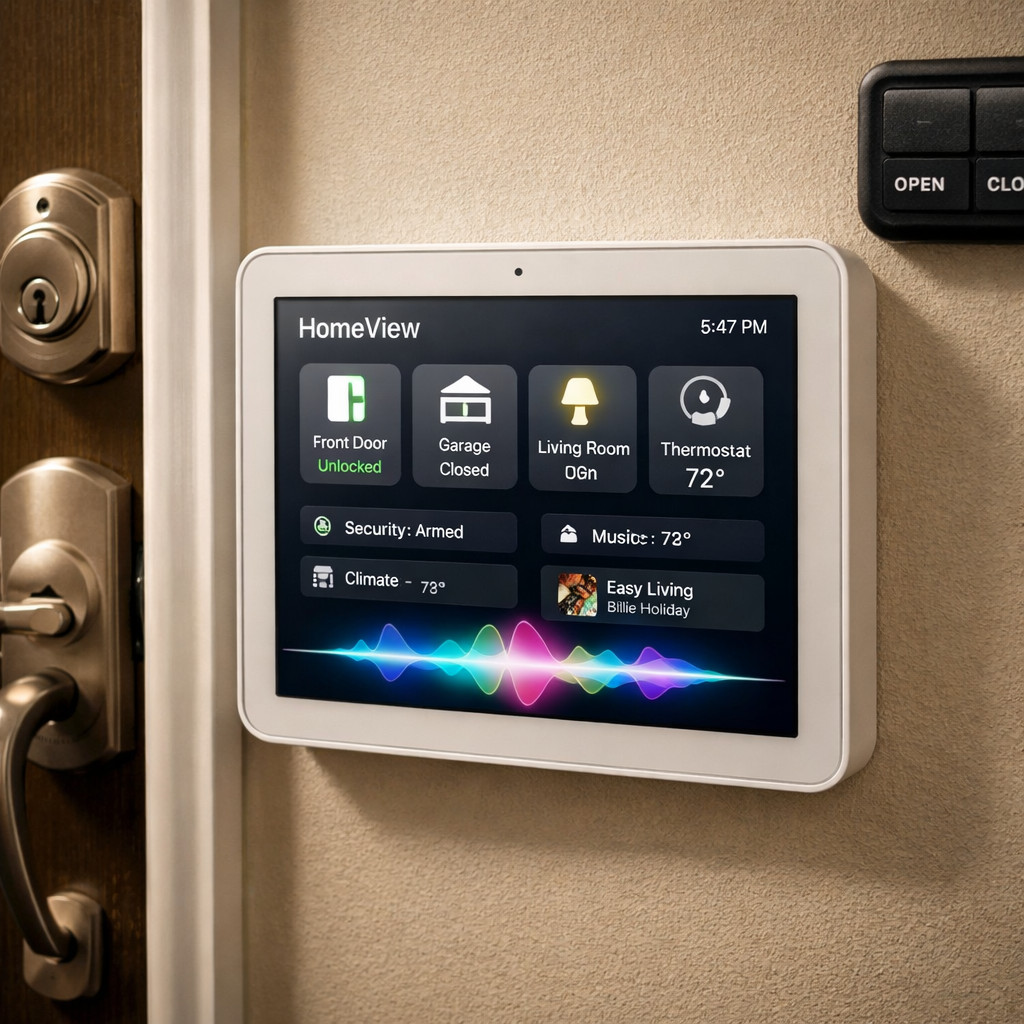
Apple is planning a software fix for HomeView early next month to address a flaw in Siri’s lock and garage-door control features. Users have reported that even when identity is correctly recognized, the assistant fails to unlock the front door or open a garage—two features central to smart-home expectations. Apple has acknowledged the bug and says a December update will resolve it.
HomeView, Apple’s smart home hub with a 7-inch display, launched with Siri AI and personal context recognition. The device can identify up to six household members by face, personalize content, and control home accessories like thermostats, lights, cameras, and locks. But the lock-unlock and garage functions require both facial recognition and proximity of the paired iPhone or iPad, plus authentication, to take effect. Despite satisfying those preconditions in user reports, features have sometimes failed.
Earlier coverage noted Apple’s HomeView depends on the paired iPhone or iPad for personal-context tasks. Without one that supports Apple Intelligence, certain Siri AI capabilities—such as interacting with Messages, Calendar, or making changes across apps—are unavailable. General knowledge queries and routine smart-home controls still work.
Beyond Siri’s reliability issues, reviewers observed that unlocking doors or opening the garage door via voice still triggers authentication—via face or an unlocked iPhone—even when expected to work automatically. That requirement is part of HomeView’s security measures but conflicts with what users believed they had set up. Ship-date for HomeView was November 13, prices start at US$299. Apple has confirmed the fix will arrive in December.
What This Means for Users
The bug affecting Siri’s ability to perform key locking and garage-door operations undermines a core promise of the HomeView’s smart home functionality. If voice control can’t be trusted for access tasks, users may hesitate to rely on it for anything security-related. Apple’s fix should address whether identification conditions are being correctly checked and whether authentication logic is firing properly.
Given the complexity of voice, face recognition, paired iPhone/iPad presence, and security thresholds, ensuring that Siri reliably opens or unlocks only when all conditions are met is non-trivial. Users whose devices meet all the technical requirements—Apple Intelligence enabled, supported language settings, compatible hardware—should see the problem resolved. Anyone lacking those pieces is likely to continue seeing limitations.
Apple’s move highlights how tightrope navigation between security and convenience is central in the smart home space. As more homes adopt hubs like HomeView, any reliability failures in access control functions stand to erode user trust. The December update will be closely watched not just for this fix, but for how effectively it restores confidence in system design across authentication, voice control, and identity inference.