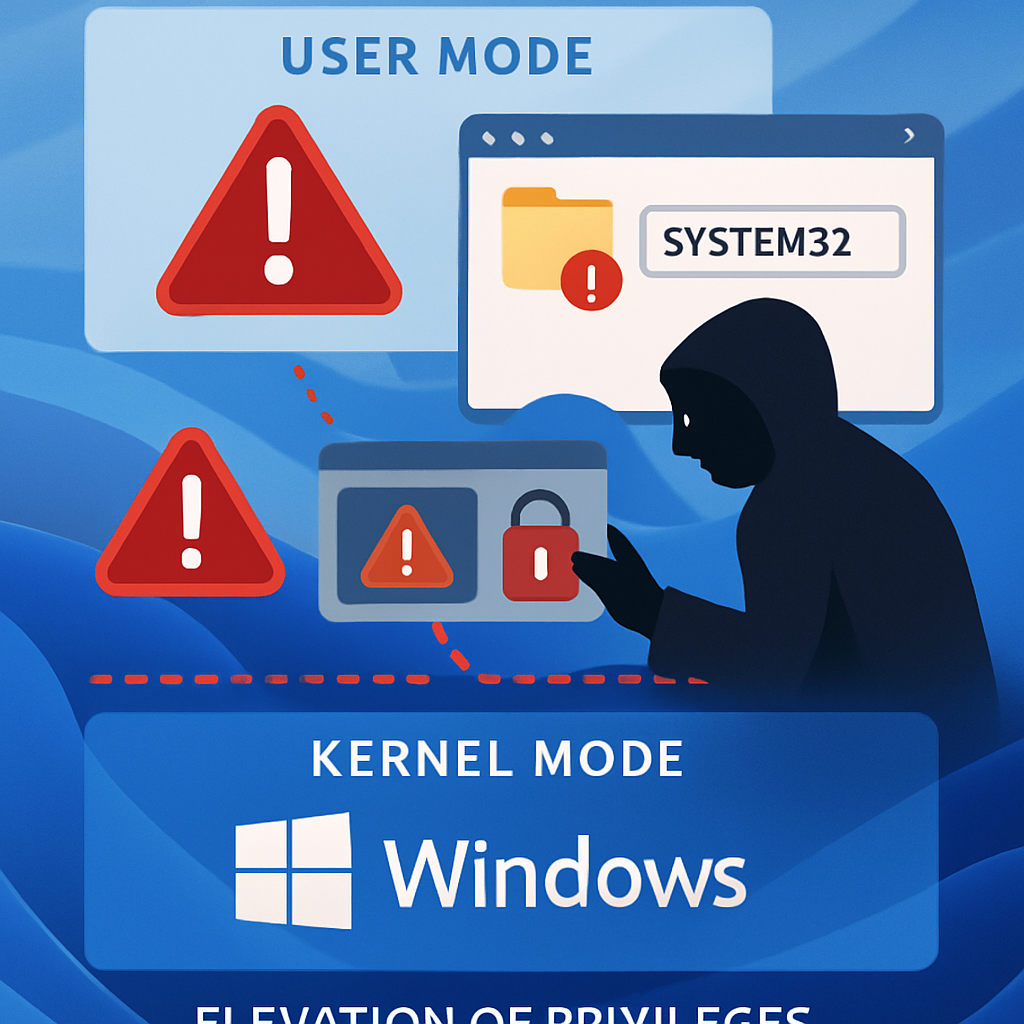
A researcher has unveiled a zero-day Windows exploit called “SignDrop” that allegedly subverts the Common Log File System (CLFS), a kernel component designed to protect Windows logs. Once triggered, SignDrop could permit a standard user account to gain SYSTEM privileges — the highest access level on a Windows machine. As of November 11, 2026, Microsoft has not verified the vulnerability or issued a patch.
How SignDrop works
The exploit was published on GitHub by a researcher going by MSNightmare (aka Nightmare Eclipse) on November 10, 2026. It targets the kernel driver clfs.sys. SignDrop is said to abuse the creation of “.cnpf” authentication files when new log files are made via the exposed “\CLFS” device object.
Its approach involves using symbolic links through the object manager and manipulating file timestamps. The researcher claims it can force a high-privilege Windows Defender process to create files in protected locations. This method relies on core CLFS behavior, which handles parsing complex log files in kernel mode and has historically been a target for privilege escalation bugs.
Why many systems remain vulnerable
Microsoft added HMAC-based authentication to CLFS log files in the update released October 28, 2025. This change, implemented in Windows 11 25H2 and Windows Server 2025, verifies log file contents via a secret key; mismatches cause the driver to reject the file.
After updating, new systems enter a “learning mode” for 90 days, where CLFS retroactively adds authentication codes to existing log files upon access. After that, the system switches to enforcement mode on the next reboot. However, the researcher alleges SignDrop works regardless of whether a machine is still within the learning period or has already moved to enforcement, meaning almost any system older than 90 days might be at risk. The researcher estimates about 80 percent of Windows installations remain exposed, though this figure is heuristic rather than based on measured data.
Limits, mitigations, and what to watch
Important constraints apply: SignDrop is a local privilege escalation. It requires prior code execution under a standard user account. It cannot be exploited remotely by itself. There is no evidence yet that attackers are using it in real attacks. Independent testers have not yet validated the claim, and there is no assigned CVE or formal Microsoft advisory as of the publishing date.
Turning off CLFS authentication is not a safe workaround. Doing so would allow the driver to open any log file — including maliciously crafted ones — undoing the protection that the HMAC-feature was intended to provide. The researcher’s tests reportedly failed when authentication was disabled, but the risks of disabling remain significant.
Administrators are advised to limit which users can run code on critical systems, monitor for unusual file creation by high-privilege services like Defender, and watch for CLFS-related error codes (for example, ERROR_LOG_METADATA_CORRUPT). Reviewing the fsutil clfs tool in Microsoft’s documentation before making changes to CLFS behavior is also recommended.
No fix is yet released, but a remedy would likely arrive via Microsoft’s Patch Tuesday cycle once the issue is confirmed. In the meantime, keeping Windows fully updated and enforcing strict control over standard user permissions are the best protective measures.
SignDrop raises serious concerns until verification and remedy arrive. Because attackers can’t exploit it remotely, its risk is somewhat contained—but its scope matters: many organizations trust CLFS as a last line of kernel-level log protection. Watch closely for Microsoft’s response and test indicators of compromise as threat intelligence updates become available.