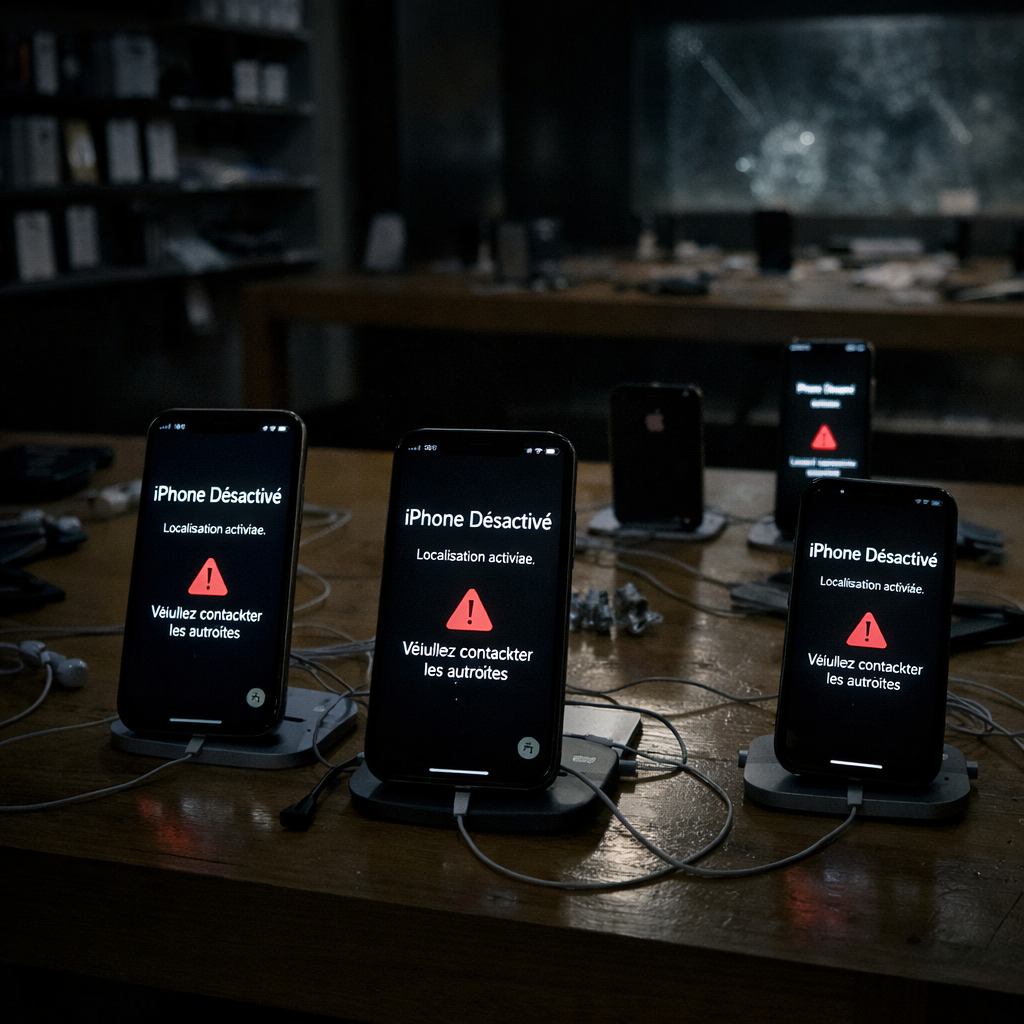
During riots in France on October 17, looters who stole iPhones from Apple Stores in Lille and Bordeaux discovered the hard way that the devices were instantly disabled. Soon after the thefts, videos surfaced showing phones displaying a French-language alert demanding their return to “Apple Lille,” along with a warning that the device had been locked, was being tracked, and that local authorities would be notified.
The message read: “Veuillez retourner l’appareil à l’Apple Lille. Cet appareil a été désactivé et est en cours de géolocalisation. Les autorités vont être alertées.” The phones were no longer usable in any meaningful way once removed from their retail environment.
(This is the same kind of warning appearing in multiple reports about disconnected or ex-demo units taken during the unrest.)
How the Protection Works
Apple uses display devices in its stores that are locked into specialized firmware via a Mobile Device Management (MDM) system. These demo units are configured to disable themselves when removed from store premises or a designated geofenced area. Once triggered, the operating firmware locks the device entirely, activates location tracking, and removes the ability to use or resell the unit in any normal way.
Activation Lock and the Find My system play roles too—these are the tools consumers usually use to secure lost or stolen personal devices. But the shop display lockdown system is separate, making iPhones in retail stores nearly impossible to exploit once stolen.
Broader Context & Legal Backdrop
The October 17 unrest began as protests over cost of living and public services, and escalated into violent looting and vandalism across major French cities. Over 3,000 businesses were looted or damaged, and estimated insured losses are heading toward €1.2 billion. Apple’s Lille and Bordeaux stores were among those hit.
Authorities are using IMEI numbers (device serial identifiers) and coordination with manufacturers to block devices and track down stolen units. France’s laws allow police and justice officials to request device location information in relevant cases, especially after a theft report has been filed.
For anyone considering buying secondhand Apple gear right now in France: the visible message warning that “this device is disabled… being tracked… return to its store” is a major red flag. Even if a device appears to function and seems legit, it may be rendered nonfunctional by demo-specific protections or later blacklist blocking.
What this means: Apple’s ability to turn stolen retail iPhones into effectively useless tracking bricks sends a powerful signal to would-be looters or fence operations. It doesn’t just protect the device—it upends the economics of stealing display units. But it leaves open questions around how often tracking leads to arrests, how many devices are affected, and whether law enforcement can scale this deterrent effectively.