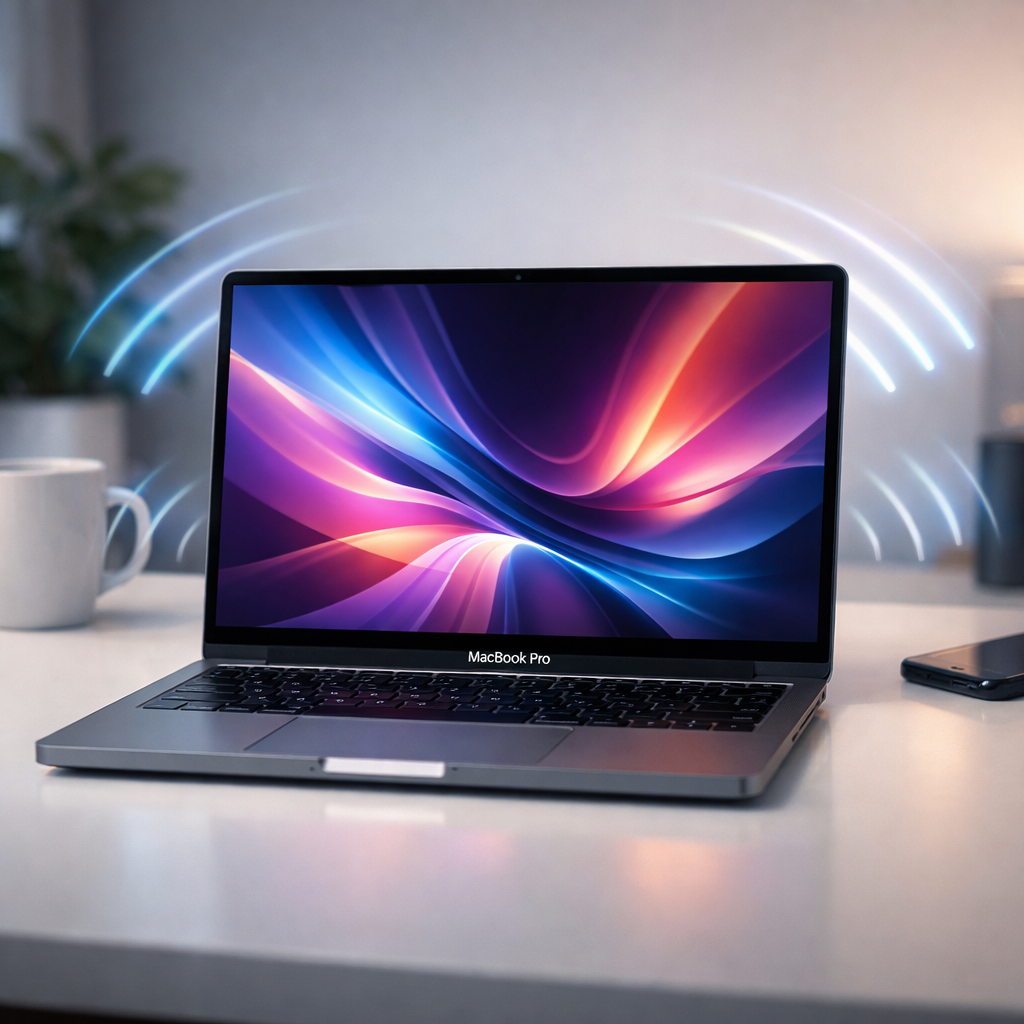
Apple has quietly refreshed the 14-inch MacBook Pro, equipping its base model with the new M6 chip and modern wireless tech. The visual design remains unchanged, but the under-the-hood upgrades deliver noticeable gains for creators and everyday users alike.
Processor & Power Boosts
The latest version swaps in the M6 chip, previously introduced in the Mac mini. It features a 12-core CPU made up of two “super” cores, four performance cores, and six efficiency cores, alongside a 12-core GPU. Base system memory stays at 16GB, and the Thunderbolt 4 ports are carried over. Battery life is now rated for up to 14 hours on a single charge.
Wireless Upgrades & Connectivity
Wireless connectivity is getting a major refresh. The machine now includes Apple’s N2 chip, which supports Wi-Fi 7, Bluetooth 6, and Thread. These updates are meant to boost speed, reduce latency, and improve reliability for AirDrop and other services that depend on robust wireless links.
Performance vs Previous Models & Pricing
Apple claims the new 14-inch MacBook Pro is a major leap over the 13-inch M1 version: up to 13× faster in first-token performance for large language model prompts, up to 11.7× faster in ray-tracing renders using Blender, and similarly large gains in image processing and developer workflows compared to the older models. Improvements over the prior 14-inch M5 model are more modest—typically in the 1.2×-1.3× range. Pricing starts at $1,999, with preorders opening October 28 and units expected to arrive by November 6.
This refresh is targeted at the “entry-level” end of Apple’s pro laptop lineup. More powerful variants such as M6 Pro or M6 Max remain absent, with no signals they’re arriving anytime soon.
What this means: The updated 14-inch MacBook Pro bridges performance gaps for users upgrading from M1 machines, especially for AI workloads and graphics work. The jump in wireless tech future-proofs the machine for high bandwidth and low latency tasks. On the trade-off side, those with recent M5 models may find the gains less dramatic. Still, for those sitting on older Macs, this delivers a solid generational leap.