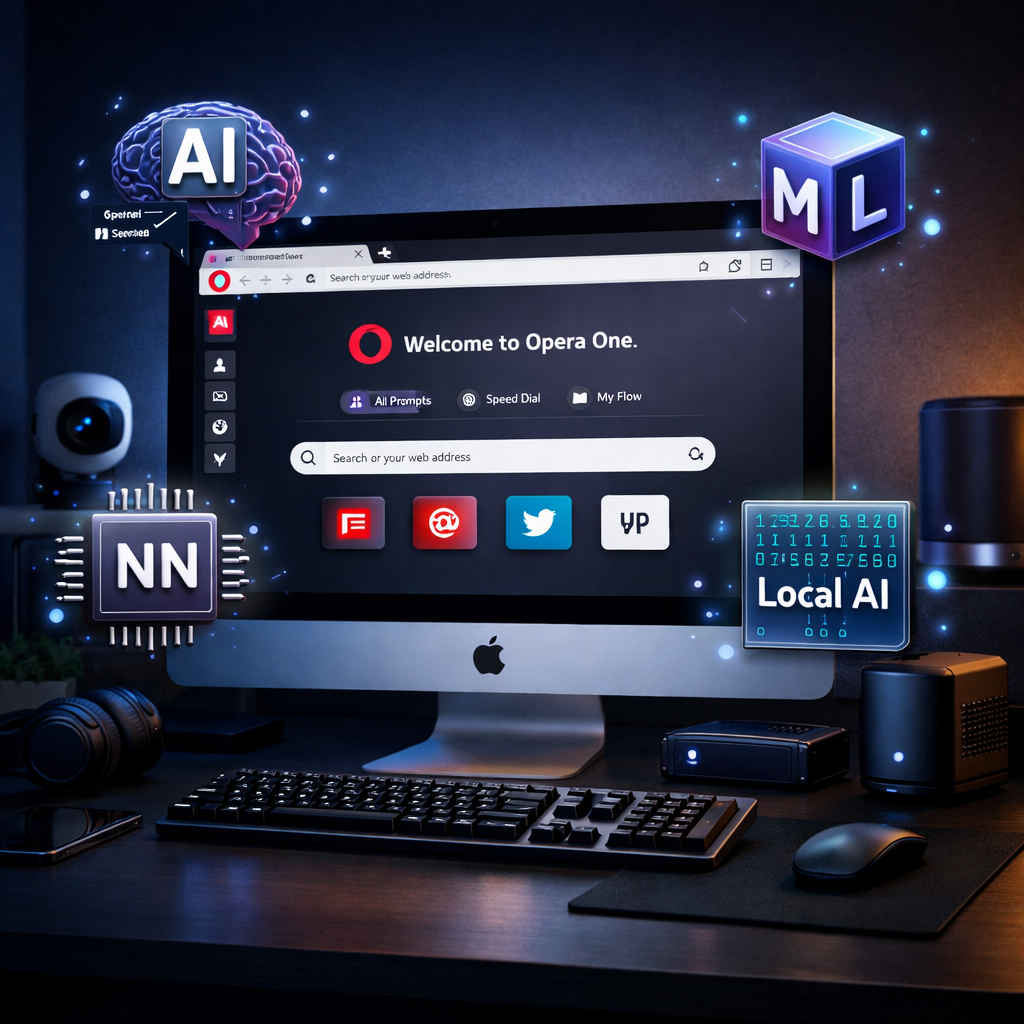
Opera One users on Mac systems now have access to Apple’s on-device foundation model directly within their browser, thanks to a new preview feature built on the proposed WebAI standard. As of October 27, 2026, Opera’s browsers are enabling local AI model usage without needing external cloud services. Additional builds like Opera GX and Opera Neon are scheduled to adopt the feature soon.
What is WebAI and How It Works
WebAI, a proposed web standard already backed by big industry players, enables websites and browser extensions to tap into AI models that run locally on a user’s device. It’s model-agnostic—supporting both Google’s and Apple’s AI models at launch—and emphasizes open models to ensure flexibility and control.
The feature is opt-in, free to use, and fully under user control. Users decide which websites or extensions can access their device’s local AI models, and nothing is sent externally, preserving privacy.
Features and Demonstrations
With local AI integrated into the browser, Opera anticipates developers will build new tools—such as extensions that can organize tabs, flag clickbait, or highlight job postings—without needing server-side infrastructure or subscription fees. All data processing stays on the user’s device.
Opera also debuted HTML-in-Canvas, a related capability that lets developers embed live, interactive web pages inside 2D and 3D scenes. Developers using familiar web tools like HTML and CSS can create immersive environments that support interactive elements despite being part of a 3D world. Two demos—”Webpage Bulldozer,” which turns parts of a web page into physical objects, and “Gamer Room,” a virtual space with live web-display screens—showcase what’s possible.
This rollout marks a shift toward decentralizing AI: giving users and developers more autonomy over how and where computation happens. By running models locally, Opera bypasses traditional cloud barriers around cost, latency, and privacy.
Analytical Perspective: This is a pivotal moment for browser-based AI. Enabling foundation models to run locally in Opera One on Macs could signal the rise of privacy-respecting, high-performance web apps that avoid costly server-side AI. Watch for how major browser makers, web developers, and AI model providers adapt—this could reshape expectations around usability, security, and the architecture of web experiences.