Smart home ecosystems are proving to be overwhelming even for tech giants. Recent developments from Apple, Google, and Amazon expose how fragmented standards, slow hardware updates, and half-finished visions are leaving consumers confused and frustrated.
Apple’s Missteps Highlight Larger Industry Struggles
Apple’s recent announcements underscore how little consensus exists in defining what a “smart home” should be. Critical products like the HomeView dashboard, Apple TV 4K, HomePod Mini 2, and the Apple Home Collection have drawn criticism for offering minimal value relative to their cost or promise. Among these, HomeView stands out for prioritizing simplicity, yet many feel it fails to deliver meaningful improvements over what already exists.
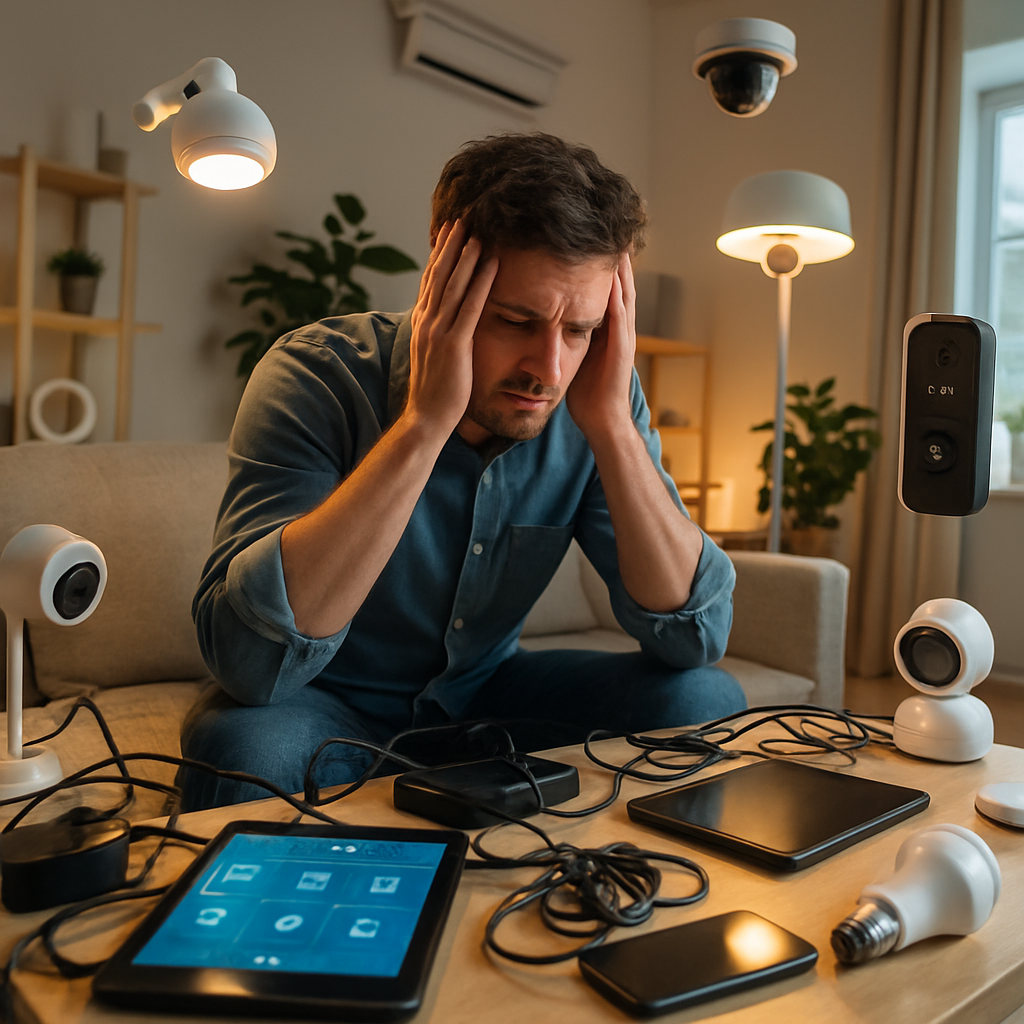
Apple isn’t alone. The broader issue is that households may own Hue lights, smart locks, security cameras, and water sensors, but managing all of them—across different brands, platforms, and communication protocols—can quickly become a nightmare. Even though industry efforts like Matter aim to bridge compatibility gaps, integration remains inconsistent and often clunky.
Google’s Strategy: Course Corrections with Caveats
Google appears to be adjusting course. The company’s Gemini-powered platform—used across Nest and other smart home devices—is getting frequent software enhancements. Among its recent strides: local Matter control for Philips Hue lighting, which reduces dependence on cloud services and promises better responsiveness. Still, many Nest devices haven’t seen hardware upgrades in years, leaving them lagging behind the rapidly evolving competition.
Besides hardware, assistant platforms are under scrutiny. Amazon’s Alexa+ was once the leader, but it’s now criticized for lacking memory, understanding, and context—traits Apple and Google are better positioned to develop, thanks to their control over smartphones. Nevertheless, Google’s first-party hardware also faces challenges; although its latest Nest Learning Thermostat earns praise, other products stagnate.
Why Smart Home Unity Keeps Slipping Away
Standardization efforts like Matter are inching forward, but true unification across ecosystems has yet to be achieved. Different device types, brands, and communication standards create a puzzle that few consumers want to piece together. Even when technology like local Matter control delivers, managing multiple apps, firmware versions, and physical setups is still overwhelming.
Moreover, aggressive marketing and rising prices for minimal incremental upgrades are contributing to growing customer skepticism. Products promised to work seamlessly often require manual setup, constant troubleshooting, or come without key features—like Apple’s recent announcement that its HomePod Mini 2 will ship without built-in AI support.
What Comes Next for Smart Home Tech?
As smart home complexity becomes more obvious, companies are being forced to make choices. Google seems to be betting on software bridges and AI to streamline experiences. Apple’s approach suggests a focus on aesthetic ecosystem suites, even if function lags. Meanwhile, Amazon appears bogged down by early volume and inconsistent smart assistant performance.
The next battleground will likely be in localized control, interoperability, and genuinely predictive intelligence. How devices respond when internet access isn’t reliable and how assistants retain memory across contexts are already emerging as differentiators.
Why this matters: Smart home tech holds huge promise—reducing energy waste, enhancing security, and boosting convenience. But unless ecosystems become more user-friendly, consumers may abandon the smart home vision altogether. What to watch: whether Matter—or whatever standard comes next—actually delivers cross-brand reliability and whether companies simplify setup enough to regain trust.