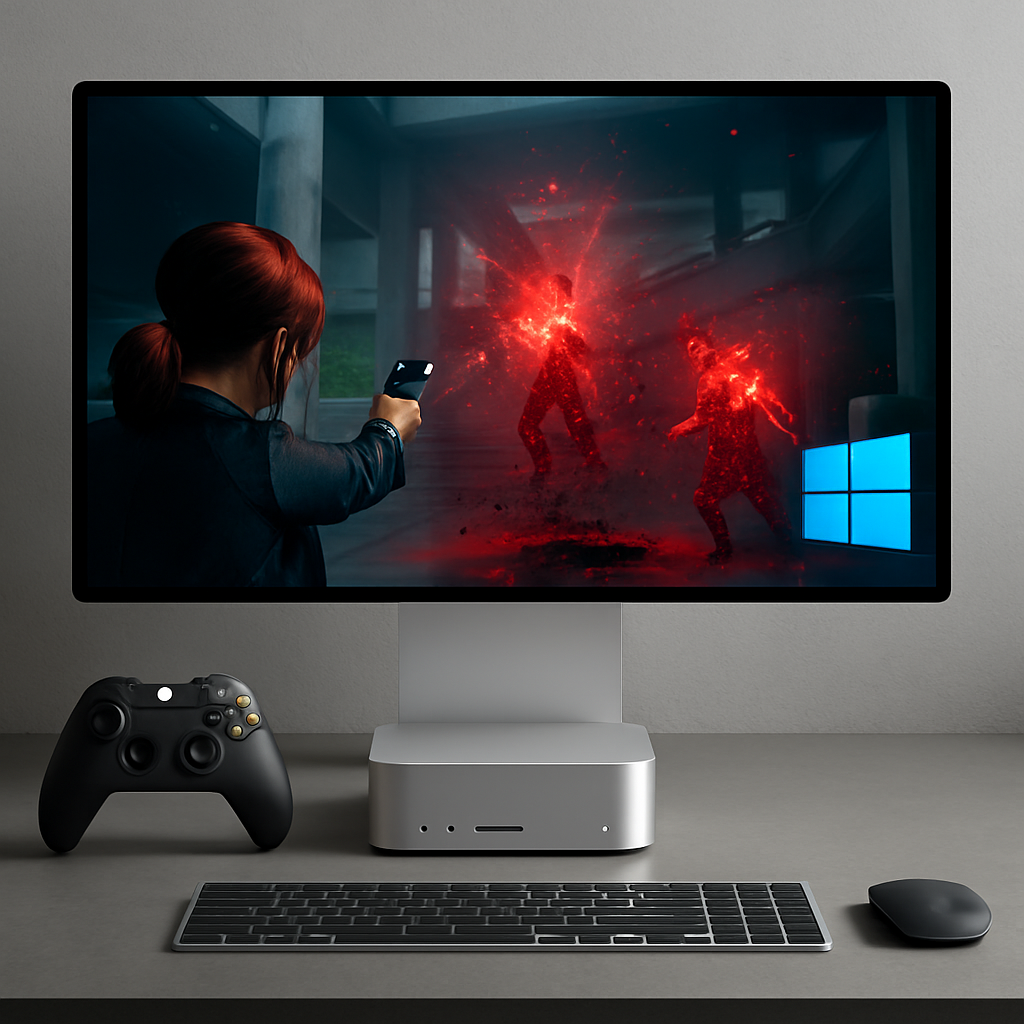
The new Apple silicon machine, powered by the M5 Max chip, is showing off some unexpected muscle when running recent Windows games. A gaming enthusiast documented twenty-plus modern titles—including Gears of War E-Day—running impressively on the M5 Max Mac Studio using various compatibility tools. The results suggest Apple’s workstation-class Macs are more versatile for gamers than previously assumed.
Putting M5 Max Mac Studio Through Its Paces
The test involved about 17 modern Windows games. While settings varied, one standout title—Gears of War E-Day—performed exceptionally well. That success came using non-standard tooling approaches to get Windows-only games running smoothly. The tech being used isn’t the standard Proton solution many Linux users leverage; instead, custom setups were needed for different games, with varying degrees of tweaking to get them operational.
What Makes It Work
M5 Max’s architecture—built for high-performance workflows—is clearly contributing to surprisingly strong frame rates and responsiveness in titles not natively built for macOS. Rather than relying on native ports, this experiment used compatibility layers or wrappers that translate Windows game calls into something macOS can handle. For some games, minimal performance loss was observed; others needed more adjustments before reaching playable performance. Key to this experimentation was identifying which tools worked best with which titles.
Not all games behaved the same under this setup. Some ran with near-native fluidity, while others struggled due to lack of optimization or more aggressive graphics demands. The desktop-class GPUs inside the Mac Studio helped offset these hurdles. Audio, input, and display functions generally kept up well when using proper support tools.
Broader Implications for Mac Gaming
This isn’t just a niche experiment. For years, Apple’s Macs weren’t considered viable Windows gaming rigs. Native game support and developer attention were limited. But with Apple silicon’s increasing performance envelope, more users are exploring ways to play Windows titles on Macs without dual-booting or using full virtualization. The success here pushes the conversation forward: Macs are becoming more capable gaming machines even for multiplatform gamers who tend to live in the Windows ecosystem.
However, there are caveats. Setup complexity varies widely across games. Controller support, graphics fidelity, and input latency may have to be compromised. For users who want simplicity, consoles or high-end Windows PCs might still be better suited. But for those already entrenched in the Mac world and craving more game variety, this opens up promising possibilities.
Expectations heading into the future need adjustment. If developers or Apple decide to improve compatibility tools, or even enable better official support for Windows-origin titles, the Mac could claim a small but meaningful slice of the gaming market. For now, though, this experiment reminds us that the Mac Studio with M5 Max isn’t just for creatives and developers—it’s ready to game too.