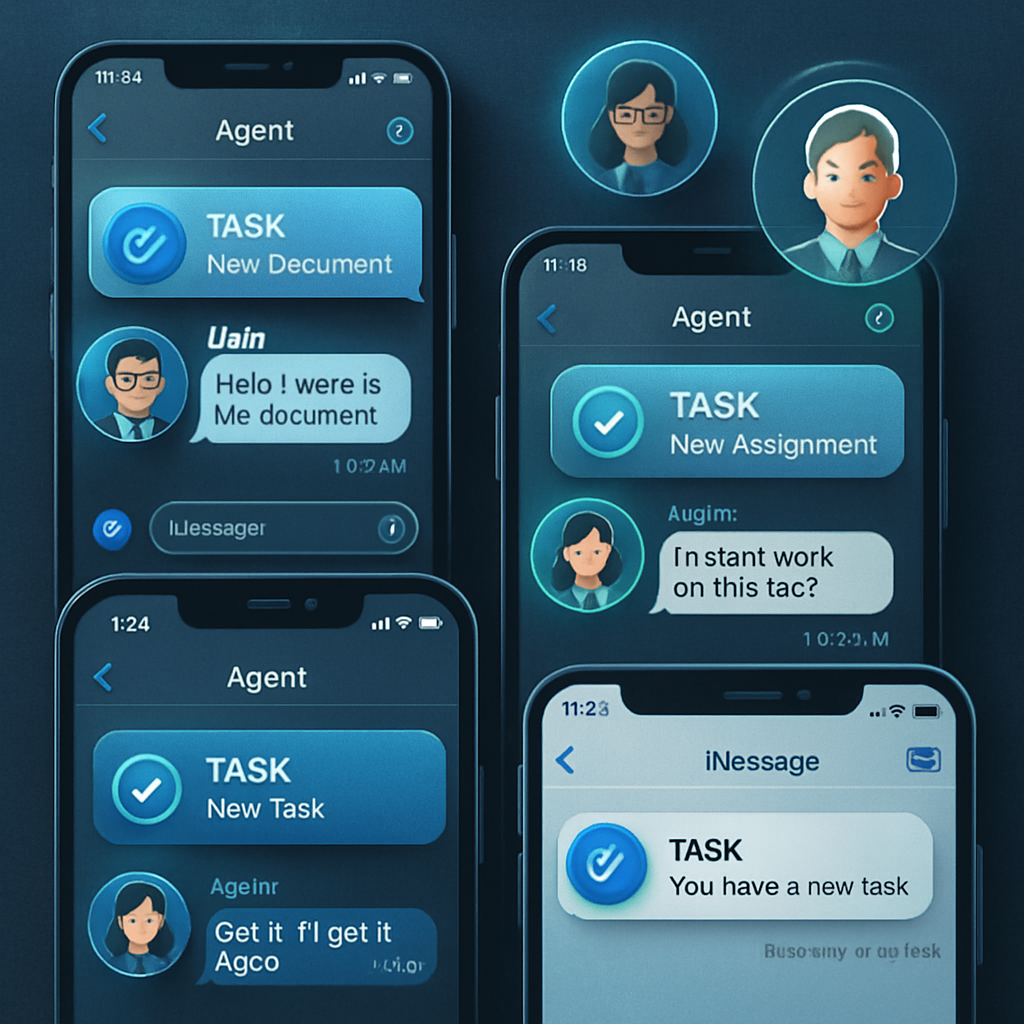
Messaging just got a major upgrade. Rather than downloading yet another standalone assistant, a new breed of AI agents is emerging—ones you can text like a friend. These systems remember context, integrate with your existing apps and services, and carry out tasks ranging from scheduling and travel planning to managing family life and content creation.
What’s Driving the Rise of Text-Based AI Agents
These agents aim to reduce app fatigue by living where users already spend time: messages. Whether it’s SMS, iMessage, WhatsApp, Telegram, or RCS, these assistants can interpret a simple message, decide what needs to be done, and then act—adding meetings to calendars, sending reminders, researching topics, or even booking flights. They are built to remember past interactions, maintain context, and operate across multiple platforms so you won’t need to switch apps constantly.
One standout is Instinct. After raising $1 billion in its latest funding round, it now carries a valuation of $10 billion. It allows communication via text or voice and connects to tools like email, calendars, and Google Workspace. It recently introduced its own email address so it can manage tasks like signing up for services, contacting businesses, or handling subscription cancellations without clogging your inbox. Contacting vendors or placing calls are also features being rolled out. Though still in private beta, people are using it for everything from grocery shopping to trip planning.
Other Notables You Should Know About
• Caddy lives in iMessage and Android’s RCS. It sifts through conversations and emails, surfaces things that need action—appointments, follow-ups, reminders—and adds them to your calendar. Public beta since April 2026.
• Comma spans messaging apps like Signal, Telegram, and WeChat, along with computers and browsers. It can summarize calls, flag urgent tasks, and guide you through what needs attention. Free to start and open source.
• Fambot bridges family life: school, sports, meals, and daily plans. You get nightly summaries of the next day, and you can interact via SMS. Supports Gmail, Google Calendar, Outlook, WhatsApp; Apple Calendar is arriving. In early beta with ~$3.5M in pre-seed funding.
• Folk lets you use iMessage, WhatsApp or Telegram. Along with reminders and researching, it can run code and execute multistep tasks—useful when simple conversations aren’t enough. Free during beta; a Pro plan ($8.33/month) opens up unlimited background work.
• Martin is a general assistant via SMS, WhatsApp, Slack, or its own app. It handles calendars, emails, tasks, voice calls—all with subscription pricing starting at $21/month.
• Miso is tailored for travelers: flights, personal preferences, loyalty programs, plus live updates and suggestions; it works through iMessage and includes travel support teams.
• Family-focused agents like Ohai, Ollie, and Orbits coordinate home responsibilities—schedules, chores, meals—across members and message them reminders. Ollie also has SOC 2 compliance, signaling strong security governance.
• Pally taps into WhatsApp, Gmail, and more to keep receipts, plans, and files organized; it also offers call minutes. Paid and free plans differ in usage limits.
• Poke supports everyday tasks like smart home control, health & fitness, and photo editing. It gained attention when it became the first agent accepted on Apple Messages for Business.
• Rene acts more like another contact in your phone. It tracks conversations, sends reminders and summaries, and can perform tasks like code writing, shopping or creating slides.
• Skye isn’t just message-based—it surfaces info proactively on your homescreen: reminders, daily briefings, and preloaded context ahead of meetings. Self-funded until now; in private beta.
• Stanley supports content creators with idea generation, scripts, schedule planning, using voice notes and context from your accounts.
• Szn has business usage: handling voice notes, photos, emails, making calls, managing follow-ups. Already serving thousands of businesses globally.
• Tab lets you delegate everyday errands—sending groceries, finding gifts—through iMessage or WhatsApp. Just launched with a valuation of $300 million.
• Underdog takes privacy seriously: its AI model runs fully on your device, not in the cloud. Currently in invite-only beta and supports Mac and Windows first.
• Wajo‘s “Fo” agent includes its own email, phone number, payment card, so it can engage businesses without disclosing your credentials. Offers free basic usage, with Pro plans for heavier workloads.
Why This Matters—and What to Watch
These AI agents are part of a shift: your messaging inbox isn’t just for chatting anymore—it could become your central productivity hub. Instead of opening separate apps, you’ll tell your assistant what you need in plain text, let it act, and move on with your day. The trade-offs are more control, less friction—but also more privacy and security concerns, especially as agents connect to sensitive data and act autonomously.
What to keep an eye on: how memory and context are handled—can you trust an agent not to leak your sensitive data? Do you really get meaningful control when assistants take actions like managing emails or accounts? Also, how will pricing evolve once these assistants escape beta? Some are free or low-cost so far, but subscriptions are creeping in. Finally, watch platform integrations—especially Apple’s rules, cross-platform support, and how messaging standards like SMS, RCS, iMessage, WhatsApp shape what agents can or can’t do.