Microsoft Introduces Scout: The Always-On AI Agent Revolutionizing Microsoft 365 Integration
On June 2, 2026, at the Microsoft Build 2026 conference, Microsoft unveiled Scout, its inaugural Autopilot AI agent. This persistent, always-on assistant is designed to seamlessly integrate across Microsoft 365 applications, operating continuously without the need for user prompts. Scout signifies a transformative approach to AI integration within enterprise workflows, marking a departure from traditional, reactive AI assistants.
Introducing Microsoft Scout
Scout is the first in Microsoft’s new category of AI agents termed Autopilots. Unlike conventional AI assistants that activate solely in response to user queries, Autopilots like Scout function autonomously in the background. They monitor various signals, respond to triggers, and resume tasks without explicit user initiation. This proactive functionality ensures that Scout remains engaged, anticipating and addressing user needs in real-time.
Seamless Integration Across Microsoft 365
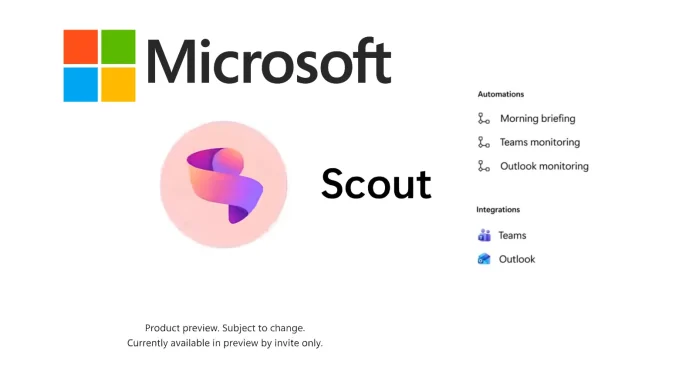
Scout is natively integrated across the Microsoft 365 ecosystem, including Teams, Outlook, OneDrive, SharePoint, and other core applications. This integration allows Scout to access and utilize data from chats, emails, calendars, and contacts, providing a comprehensive understanding of the user’s workflow. Users primarily interact with Scout through Teams, while a dedicated desktop application extends its capabilities to browsers, local resources, and Model Context Protocol (MCP) servers.
Powered by Advanced Technologies
At its core, Scout leverages OpenClaw open-source technology combined with Microsoft’s proprietary Work IQ layer. The Work IQ layer enables Scout to build and maintain persistent context over time, learning user preferences, priorities, and task requirements. This continuous learning process allows Scout to become increasingly relevant and effective, tailoring its actions to align with individual user needs.
Key Autonomous Capabilities
Scout is equipped with a range of autonomous functionalities designed to enhance productivity and streamline workflows:
– Meeting Coordination: Scout schedules and coordinates meetings across different time zones, ensuring optimal timing for all participants.
– Priority Management: It identifies and flags high-priority meetings, generating preparatory materials to ensure users are well-informed.
– Task Scheduling: Scout proactively blocks calendar time for identified deliverables, helping users manage their workload effectively.
– Risk Identification: The agent surfaces potential risks, such as stalled decisions, before they escalate into significant blockers, enabling proactive resolution.
Enterprise-Grade Security and Compliance
Security is a cornerstone of Scout’s design. Each instance operates under its own governed Microsoft Entra identity, ensuring that all actions are attributable to a specific, directory-managed actor. This approach contrasts with consumer AI tools that may use shared or anonymous service accounts.
Credential protection is enforced end-to-end:
– Scoped Credentials: Credentials are limited to the specific task at hand, minimizing exposure.
– Redacted Logs: Sensitive information is redacted from logs and diagnostics to prevent unauthorized access.
– Managed Standards: Credentials are managed under Microsoft’s first-party service standards, ensuring consistency and reliability.
Sensitive actions performed by Scout require human approval before execution, adding an extra layer of oversight. Additionally, Microsoft Purview policies, including sensitivity labels and data loss prevention (DLP) rules, are enforced in real-time before any data is written or transmitted.
Open-Source Contributions
Beyond its proprietary functionalities, Scout contributes to the open-source community by enhancing policy conformance capabilities within OpenClaw. This contribution enables organizations using OpenClaw independently to validate their environments against security and compliance requirements, providing audit-ready verification.
Availability and Access
Microsoft Scout is currently in private preview, accessible to a select group of Frontier program customers and Microsoft employees who have been piloting the experience internally. Access requirements include:
– Frontier Program Enrollment: Participants must be enrolled in Microsoft’s Frontier program.
– Intune Policy Configuration: Proper configuration of Intune policies is necessary to ensure compatibility.
– Opt-In Attestation: Users must provide an opt-in attestation to confirm their participation.
– Valid Licensing: A valid GitHub Copilot Business or Enterprise license is required for access.
Implications for Enterprise Workflows
The introduction of Scout represents a significant advancement in AI integration within enterprise environments. By operating continuously and autonomously, Scout reduces the cognitive load on users, allowing them to focus on higher-level tasks while routine activities are managed efficiently. This always-on functionality ensures that critical tasks are addressed promptly, deadlines are met, and potential issues are identified before they become problematic.
Future Prospects
Microsoft’s unveiling of Scout as the first Autopilot AI agent indicates a broader strategy to embed autonomous AI capabilities across its product suite. As Scout evolves and additional Autopilots are introduced, organizations can anticipate more sophisticated AI-driven solutions that further enhance productivity, collaboration, and security within the Microsoft 365 ecosystem.
Conclusion
Microsoft Scout marks a pivotal shift in the integration of AI within enterprise workflows. Its always-on, autonomous nature, combined with deep integration across Microsoft 365 applications and robust security measures, positions Scout as a transformative tool for modern organizations. As it moves beyond private preview, Scout is poised to redefine how businesses leverage AI to streamline operations and drive efficiency.