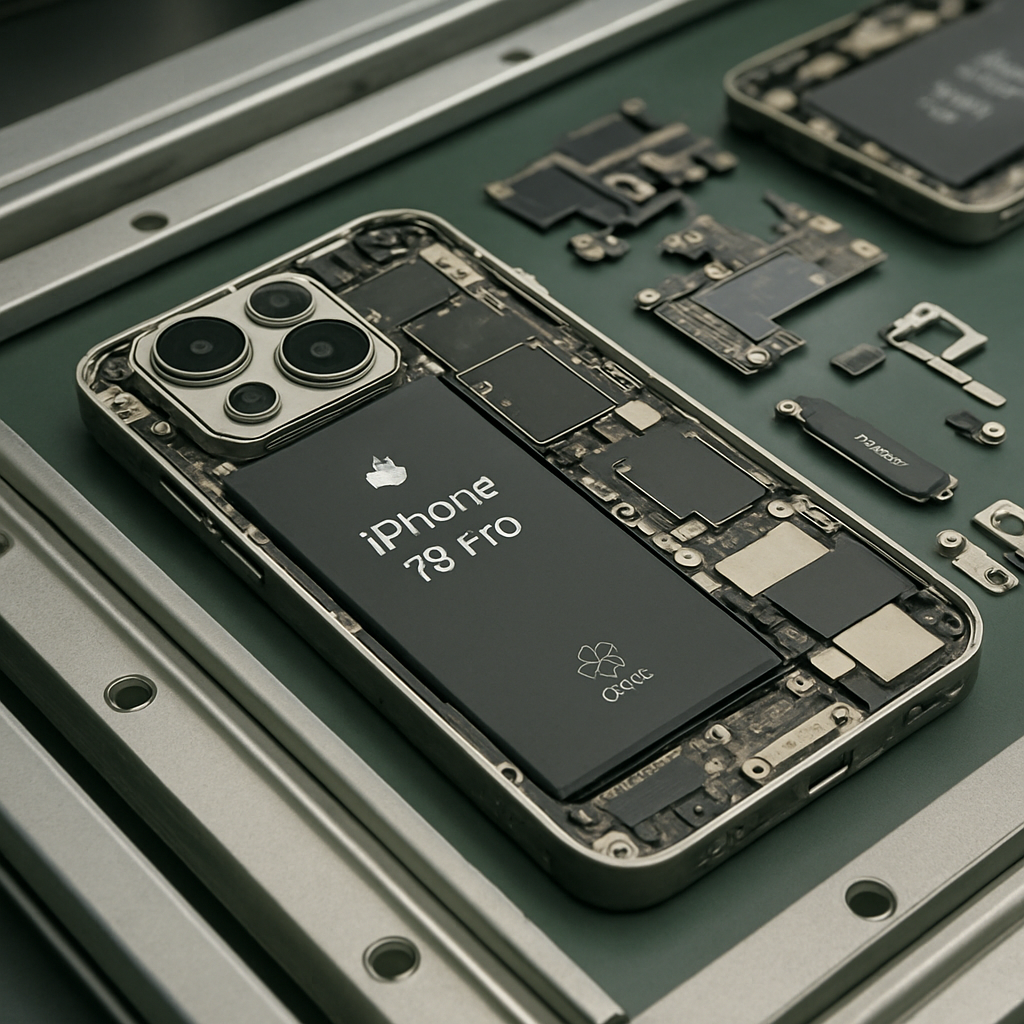
New reports allege that Apple has reduced component orders for the newly released iPhone 18 Pro, citing weak demand. In particular, suppliers were reportedly instructed to scale back production starting in early September. These claims come from supply chain disclosures indicating that parts orders are more conservative than usual. However, rumors that whole-device manufacturing has dropped are being challenged.
Conflicting Accounts from Suppliers
A report from Nikkei Asia suggests that Apple cut component orders as demand for the iPhone 18 Pro lagged. The report alleges that suppliers were told to produce fewer parts from September onward. However, the exact timeline varies depending on the source—some say the reductions happened in early September, others point to August.
While parts orders may be lower, Apple insiders indicate that the number of full-device assembly orders for the iPhone 18 Pro has not been reduced. In other words, Apple may be fine-tuning supply of internal components without scaling back the entire production line.
Factors That May Explain the Discrepancy
This year’s iPhone rollout has not adhered to the usual model. Alongside the iPhone 18 Pro, Apple introduced the iPhone Duo—a high-profile premium model—and appears to have postponed regular iPhone 18 variants until early 2027. These staggered launches could affect how and when component orders are placed.
Another point noted: pre-orders are slipping later than last year, though not as drastically as in some past launches. The slower shipping estimates could reflect supply chain delays or cautious component ordering rather than broader demand issues.
Past years have seen similar reports of declining demand shortly after product announcements. These claims often resurface—sometimes accompanied by market-moving headlines—but are seldom supported by concrete data on complete production cuts. Apple continues its practice of not publicizing how many components it orders or units it manufactures for new model launches.
Observed context: order reductions of components are typical in Apple’s yearly cycle. The company often adjusts parts orders multiple times per year to align production with sales trends. What might appear to be “orders being cut” may in fact be part of regular supply chain calibration.
Still, the element of the iPhone Duo—itself a premium offering—could shift the spotlight of demand away from the 18 Pro during the current buying window. Meanwhile, the standard iPhone 18, expected early in 2027, isn’t yet pushing component demand.
Analysis: The recent narrative of Apple cutting orders for the iPhone 18 Pro reflects patterns repeated in past product cycles. That said, component scaling is not wholesale production reduction. The introduction of staggered models—like the iPhone Duo—and delayed rollouts of entry-level variants could be reshaping both demand and component demand curves. What to watch now: whether Apple revises Pro model production based on early sales, how retail availability performs in coming weeks, and what the supply chain signals when the standard iPhone 18 engages in production. It’s this interplay of demand, timing, and product versions that will clarify if this is a blip or something broader.