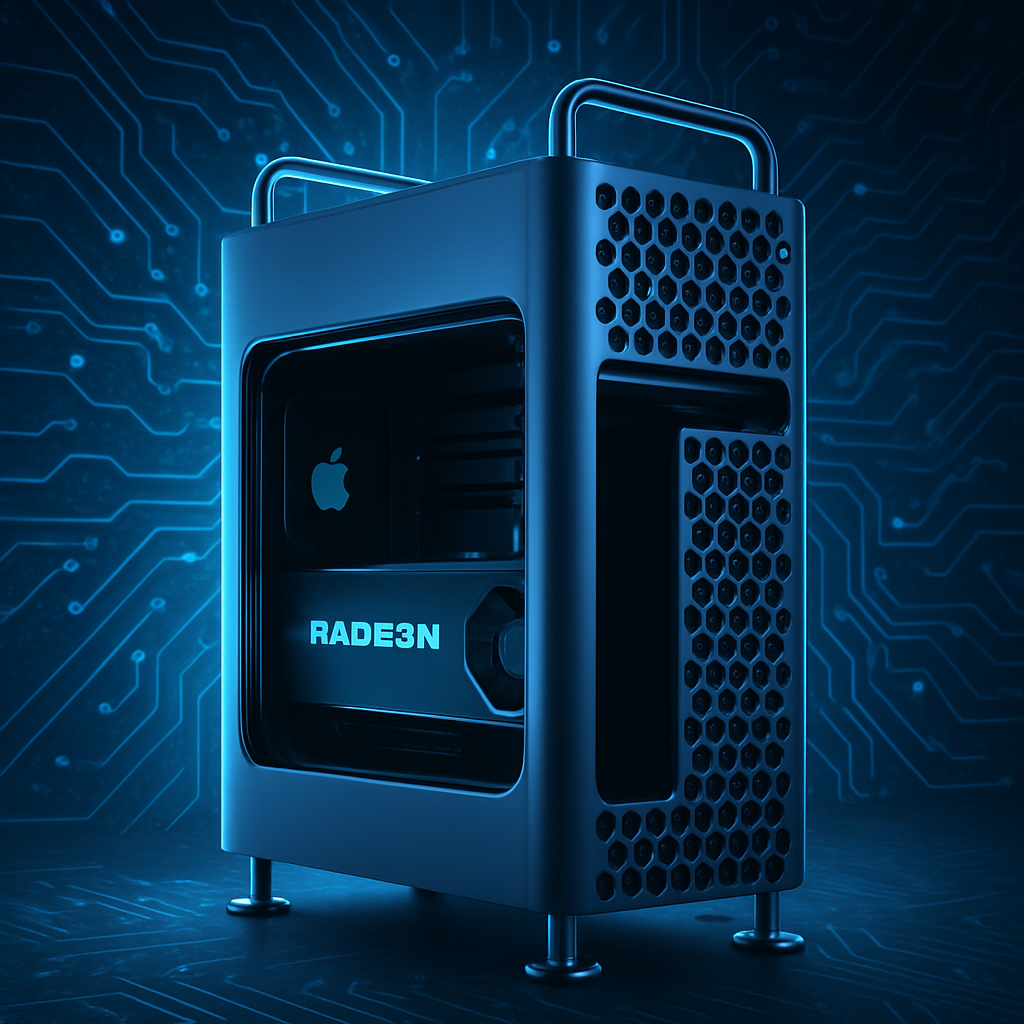
For those with Intel Mac Pro systems—especially if your setup includes an AMD graphics card—local AI model experiments are now possible. A project called ToshLLM has emerged, enabling AI workloads to run directly on Mac hardware using Apple’s Metal API. This means no cloud dependencies, no ongoing costs per token of output, and full utilization of your existing machine.
How it works
ToshLLM handles the AI computation locally by tapping into Metal for GPU acceleration. If you’re using an Intel Mac Pro with an AMD GPU, that’s enough to get started. No Apple Silicon required. It’s designed for those who want to craft or test AI models without depending on external servers or paying usage fees typical in cloud-based services.
Performance and trade-offs
While this setup democratizes access to AI development, there are trade-offs—particularly around speed. Metal acceleration on an Intel Mac Pro won’t match the performance of Apple’s M-series machines. In particular, the M5 Ultra Mac Studio remains faster when it comes to model inferencing and training tasks. But for many hobbyists, researchers, or privacy-conscious developers, the compromise could be more than worth it.
Previously, AMD-GPU Macs lagged behind Apple Silicon machines when it came to enabling efficient neural network workflows. This has made AI work on older hardware less accessible—until now. Using ToshLLM, those older rigs gain a new lease on life for local AI, side-stepping cloud costs and enhancing autonomy.
This isn’t just about having a powerful AI setup—it’s about rethinking where computation can and should happen. Offloading heavy jobs to the cloud has pros, but running AI locally offers advantages in latency, data privacy, and cost control. ToshLLM taps into those benefits, particularly for creative developers and people concerned about sending sensitive data off-device.
Whether you’re a data scientist, machine-learning enthusiast, or just curious, keep an eye on how tools like ToshLLM evolve. As Metal support improves, and as developers optimize performance, older Macs may become surprisingly capable AI workhorses. For now, it’s a win for anyone who wanted to stretch the usefulness of Intel hardware without breaking the bank—or giving up control.