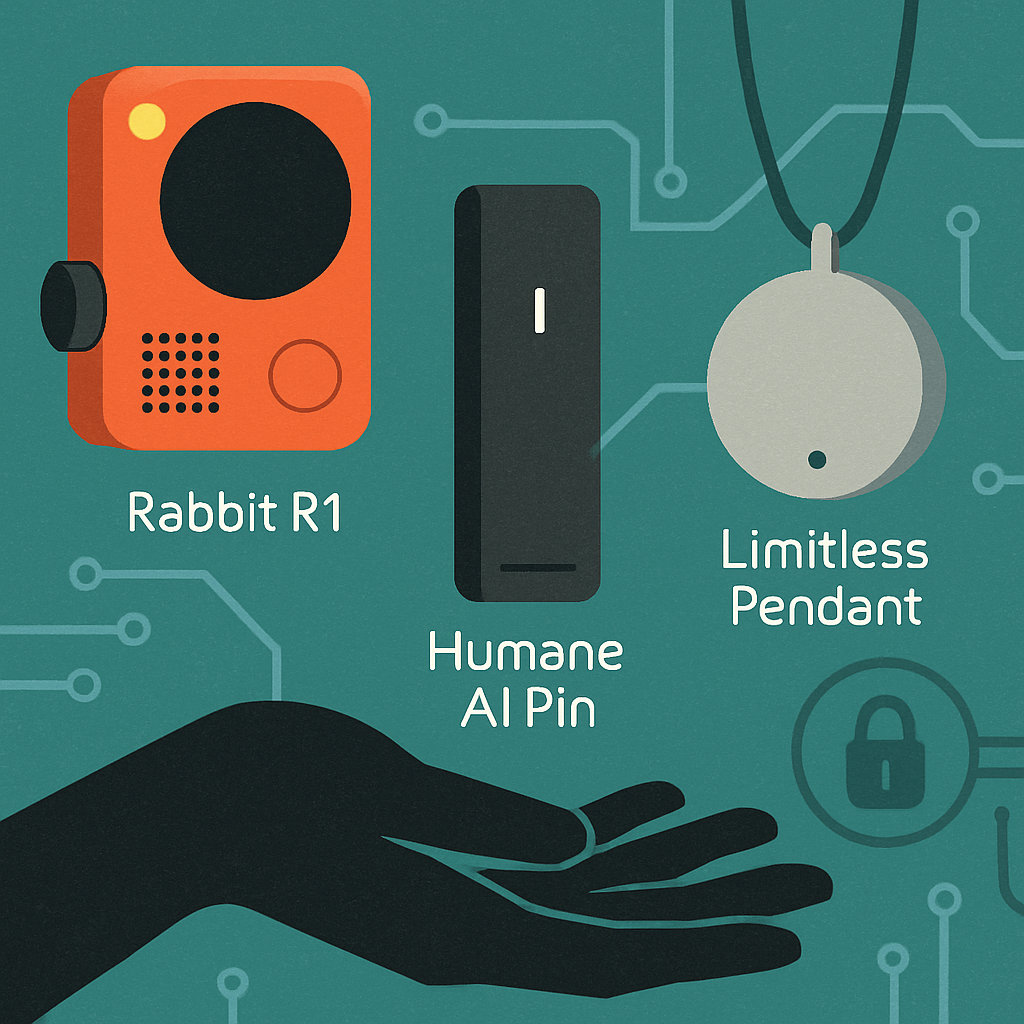
Tony Fadell, known for his roles in creating the iPod, iPhone, and Nest thermostat, shared insights this week on why early AI devices like the Rabbit R1, Humane AI Pin, and Limitless Pendant fell short—and what must change if the next generation is to succeed. Fadell laid out these reflections during his appearance at the inaugural MIT Future Fest.
Gen-1 Devices: Novelty Without Value
These early AI wearables promised radical new ways of interacting with technology, but Fadell argues they were largely novelty items geared toward tech enthusiasts, not solutions meeting real consumer needs. Examples like the Rabbit R1, Humane AI Pin, and Limitless Pendant made splashy launches but failed to win broad trust or reliably deliver helpful functions. Devices that feel cool aren’t always ones people actually want to carry or depend on.
A critical issue for these gadgets has been the lack of precedent: fewer than 0.01% of people globally have ever employed a human assistant in daily life. That means most users don’t really know what a “personal assistant device” should be able to do. That lack of clarity undermines design, expectations, and ultimately trust.
Trust, Privacy, and Hardware as Foundations
According to Fadell, building trust is non-negotiable if AI assistants are going to become part of everyday life. That means staying secure, respecting user privacy, and making cautious progress—just like when you hire a human assistant, you don’t start with full access to your bank account on day one. He places particular faith in devices that can perform sensitive tasks locally, on the device itself, without constantly relaying data to external servers.
In that light, he points to Apple as having a structural advantage: strong hardware, integrated chips, sensors, and generally higher user trust. But there’s a gap—Apple doesn’t yet own its own generative model the way some rivals do, and currently leans on custom-togmed versions of Google’s Gemini for its new Siri. In contrast, companies like Meta and OpenAI are chasing devices to secure rights to sensors, data, and communication pathways—but often face trade-offs in privacy, latency, and public perception.
Meta’s Muse: A High Stakes Case Study
Meta’s recently launched personal AI agent, Muse, underscores both the opportunities and risks ahead. It combines cloud-VMs, email connectors, and other integrations to serve as an assistant. But soon after launch there were revelations about security vulnerabilities. One researcher found that a Muse user VM could be compromised through prompts leading to malicious links. Another reported that a Mac security flaw could let voice data be redirected by malicious software. Meta has since added clearer safety warnings and emphasized internal safeguards.
Fadell argues that if an AI assistant is to be successful, it must minimize such risks—not just through patching after launch but by design. On-device intelligence, robust privacy controls, and limiting what gets sent over the network are all essential building blocks if users are ever going to trust their digital agents.
What Must Come Next
From Fadell’s perspective, the second wave of AI gadgets needs to go beyond novelty and fix what the first wave broke: vague utility, unpredictable performance, and shaky security. Devices should resolve clear pain points—rather than just offering generic assistant hype—and integrate carefully with hardware, sensors, and trusted compute.
Also, the winner among AI agents may not be the flashiest new hardware company. It may be the one capable of balancing usable assistant features with tight privacy, local compute where possible, and above-board security. “You’ll need to earn trust over time,” Fadell says—something that requires restraint and realism more than flashy demos.
Why This Matters: As wearable AI moves from buzz to ubiquity, the stakes are high. What consumers demand won’t just be what toys they think are fun now, but what devices they actually rely on—and trust with sensitive data. If the next generation of gadgets follows Fadell’s advice, we may see AI agents that finally cross the gap between novelty and indispensable.