Google has updated its assessment of what it would take to build orbital data centers, determining that thousands of flights of SpaceX’s Starship rocket would be necessary before this becomes feasible on a large scale.
What Google’s Suncatcher is Testing
Today, Google launched its prototype orbital compute satellite, part of its Project Suncatcher program, aboard a SpaceX vehicle from California. The satellite carries one of Google’s Tensor Processing Units (TPUs), a type of chip often compared to Nvidia GPUs, to check how it tolerates space conditions—including power delivery, cooling, and exposure to cosmic radiation. Built by Planet Labs, this satellite will run models and computations in bursts of 15 minutes to help the team understand how thermal and power constraints affect performance. Google and Planet Labs are also planning a more advanced dual-satellite demo for next year, which will include laser-based communication between spacecraft.
The Launch Frequency Challenge
Google’s researchers published a peer-reviewed white paper in Joule that provides detailed projections around orbital data centers. Their model includes a so-called “learning curve” for SpaceX’s launch costs—anticipating cost reductions of roughly 20% annually based on Falcon 9’s history, aiming for launch costs near $200 per kilogram by 2035. To hit those savings, Starship would need to loft about 370,000 metric tons of payload into orbit over the coming decade. Given assumptions about Starship’s capacity (around 200 metric tons per flight), Google estimates that requires nearly 1,800 launches between now and the mid-2030s—about 180 per year.
That’s a steep increase from Starship’s current rate, which has never exceeded five flights in a single year. While Elon Musk has suggested the vehicle could one day fly hourly operations by 2029, substantial technical, regulatory, and operational hurdles remain.
Is the Hardware Ready?
A key concern for Google is whether TPUs will survive in orbit. Early radiation tests in particle accelerators showed more errors when chips were exposed more realistically, but the team believes the error rate remains low enough for most inference workloads over the planned five-year lifespan of a satellite. For huge training tasks running across thousands of chips, greater error rates still pose challenges. Overall, Google sees its chips as capable of running inference operations reliably in space under current shields and error correction techniques.
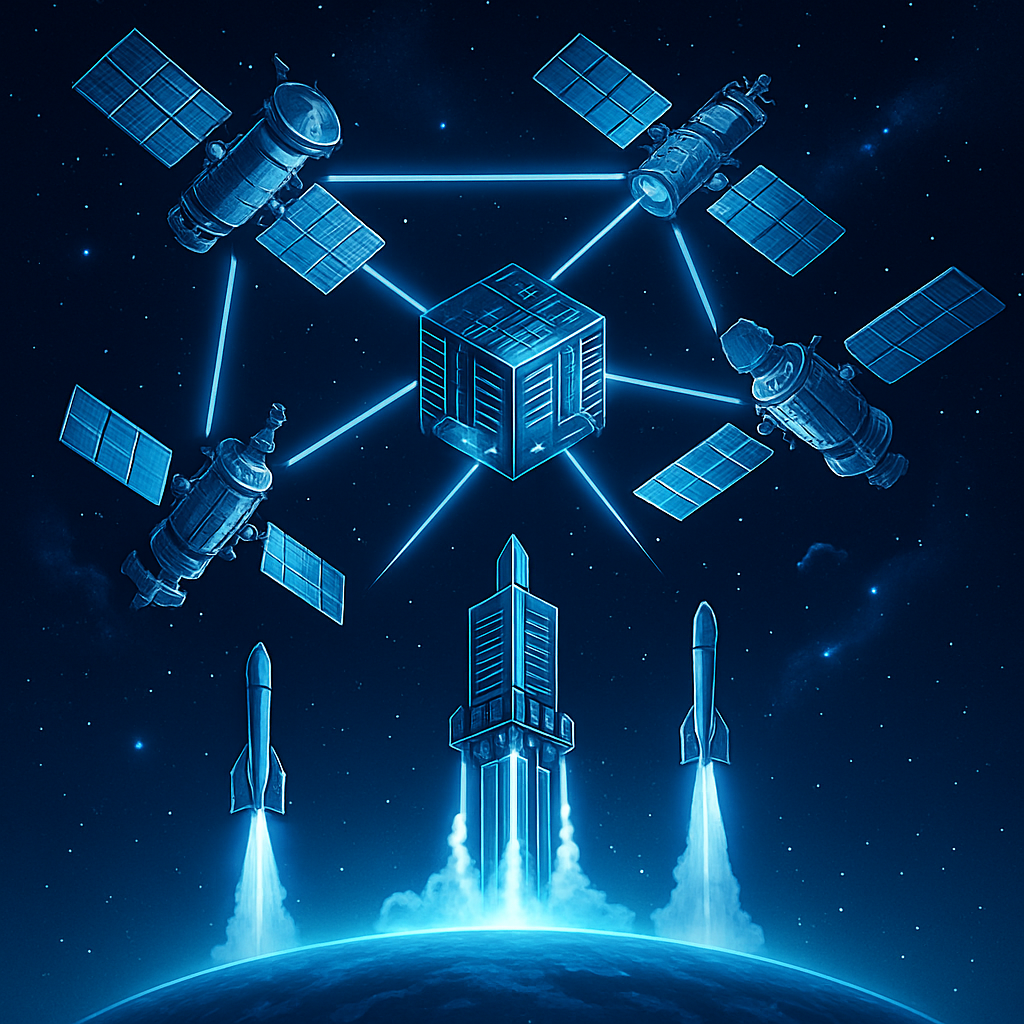
Besides hardware resilience, Google is working on satellite architectures: the company anticipates an orbital data center made of 81 satellites flying in tight formation, able to work together to handle future AI workloads efficiently with minimal latency.
Despite the considerable launch requirement, Google’s white paper emphasizes that the study isn’t meant as a full economic forecast but rather as a foundation for what’s technically needed for next-gen cloud infrastructure in space.
What This Means
This analysis underscores how starry ambitions for cloud computing beyond Earth depend not just on chip and satellite tech but heavily on launch economics and scale. Achieving cost-per-kilogram targets, securing frequent, reliable rocket flights, and building durable AI hardware for the harsh conditions of space are all essential. What to watch: whether SpaceX can dramatically scale up Starship flights in the next few years, and whether Google or others can close the gap between near-earth testing and real-world orbital operations.