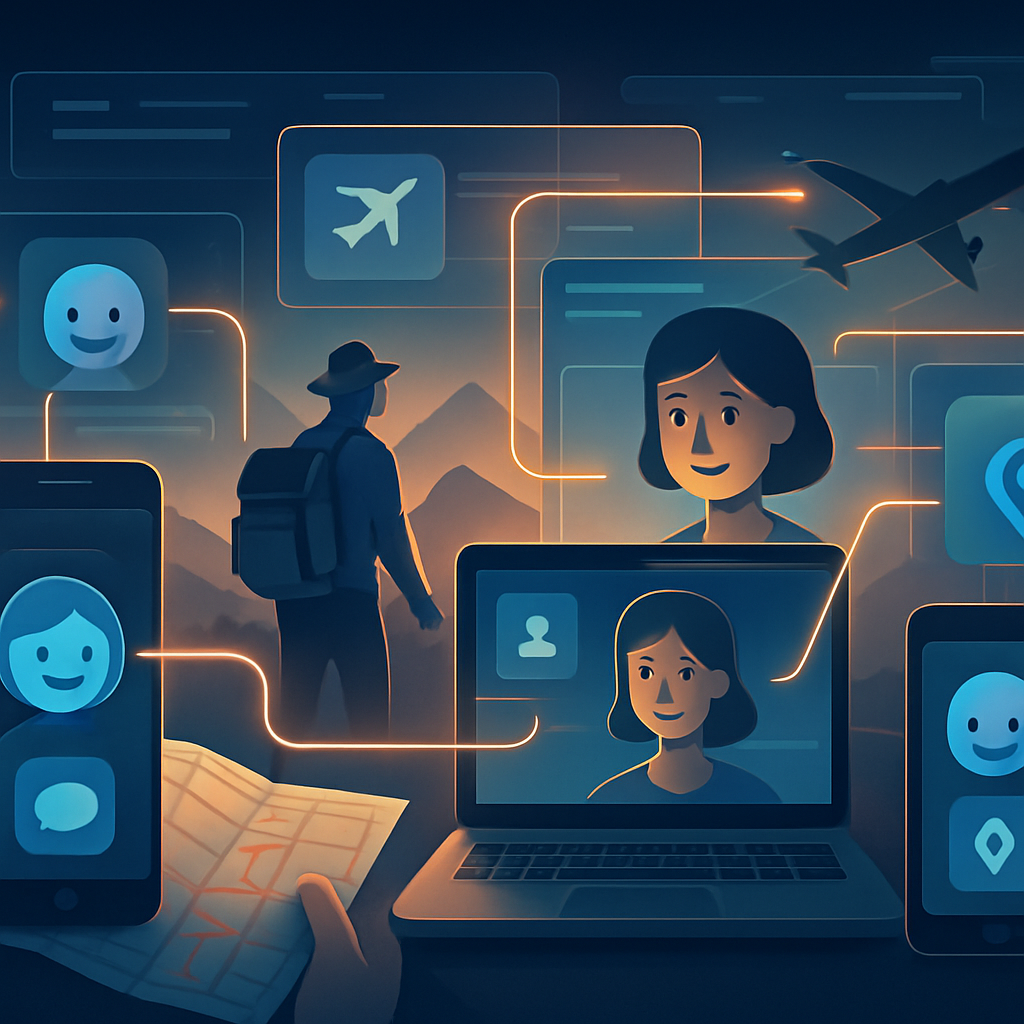
Airbnb has taken a bold step in its fall update by introducing AI-powered search—the kind that marks a shift in how travel discovery happens. CEO Brian Chesky, speaking over Zoom, emphasized that while this new search feature is a step forward, chatbots alone aren’t the future of e-commerce or travel planning. Chesky believes existing interfaces—chat-based and graphical—don’t yet strike the balance needed for both browsing and booking.
The limits of chatbots & the rise of hybrid interfaces
Chesky argues that chatbots are inefficient for tasks like browsing vacation rentals precisely because they force users into a conversational loop—presented with options one at a time, having to respond repeatedly before reaching a decision. But he also sees the current Airbnb search as only a first version. What’s coming next, he suggests, is something between today’s AI and purely conversational tools: interfaces that fuse generative and deterministic elements.
Beyond solo interaction, Chesky says Airbnb must support “multiplayer” AI: tools that let groups plan together. Families or travel companions should be able to browse, compare, verify, even message hosts together—not piecing everything together after the fact.
Building an OS for agents & interoperable apps
One of the boldest parts of Chesky’s vision is that we’re on the verge of needing an AI-dedicated operating system. Currently, apps are being infused with agent-like features inside iOS, Windows, Android—but existing systems weren’t built for that structure. Chesky says agents, apps, and user interfaces must operate at a lower level—kernel level—so they can properly interoperate.
He dismisses the idea that future UIs will be voice or typing only, or entirely generative. Design still has a role in shaping interfaces that are useful and intuitive. In his view, AI agents should work well together—within a single platform and across platforms. Airbnb plans to make its app more “agentic,” adding developer tools, richer UI controls, and voice-activated agents this fall.
Chesky admits that consumer AI hasn’t yet matured—it still falls short in many real-world experiences. He believes the path forward requires agent-as-app, robust SDKs, and interoperability. When agents can seamlessly exchange information, offer deep interface control, and support group dynamic, consumer AI may finally live up to its promise.
In Chesky’s words, the dominance of Apple and Google means that unless someone builds a platform designed from the ground up around agents, we’re simply going to see apps with agentic features, rather than fully formed agents that talk to each other.
Airbnb is also pushing into voice agents, which Chesky says will soon factor into both search and customer service. Internally, AI has helped the company ship features faster and reduced Chesky’s need for meetings—making information access quicker and more autonomous.
What this means: Airbnb is preparing for an era in which AI agents are not simply add-ons but the infrastructure. Interfaces will become more adaptive; apps will evolve into ecosystems of agents. How users interact, collaborate, and explore will be reshaped. Chesky’s challenge is whether the industry builds the core layers—the SDKs, operating substrate, tools—that enable agents, apps, and interfaces to grow together. This vision is ambitious—and whether it becomes real depends on companies’ willingness to rethink what software platforms actually are.