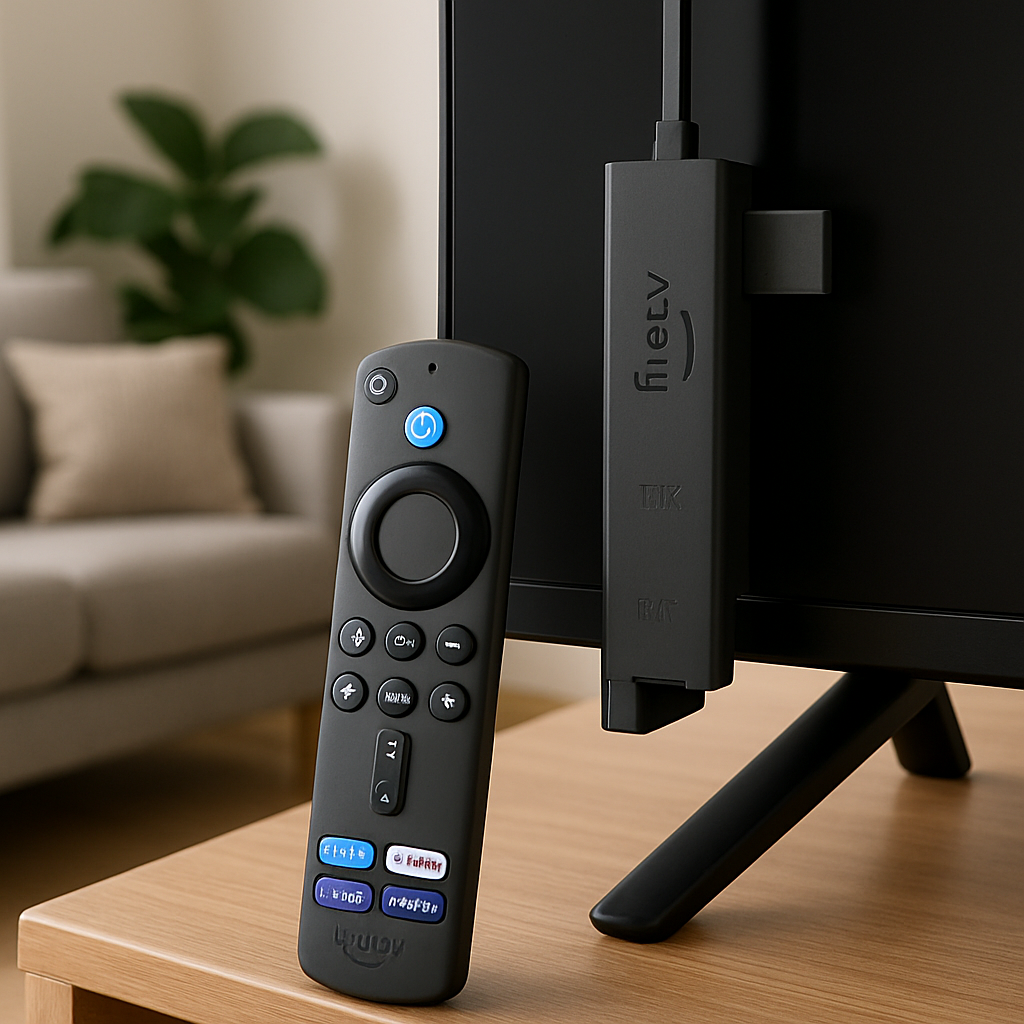
Amazon has just unveiled its latest Fire TV Stick 4K, introducing a significant software shift while bringing modest hardware improvements. The biggest change: this streamer will no longer use Android. Instead, Amazon is switching to its own Vega OS, a change that cuts off sideloading support—a longtime feature among power users. The new Fire TV Stick 4K is available now in the U.S. for $59.99, with a special Prime Day deal priced at $29.99.
From Android to Vega OS — What’s Different
Vega OS replaces the Android-based system in Amazon’s Fire TV lineup. Amazon claims it’s 20–40 percent faster in most tasks compared to other 4K streaming devices and TVs. The switch to its own operating system allows Amazon to streamline updates and performance, but it also means giving up features many users have come to expect—like sideloading apps.
Hardware Tweaks & Remote Redesign
On the hardware front, the new Fire TV Stick 4K can now be powered directly using a TV’s USB port, eliminating the need for a wall outlet in many setups. Amazon is also debuting a redesigned remote: it has an asymmetrical shape, with a flat top and rounded base, featuring a metal Home button to help it stand out by touch. It includes a customizable “Star” button and adds IR controls for managing devices like soundbars. The remote is also being sold separately for use with other Fire TV devices.
Sideloading Support Removed—Big for Power Users
Perhaps the most controversial change is that sideloading—a workaround for installing non-official apps—will no longer be supported. While Vega OS has already gained over 2,000 apps this year, and Amazon says more are coming, the removal of sideloading draws a hard line in how “open” the device remains. For many enthusiasts, that change could be a dealbreaker.
Priced at $59.99 in the U.S. and rolling out today, the Fire TV Stick 4K lands just in time for Amazon’s upcoming Prime Day discounts, where it will be $29.99 for a limited time. That timing and pricing make this one of Amazon’s more aggressive launches in recent memory.
The transition away from Android follows broader shifts in Amazon’s Fire TV strategy: hardware updates have been incremental lately, while the company has pushed harder on content and platform control. Removing sideloading arguably tightens the user ecosystem, giving Amazon more control over what’s installed and what customers see.
Whether Vega OS delivers the performance gains Amazon promises will be a close watch, especially now that customization outside of the Amazon-curated app store is restricted. For users who value flexibility and sideloaded apps, this new Fire TV Stick may feel like a strong upgrade—or a frustrating compromise. Power users and streaming enthusiasts should try it first hand before making the jump.
What this means is clear: Amazon is making a decisive bet on control and smooth performance over flexibility. In a streaming market crowded with Roku, Apple TV, Google TV, and competitors running Android, having your own OS gives advantages—but at the cost of certain freedoms. Going forward, how deep Amazon’s closed approach goes, and how users react, could reshape expectations for what streaming devices should be.