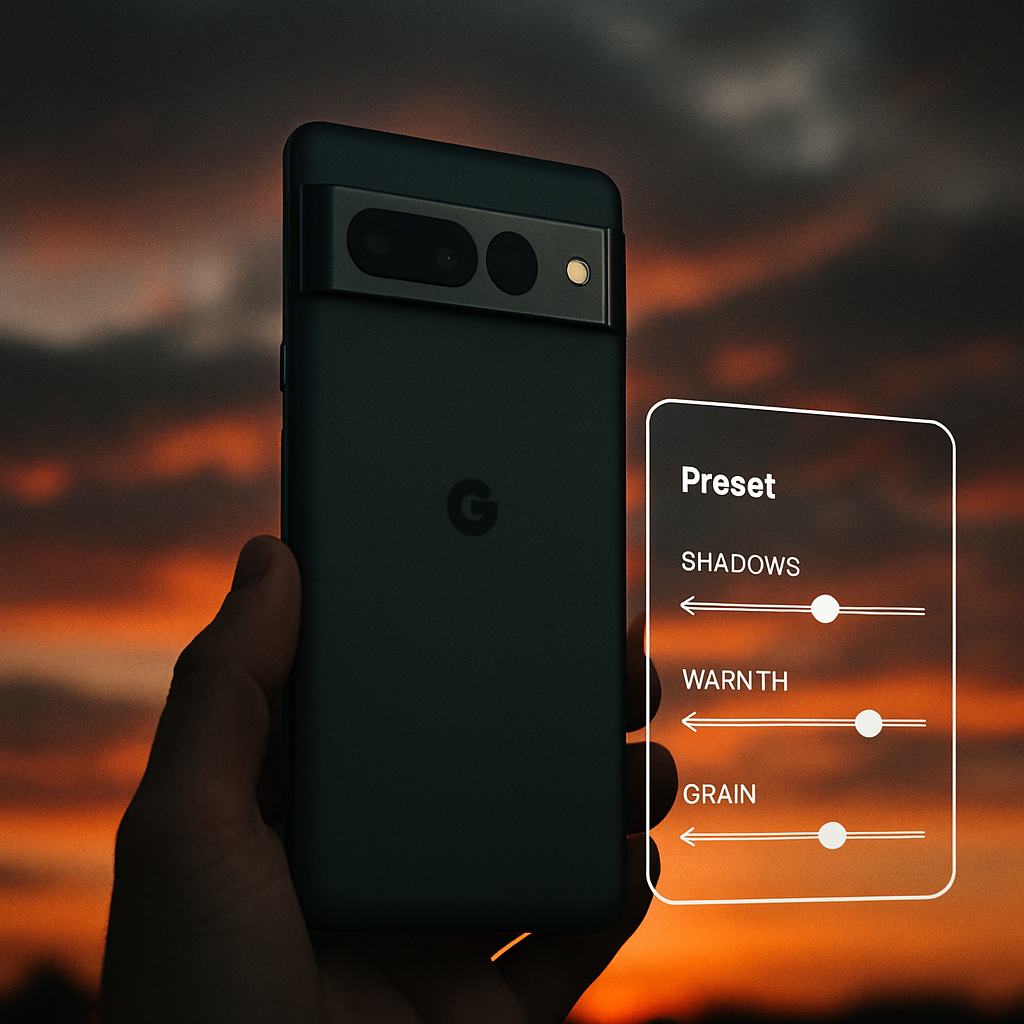
Google’s latest Pixel 11 Pro is drawing attention not just for new hardware but for two fresh camera tools that may redefine what buyers get excited about: Camera Looks and Magic Capture. These features aim to shift the Pixel’s identity from computational perfection to aesthetic control.
From Early Pixels to More Intentional Imagery
Historically, Google’s Pixel and Nexus phones leaned on powerful software—think HDR+, multi-frame processing, de-noising—to make shots pop. But that came with trade-offs. Photos often looked polished but lacked character. Now, Camera Looks gives creatives control by letting them choose styles like Natural, Shadows, or Vanilla before taking a photo. Customization spans warmth, tint, grain, shadow, highlights, and vibrance.([9to5google.com](https://9to5google.com/2026/08/25/the-real-reason-to-buy-a-pixel-11-pro/))
Magic Capture takes a different route: instead of trusting users to press the shutter at the ideal moment, it records video and picks the best frames using AI. The system sifts through hundreds of frames, then uses on-device and Gemini AI processing to surface vibrant, sharp images—even from imperfect video moments.([dpreview.com](https://www.dpreview.com/articles/we-tested-the-pixel-11s-magic-capture-and-camera-looks-heres-how-the-photos-look/?utm_source=openai))
Why These Might Be Pixel 11 Pro’s Key Selling Points
On the hardware side, the Pixel 11 Pro introduces a revamped 5× telephoto sensor and a larger main sensor—both with substantial improvements in low-light sensitivity and zoom performance.([9to5google.com](https://9to5google.com/2026/08/12/google-pixel-11-camera-whats-new/?utm_source=openai)) But the standout isn’t just better optics; it’s how Google is handing you both fluid tools and artistic control.
Camera Looks bridges a gap some users have felt since Apple launched its Photographic Styles—letting styles be applied in the viewfinder rather than added in post-processing.([9to5google.com](https://9to5google.com/2026/08/25/the-real-reason-to-buy-a-pixel-11-pro/)) Magic Capture, meanwhile, stands out for its ability to offer meaningful AI-assisted selections from video captures—ideal for real-world use where timing isn’t perfect.([dpreview.com](https://www.dpreview.com/articles/we-tested-the-pixel-11s-magic-capture-and-camera-looks-heres-how-the-photos-look/?utm_source=openai))
These features are especially compelling in a market fatigued by incremental hardware upgrades. Most Pixel users may not care deeply about raw zoom capabilities or display specs—but wanting better control over final images? That hits hard. It’s also a signal: Google hears the criticism about overly processed and homogenized Pixel photography.
Even with all the noise around flagship specs—telephoto sensors, AI chips, display bumps—Camera Looks and Magic Capture may be the features that sway buyers looking for emotional connection and creative agency in their phones.
Trade-Offs & What’s Missing
Not everything is available across the board. Magic Capture, Pro-Stable video, and the full zoom range lean heavily in favor of Pro and Pro XL models. The base Pixel 11 still gets Camera Looks and many of the same software innovations, but drops some optical advantages.([androidauthority.com](https://www.androidauthority.com/missing-camera-features-pixel-11-3695959/?utm_source=openai)) For folks who prize hardware—zoom quality, brighter sensors, low-light performance—the Pro still provides meaningful upgrades.([9to5google.com](https://9to5google.com/2026/08/12/google-pixel-11-camera-whats-new/?utm_source=openai))
Price also matters: features are irrelevant if the jump to Pro puts it beyond what you want to spend, especially when the base Pixel 11 already includes some of the new software magic.([androidauthority.com](https://www.androidauthority.com/pixel-11-vs-pixel-11-pro-3697640/?utm_source=openai))
In short: if you’re purchasing the Pixel 11 Pro, you’re buying into a more deliberate camera experience—one about style and control, not just sharper numbers.