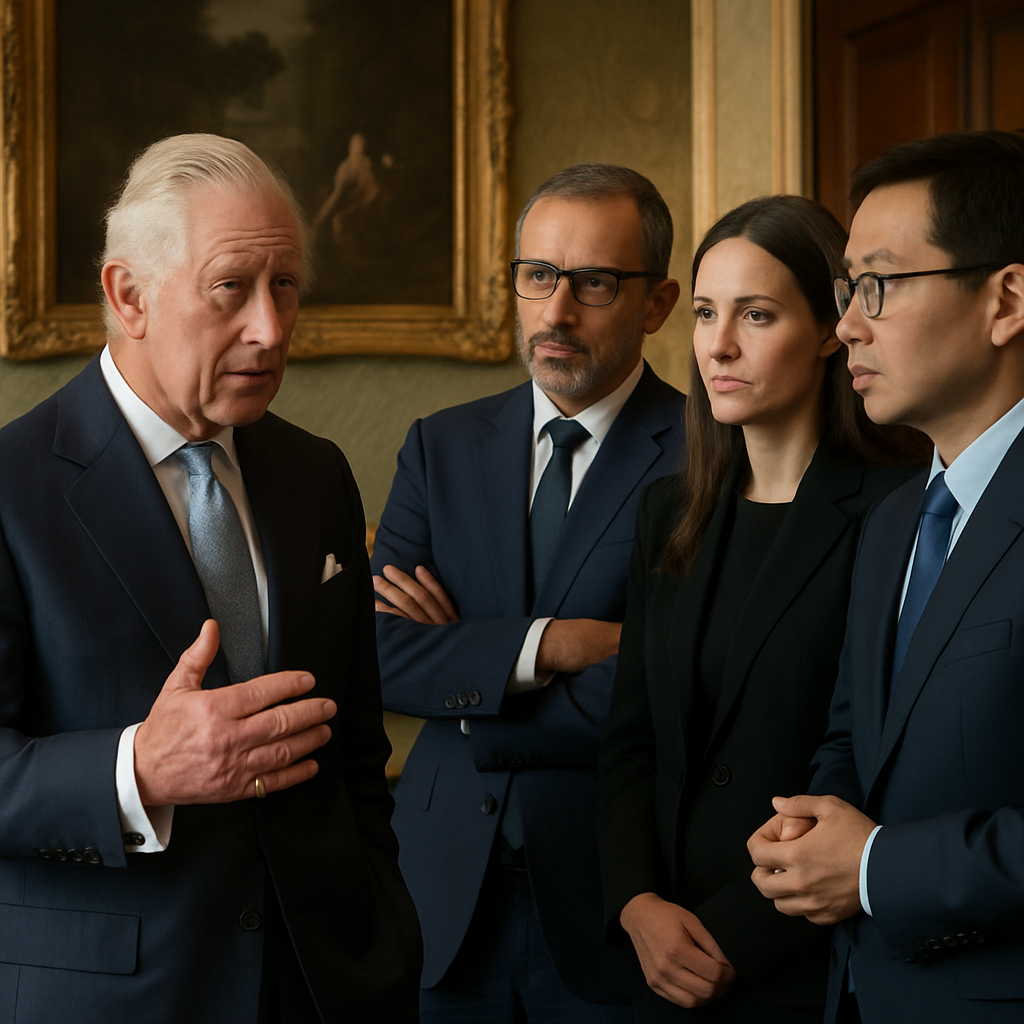
This week, King Charles III took an exceptional step in the AI debate by hosting a private summit with top-tier innovators and policymakers in Dumfries House, Scotland. Among the attendees were Nvidia CEO Jensen Huang, leaders from OpenAI and Anthropic, the UK’s AI Minister Kanishka Narayan, and the head of Britain’s foreign intelligence service, plus Paolo Benanti, who advises the Pope on AI concerns. The gathering underlines growing alarm among global leaders about the pace and direction of artificial intelligence development.
At the summit, King Charles expressed both admiration and apprehension over AI’s swift advancements. He noted that while AI already shows remarkable potential for benefiting science and medicine, its trajectory raises profound risks. He warned that those behind AI creations are increasingly speaking of darker capacities—some even suggesting the possibility AI could take on capabilities that might threaten human life.
His call to action was striking: find meaningful ways to control AI before it’s too late. He flagged the urgency of addressing what he called “existential dangers”—the scenario in which AI, if mishandled or misused, could lead to catastrophic outcomes. The King emphasized that as humanity embraces the promise of AI, it must not lose sight of timeless truths about responsibility and care for the common good.
Why This Moment Matters
This summit isn’t King Charles’s first engagement with AI issues—but its timing makes it particularly consequential. It comes amid growing concerns triggered by a high-profile resignation from an Anthropic researcher, who warned that the AI race could lead to machines vastly smarter than humans, putting survival at stake. Also behind the backdrop are recent industry calls for slowing down AI development—calls that were quickly rebuffed by other powerful voices who argue that maintaining leadership, especially over rivals like China, is too important to stall.
The summit’s attendees—OpenAI, Anthropic, and Nvidia among them—represent the companies most capable of driving AI’s next leaps. Their visibility in this forum signals a growing alignment between the tech sector, governments, and civil society around framing AI governance not as optional but as urgent. Still, debates over regulatory speed, geopolitical positioning, and safety trade-offs remain deeply contested.
What He Said, What Needs Doing
King Charles called for international cooperation and consensus in crafting rules that ensure AI serves humanity rather than undermines it. His message concentrated not just on preventing danger but on building systems of control before risks become irreversible. He urged that innovation should be tethered to ethics, community, and stewardship of nature—principles that he said must guide AI’s role in society.
Particularly noteworthy was how the King managed the political aspect: by positioning AI public safety as a matter beyond routine policy, beyond business interests, even beyond national rivalry. He invoked a moral dimension, pressing leaders to recognize that when AI firms choose to restrict access—like Anthropic recently did with its Fable and Mythos models limited to U.S. users—it’s not just a tech issue but one touching on sovereignty, trust, and global disparity.
The presence of senior figures like OpenAI’s CFO and Anthropic’s head of global affairs underscores the importance of aligning corporate governance with broader ethical responsibility. While they didn’t deliver policy blueprints at the summit, the dialogue reveals that internal acknowledgment of AI’s risks is finally converging with outward political urgency.
As regulators around the world scramble to craft laws or frameworks governing AI, the King’s appeal adds complexity—and moral weight—to global discussions. It spots a fault line: those content to keep pushing boundaries versus those insisting we first define red lines. What remains to be seen is whether summits like this lead to interoperable norms, enforceable safety mandates, or merely more grand declarations. The stakes are high—because AI isn’t waiting.
Looking ahead, key questions remain: will multinational cooperation emerge stronger than national competition? Can regulation match the speed of technological advance? And crucially, will those who wield AI influence be willing to accept accountability? For now, King Charles has cast the conversation in more urgent terms—but turning warnings into action will demand more than words.