Security researchers have uncovered a rising threat targeting German organizations: the malware known as Sauron Loader. It’s designed to act as a secondary tool in attack chains—delivered via trickery rather than exploiting any newly found software flaw. Its arrival usually follows email spam bombardments, fake IT support phone calls, and misleading prompts that push users to run malicious commands. For many victims, the final payload is just one piece of a larger deception.
How Sauron Loader Inserts Itself
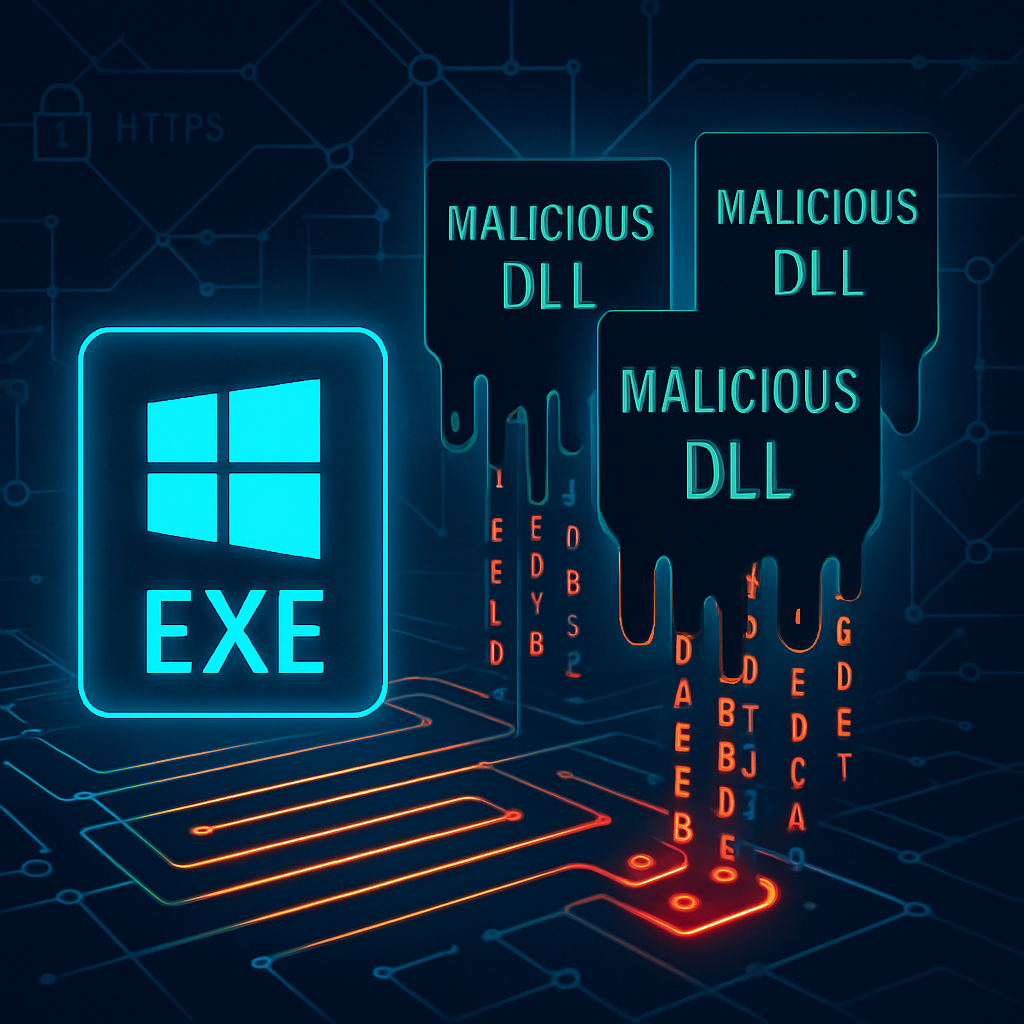
The loader uses DLL side-loading to run code that looks legitimate. In one case, a Windows installer sets up a genuine executable alongside two attacker-supplied DLL files. When the trusted executable runs, it loads a nearby library provided by the attacker. One of these malicious DLLs contains the core loader code, encrypted. Once launched, it hands off execution to a second DLL that decrypts the code in memory and takes control.
This tactic of concealing working code until runtime helps evade traditional file-based detection. There’s also evidence that the loader introduces delays during decryption—likely aiming to break automated sandboxing used in malware analysis.
After establishing foothold, the loader creates a scheduled task so it runs repeatedly, increasing its chances of long-term persistence without being obvious.
What the Malware Can Do Once Inside
Sauron Loader doesn’t just sit quietly—it can fetch and execute additional payloads, gather system details (like the PC name, Windows version, and active user), capture screenshots, and communicate via encrypted HTTPS channels.
Its network communication is carefully masked: it uses changing URL paths and multiple control servers, making traffic analysis difficult. Payload types can range from executables and libraries to scripts and installers.
In some cases, social engineering plays a critical role: flood emails, fake tech support calls, and fake “helpdesk” prompts trick users into installing the malware or performing actions that facilitate its delivery.
Detection Tips & Indicators
There are telltale signs defenders should watch for. Sudden installer activity, unfamiliar library loads under legit executables, new scheduled tasks that regularly relaunch software, and encrypted outbound connections with odd or changing endpoints—all may signal Sauron Loader’s presence.
Other red flags include unexpected contact claiming to be from IT support, especially when it follows email spamming. If asked to run a command via a “fix,” verify the request through internal IT channels.
Some technical indicators have been shared: hash values (SHA-256) for the installer, the legitimate executable used as a side-loader, and the two malicious DLLs. Filenames encountered include rnpkeys.exe, rnp.dll, tdwp.dll, and default file extraction in C:\ProgramData\keyroll. Scheduled task name “keyroll” is also notable.
Control-and-command endpoints tied to Sauron Loader have also been identified—domains crafted to change often, which complicates network filtering and threat hunting.
This threat demonstrates how malware authors are refining both technical stealth and psychological manipulation. Sauron Loader is not the kind of malware you spot because it exploits a 0-day; you see it after an email or phone call that sounds, illogically, legitimate.
—
Why this matters: Sauron Loader is a perfect example of dual-layer stealth—blending DLL side-loading, encrypted in-memory code, and socially engineered delivery paths. For organizations, this means detection tools need to shift from scanning files and known bad signatures toward behavioral monitoring, logging of scheduled tasks, and scrutiny of unexpected library loads. IT teams should also tighten helpdesk policies and educate users: in many cases, the barrier between safe and compromised is a phone call or email that just seems off. Defense must anticipate deception before the actual malware lands.