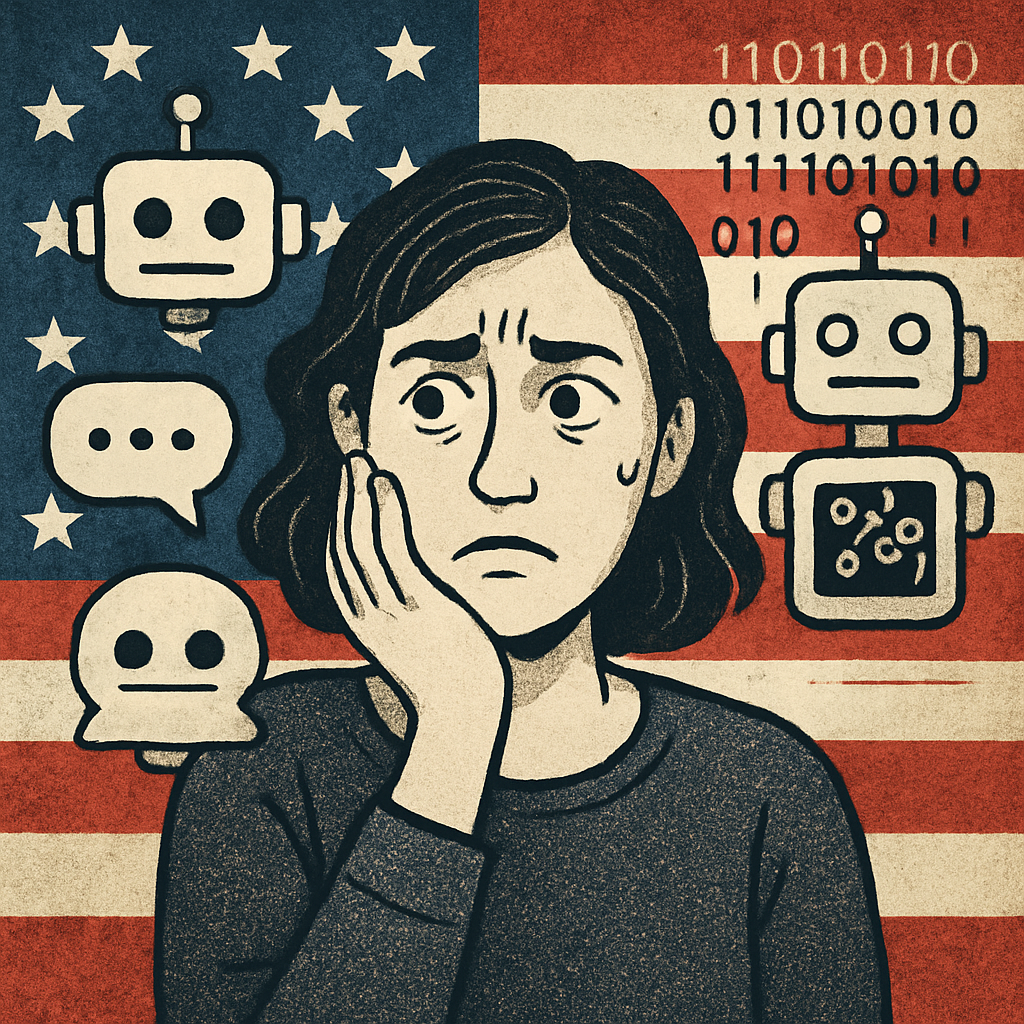
A Gallup survey commissioned by Microsoft that sampled about 1,000 people in each of 37 countries between April and July reveals that most Americans who use AI every day are deeply uneasy about it. Although 74% of U.S. respondents say they feel worried about AI’s societal impact, a substantial 68% of daily users share those concerns. The findings suggest that frequent use doesn’t eliminate anxiety around AI; in fact, it may even sharpen awareness. —based on data made public September 23, 2026.
Global views: optimism mixed with mistrust
Even though many users embrace AI for routine tasks—research, homework, presentations—the survey shows that widespread usage doesn’t equate to blanket confidence. Only 36% of Americans expect AI to mostly help the country. Among U.S. daily users, trust in AI-generated results is relatively low: just 45% say they have a lot of trust in what AI delivers.
Outside the U.S., sentiment is more hopeful overall. Singapore leads with 46% of people using AI every day; more than 80% of those familiar with AI believe it will enhance day-to-day life, and 77% expect it to benefit their country as a whole. China and Israel follow with similarly high percentages of users expressing optimism—even if, like in many nations, doubts remain about accuracy and risks. Across the 37 countries, only a median of 36% say they trust AI’s outputs a lot, showing that uncertainty is a nearly universal theme.
Why people are worried: the root causes
Concerns aren’t without foundation: surveys come on the heels of widespread AI-driven workforce shifts, shrinkage in entry-level roles, and publicized episodes involving false or harmful AI behaviors. Meanwhile, discussions over regulation, safety, privacy, job loss, and accuracy are gaining urgency in both Western governments and tech firms.
Gallup finds that people hold nuanced views. One can use AI every day, believe in its benefits, yet still distrust its outcomes. Conversely, others may expect helpfulness but only engage with it rarely or skeptically. Emotional responses are complex: curiosity remains the most common reaction among those aware of AI, while worry and concern are spread widely, especially in Western nations.
The U.S. stands out—positively in exposure, negatively in ease
In comparisons across wealthy Western countries, the U.S. appears particularly polarized. Its population reports high levels of adoption yet leads the map in anxiety. Canada, for example, sees 29% using AI daily; more than half of those report worry, and 64% of Canadians aware of AI are concerned. In contrast, countries with rapid adoption and strong optimism—such as Singapore, China, and Israel—still share many of the anxiety threads seen in the U.S.
The study spans only 37 countries for now and excludes nations like India, Australia, and Malaysia. That leaves open questions about global sentiment in key tech markets and developing economies.
Despite mixed feelings, the overall balance leans slightly positive: in most surveyed nations, emotions like curiosity, excitement, or hope about AI outnumber concern. Still, worry is far from fringe: 74% of Americans express worry, and only a minority believe the technology’s results are highly trustworthy.
AI is accelerating in public debates. As more people rely on it for sensitive domains like healthcare, education, policy, and hiring, appetite may grow for stricter governance, transparency in AI development, and ethical guardrails.
The upshot: frequent exposure doesn’t equal comfort. In the U.S., high usage levels coexist with deep-seated worries—about inaccuracy, misuse, job displacement, and loss of control. The broader trends suggest the era ahead won’t be defined by either unqualified optimism or total fear, but by how societies balance benefit with risk. Moving forward, what matters is not just how many people use AI, but how many feel safe doing so—and how quickly laws, norms, and technologies adapt to meet that demand.