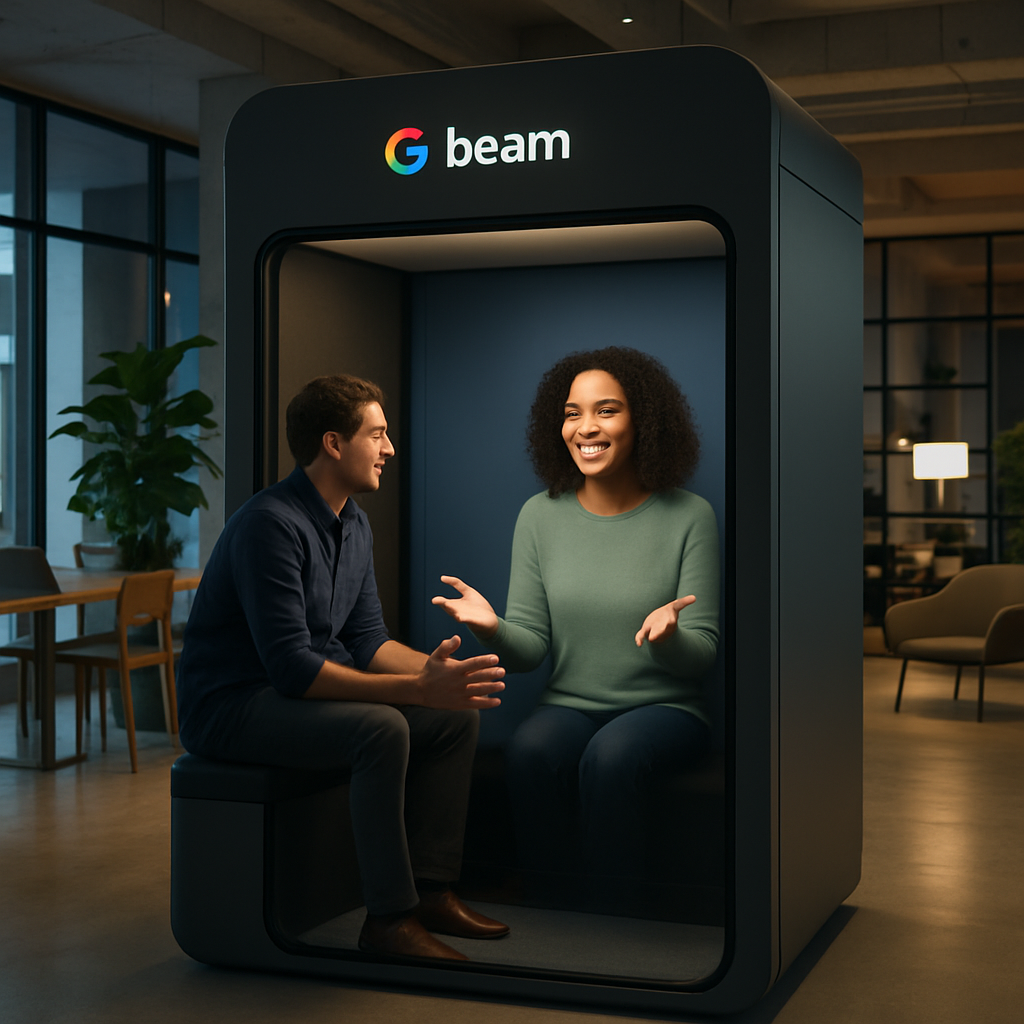
Google is bringing its Beam 3D meeting booths into shared office environments in the US via a new partnership with Industrious, a flexible workspace provider. Starting October, select Industrious locations in Atlanta, Chicago, New York City, and Palo Alto will offer bookable “HP Dimension” Beam units with full support for both Google Meet and Zoom. This marks Beam’s first entry beyond major corporate campuses.
From Enterprise to Shared Office Spaces
Launched just last year (following its rename from Project Starline), Beam has so far been installed at large firms including Netflix, Bain & Company, and Capital Group. Until now, access to Beam has been limited to large companies and internal use by Google.
During an eight-week internal test, Beam users reported feeling 50% more connected, found it 33% easier to communicate clearly, and saw a 21% reduction in the need for follow-up meetings. These early indicators suggest the 3D meeting experience may deliver more efficient communication—particularly in remote or hybrid work setups.
Global Hardware Expansion and Use-Cases
Beyond shared workspaces in the US, Google is scaling up Beam deployments to customers in Canada, the UK, France, Germany, and Japan. This rollout is managed via 18 channel partners.
In pilot programs earlier this year, distributed teams used Beam units for manager check-ins, interviews, and client interactions. That suggests the booths are intended to serve a range of synchronous work scenarios, going beyond internal meetings to include external-facing collaboration.
The upcoming Industrious locations will be the first time non-corporate or smaller-scale users can access Beam units without being part of large enterprises. Bookings will open at the listed cities starting this fall.
Beam, powered by the HP Dimension hardware, offers a high fidelity 3D video conferencing environment that projects life-size people and spaces to create natural, immersive conversations. It’s designed for organizations wanting more human presence in virtual meetings. The technology demands specialized hardware and controlled lighting and space to deliver its effects. Beam’s emergence is a response to remote work fatigue and growing demand for better virtual collaboration tools.
What makes this development notable: this shift opens Beam to users who don’t have access to corporate deployment budgets. Being able to book time at coworking locations may help smaller companies, freelancers, or external-facing teams experiment with immersive conferencing without the prohibitive investment. It also gives Google real-world feedback from wider usage, which could influence future pricing, availability, and feature refinement.