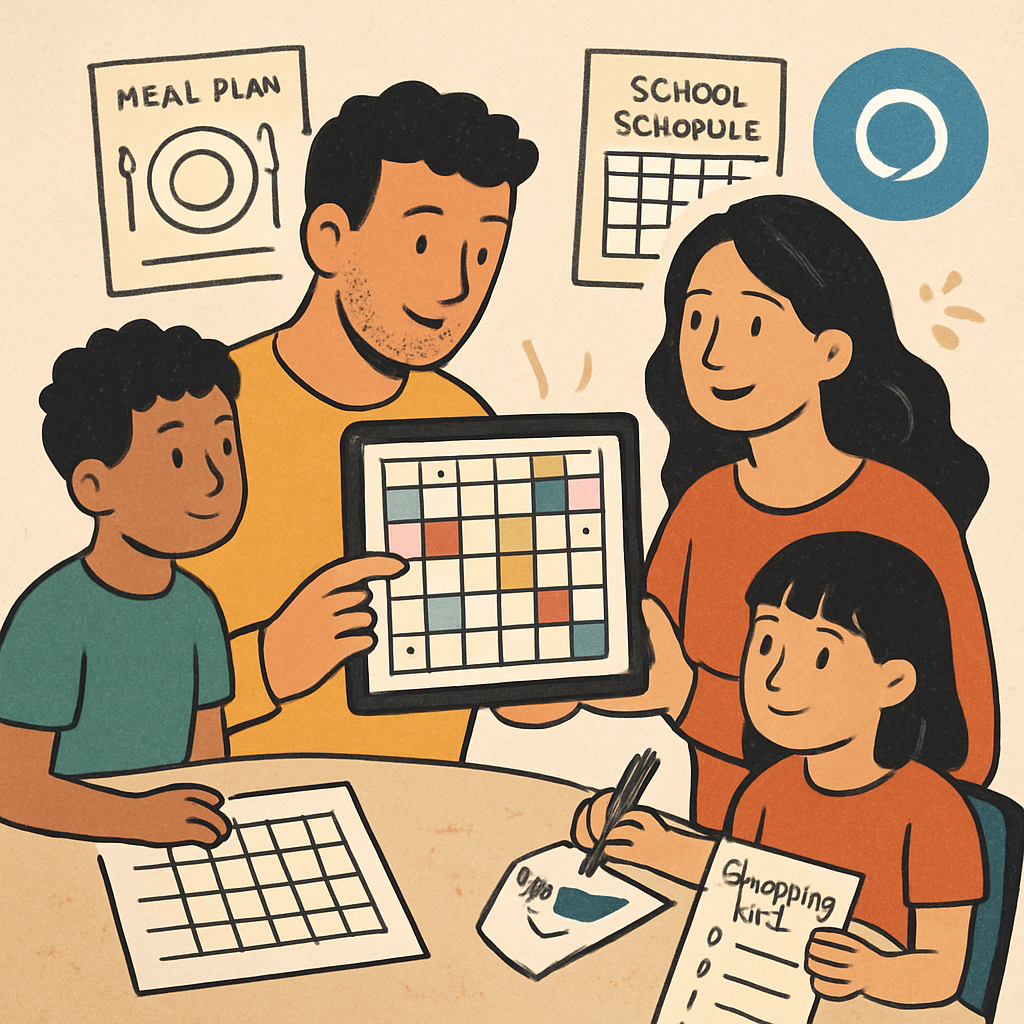
Google has upgraded its AI assistant CC to help families manage household tasks. Originally launched to assist with calendars, email, and work tasks, CC is now being positioned as a domestic planner — helping with meal schedules, shopping lists, school-related appointments, and more. The shift marks Google’s push to make agentic AI more personally useful in family life.
What CC Does Differently Now
The enhanced version of CC will act as a central household hub. Users can now share emails from schools, sports vendors, or clubs, and these communications are either forwarded automatically or identified by CC so key updates like teacher workdays or event schedules land in one shared space. Up to six family members can connect with the agent, granting CC selectively limited access to the info they choose to share.
Beyond gathering messages, CC tracks important dates and to-dos, adding them to a shared calendar or task list without manual input. It can do more hands-on tasks like filling out permission slips or registration forms, building shopping lists, planning meals for the week, estimating travel time between activities, and generating shared documents as needed. If it’s missing details, it asks and remembers for next time.
Infrastructure, Availability, and Limitations
CC’s updates run on Google’s cloud infrastructure, powered by Gemini and the Antigravity agent harness. Access is currently limited to U.S. adults with personal Gmail accounts — meaning anyone under 18 or using a school account can’t participate. Older kids often excluded due to that age and account restriction, even though many use such setups for school work.
Existing users will soon receive invites via email to opt in to the new version, while newcomers can join via a waitlist. This rollout reflects both an experiment in AI responsibility and a recognition that families are eager for tools to help with the day-to-day middle ground — more than pure productivity, but less than full automation.
This update comes as several startups are taking aim at family-focused AI solutions. Competitors already provide tools for parents to manage school schedules or family communication, showing there’s a growing demand for agentic AI that bridges the gap between work tools and home life.
Why This Matters
Google’s move with CC illustrates a broader trend where AI agents are shifting from workplace assistants into family-life enablers. The appeal of automating logistics—from dinner planning to coordinating kids’ activities—is obvious, especially for busy households. But the limitations around age, account type, and geographic availability highlight how much work is left in making these tools genuinely inclusive.
As consumers test this kind of agentic AI, privacy, clarity on permissions, and control over shared tasks will be key areas to monitor. How Google handles shared data when many household members are involved could influence user trust. If executed well, CC might become a central AI organizer in households — but missteps could stall adoption. The big questions: when will younger users be supported, will school accounts be permitted, and how will Google scale CC without compromising control or privacy?