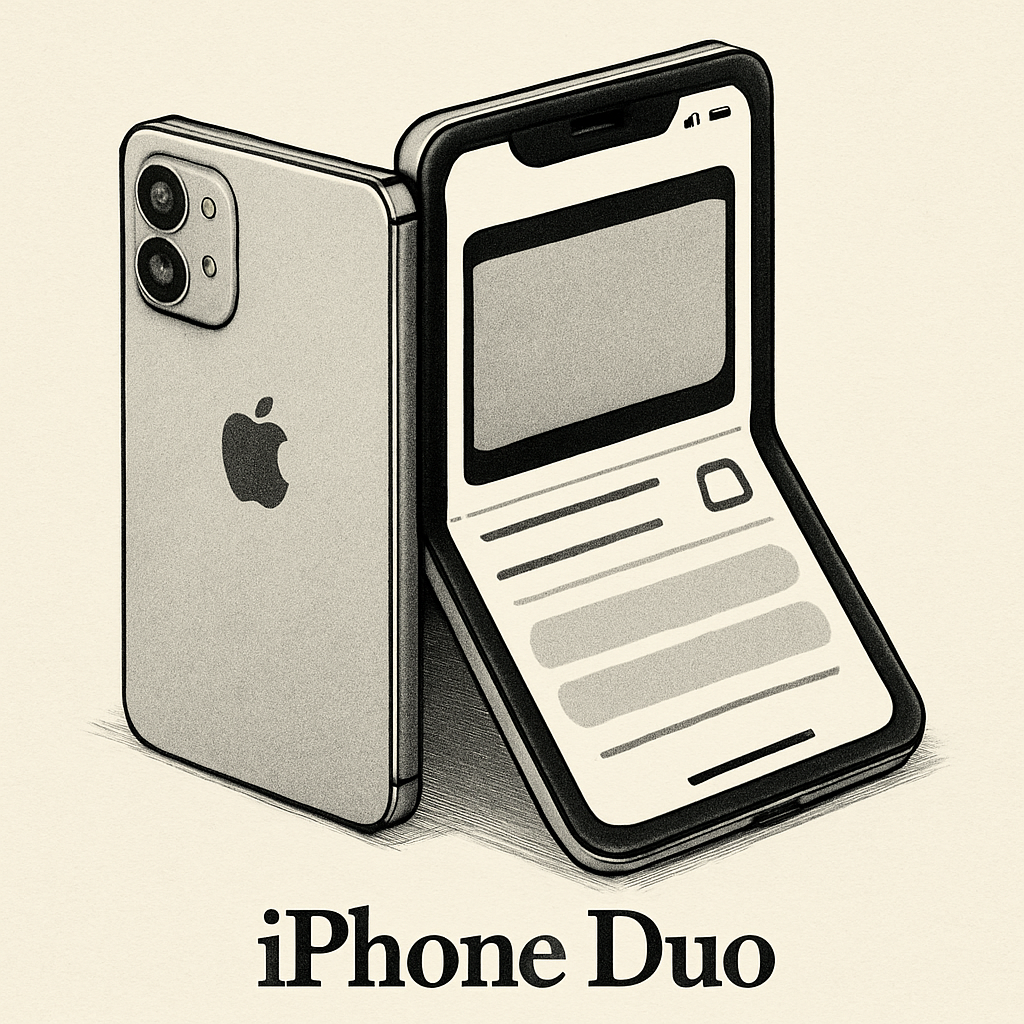
Apple’s new foldable phone, the iPhone Duo, is near shipping — but don’t expect every app in the App Store to be optimized right away. Developers face a compressed timeline and some unknowns that make “day one perfect” support highly unlikely for most apps.
Challenges Ahead for App Adaptation
Although Apple claims updating apps for the Duo’s unique layout is uncomplicated — especially for those who’ve been following its UI and design guidelines — in practice there’s a lot of uncertainty. Developers were only officially told how width, screen behavior, and display orientations would work at a high level, with many finer points still undetermined. Even Apple’s own engineers are said to be unclear in some areas, such as how or whether apps can use both the outer and inner displays simultaneously, or which front-screen functions remain active once the Duo is opened. The preview tools in Xcode didn’t support the Duo until version 27.1, released after the announcement, limiting early testing. A recent Apple workshop showed that while existing guidelines help, more details are needed to properly adapt to the Duo’s inner screen and hinge behavior.
One major visual challenge: apps that haven’t been updated will likely appear surrounded by black bars in the Duo’s inner screen. On the other hand, apps designed with Apple’s adaptability guidelines may fare better, though hardly flawlessly, in filling the new display without full support for Duo-specific features.
Why This Won’t Be Quick or Simple
Even large teams will be under pressure. The iPhone Duo is launching mere weeks after iOS 27 dropped. Developers have had time to work with iOS 27 through its beta period since WWDC, but Duo-specific tools and APIs only recently became available. That short interval leaves many scrambling to add support or risk having apps that look half-baked. Big names like Microsoft and Adobe — with slower release cycles — are rarely among the first apps to adapt to radical hardware changes, especially when required updates affect both UI and capabilities.
Three Possible Outcomes on Day One
For the average user, opening an app on iPhone Duo at launch will fall into one of three categories: it will look off-putting, just passably good, or fully adapted. Most apps will land in the middle. Only those adopting the proper guidelines ahead of time — including dynamic layouts, flexible screen usage and new APIs — are likely to perform well. And even then, full utilization of the Duo’s unique features may not happen immediately.
Developers need to make technical decisions now — how to handle whether the front screen remains active when the Duo is opened, or whether elements can reflow depending on how much the device is unfolded. Apple has provided an API so that when camera features are involved, the front screen may be controlled separately — but designing around that takes careful planning. For those who skipped the iOS 27 betas, they’re now performing double duty: catching up on general compatibility and building in Duo-specific support.
Microsoft and Adobe are cited as examples of companies unlikely to have full adaptation right at launch. Such delayed support isn’t new for Apple’s shifts in device size or display paradigms, but with the foldable form factor, the complexity increases — new orientations, hinge behavior, dual screens and API surface to cover work in uncharted territory.
Ultimately, what the community wants is breathing room. Users should prepare for a messy transition: some beloved apps will look strange, others will work fine without taking full advantage of the Duo, and very few will deliver perfect execution on day one.
Why it matters: Foldable phones represent one of the boldest form-factor shifts in years. If the app ecosystem doesn’t keep pace, the Duo may disappoint by undermining user experience — making it look like a novelty rather than a leap. Observing how developers handle this change offers insight into whether Apple can successfully steer the fragmentation risk that comes with multiple screen sizes, orientations, and usage modes.