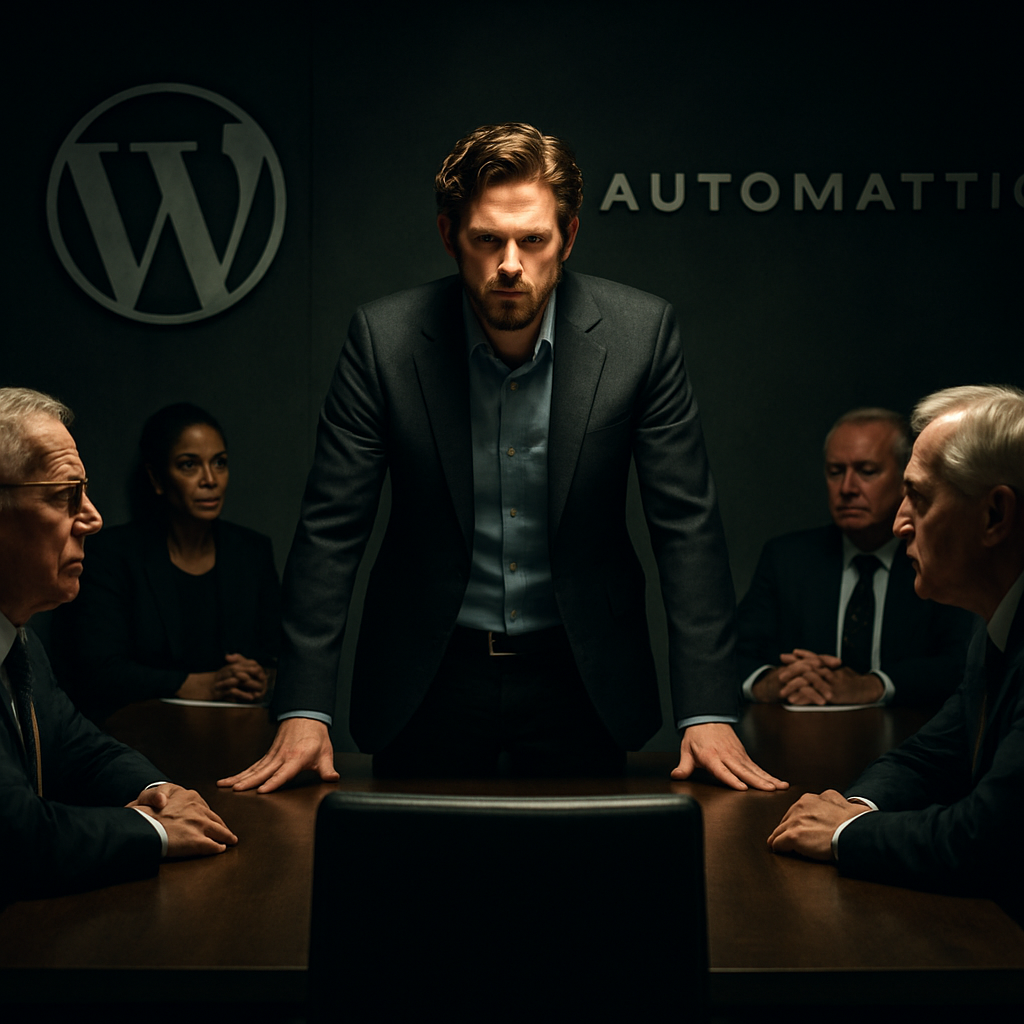
Automattic’s board has been entirely removed following a failed bid to suspend CEO Matt Mullenweg, multiple sources have confirmed. The developments follow last week’s vote to put Mullenweg on a paid leave of absence, an action he denounced as a conspiracy in internal communications. By Friday, Mullenweg informed staff that he had resumed control of the company. Automattic officially acknowledged his return.
Board Shakeup Unfolds
The overhaul kicked off with the resignation of Toni Schneider, who previously held a board seat. Schneider has since removed references to his board role from his online biography. Alongside Schneider, Sue Decker and Ann Dunwoody—both of whom supported the leave vote—have also been removed from the board. Decker’s bio confirms her tenure ran from March 2020 through September 2026, although the company’s public board page hadn’t yet reflected all the departures at the time of reporting.
Company Response & Legal Context
Automattic has declined to comment on individual departures but issued a statement expressing appreciation for the contributions of the former directors. The company confirmed that Mullenweg was away for precisely 33 hours and 20 minutes, and asserted that “we’re now back to work” under his leadership.
The leadership clash occurs against the backdrop of a high-profile legal battle with WP Engine. Mullenweg has accused WP Engine of misusing the WordPress trademark and failing to contribute appropriately to the open-source WordPress project. Conversely, WP Engine alleged the company planned to impose royalty fees on competitors. More recently, WP Engine also claims that Mullenweg destroyed evidence related to the case via messaging apps, and that last year he deactivated several open source contributors’ accounts amid concerns over forking WordPress.
Sources indicate Automattic may announce its new board structure as early as Monday. As the dust settles, Mullenweg’s return has been described as having the full support of the newly reconstituted board.
This episode isn’t just another power struggle—it underscores growing tensions in open-source business models and governance. Automattic, long home to the iconic WordPress platform and related services like WooCommerce, sits at the intersection of community-driven software and commercial interests. The failed board revolt—and the swift removal of dissenting directors—marks a shift in how power is exercised in entities tied to open-source ecosystems. Going forward, eyes will be on how Automattic balances transparency, contributor relations, and internal governance—especially with legal challenges simmering and the risk of reputational fallout if contributors feel sidelined.