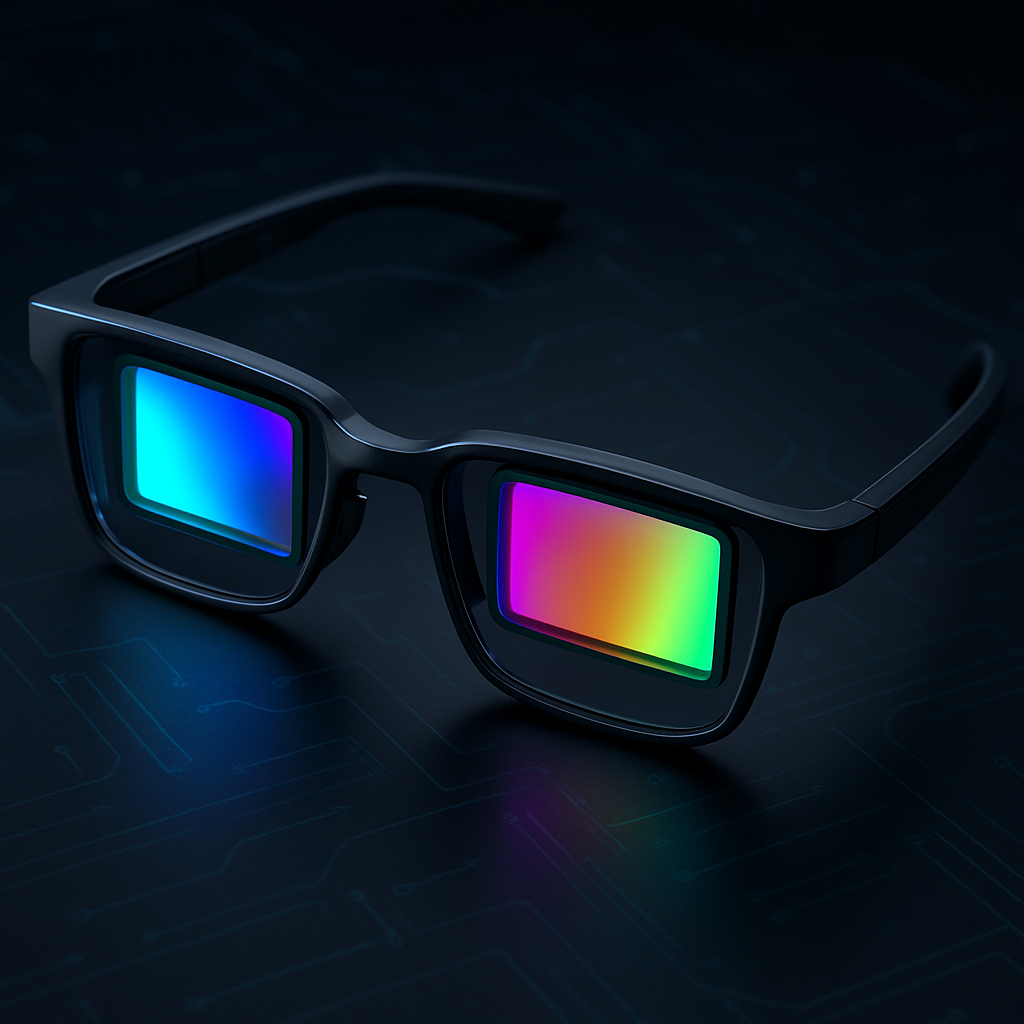
Samsung is at work on Android XR smart glasses that include full color displays, with a tentative launch expected in late 2027. These would be the company’s first XR eyewear to offer vivid visuals, moving beyond the monochrome or display-less designs seen in its earlier models.
What we know so far
The firm has begun sourcing new microdisplays designed to deliver color, pushing for ultra-compact panels measuring around 0.2-inch or smaller. These tiny displays are still under development with concerns over manufacturing cost and performance being actively addressed. Samsung Display appears intent on hitting a balance between visual quality and price. It’s not clear yet whether the final version will use one display (monocular) or two (binocular), though a binocular design would better support 3D content.
Earlier and current XR prototypes from Samsung and Google have mostly used monocular displays, where only one eye receives visual output. While simpler and lighter, they sacrifice depth perception and stereo imagery. A binocular layout would give the new glasses stronger potential in immersive media and spatial computing.
Past models, form factor, and what’s coming
Samsung’s earliest Android XR glasses won’t feature any display at all. Instead, they’ll mimic designs that focus on lightweight wearability, combining a camera with open-ear headphones—similar to Ray-Ban and other fashion-tech hybrids from companies like Warby Parker and Gentle Monster. The goal appears to be creating stylish, wearable devices without overloading the user with bulk or unnecessary hardware. As of now, Samsung hasn’t set a firm date for when either the displayless or color-display models will reach the market.
The transition to full color display isn’t just aesthetic—it’s a crucial step toward making XR glasses more usable for broad audiences. Color panels enhance usability in AR graphics, video, and mixed reality tasks. But they bring added engineering challenges: more heat, higher power draw, and complex optics, especially as screen size and resolution rise.
Reports suggest that Samsung’s internal teams remain deep in development, particularly around display quality and manufacturing yield. Cost remains a sensitive issue: adopting new microdisplay tech could drive up the price unless scaled efficiently.
Strategies like modular design, software optical correction, or smart power management may be key in making the glasses commercially viable without dramatic compromises. UX software and integration with phones or wearables may also feature heavily in the final product.
What to watch:
- Whether Samsung commits to monocular vs binocular design—depth perception will matter for adoption.
- How power consumption and weight are handled, especially if incorporating color displays.
- Pricing strategy—new display tech could push these into premium territory unless costs can be minimized.
- Launch timing—late 2027 is the current estimate, but risks or delays could push it further out.
These upcoming glasses represent a bridge between lightweight, stylish tech accessories and full XR devices. If Samsung can deliver striking color visuals in a comfortable, affordable frame, it could meaningfully advance the mainstream wearable AR/VR space. For tech watchers, these specs set the markers: display size and type, form factor, performance vs cost—and whether late-2027 means truly shipping or just showing prototypes.