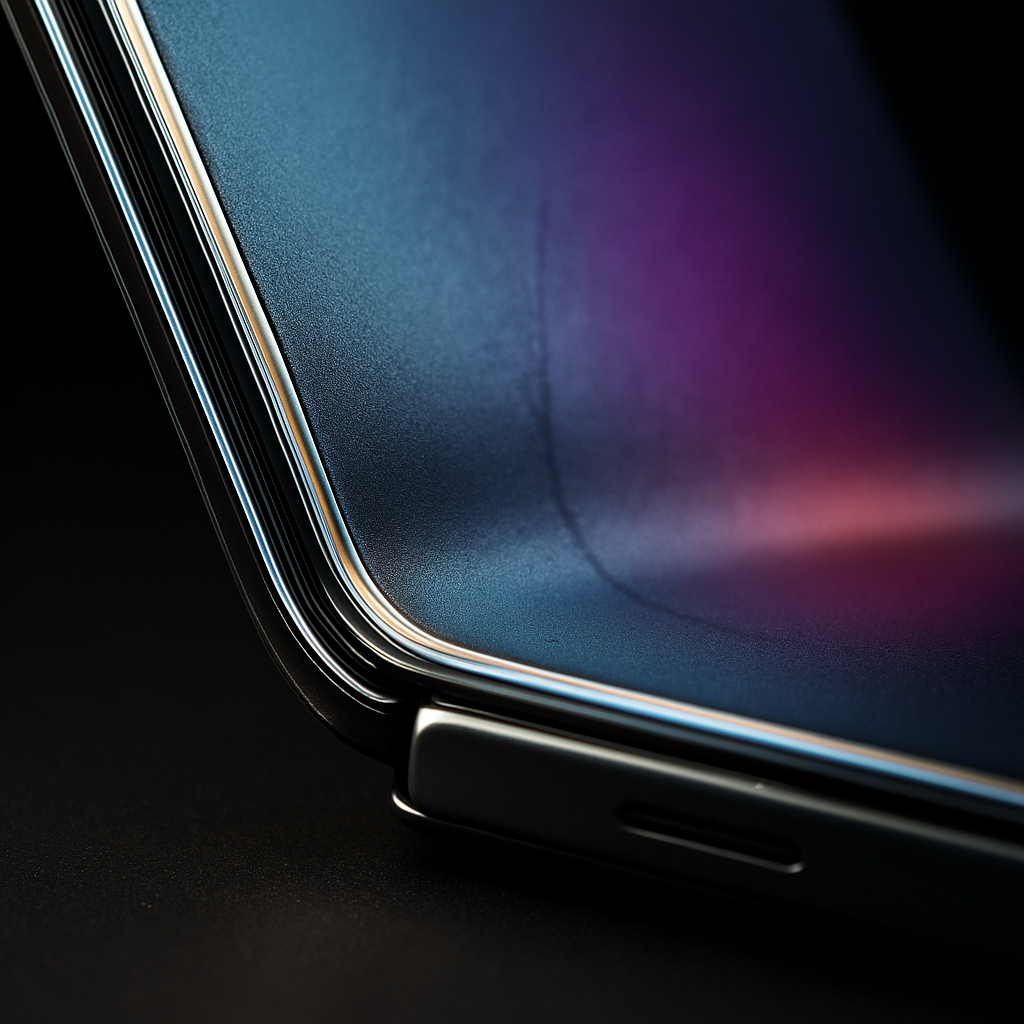
The foldable design of Apple’s new iPhone Duo comes with a caveat: its inner screen crease is unavoidable. Due to physical constraints and how the device is engineered, the display will develop a visible fold line at the hinge over time, despite Apple’s efforts to delay it.
Materials Meet Physics
The iPhone Duo’s screen is built from a hybrid stack—thin layers of OLED and ultra-thin glass separated by flexible adhesives. The OLED substrate is inherently pliable because it’s a plastic-based material, which allows bending but is vulnerable to tears. The glass layers, while extremely thin and more rigid, carry their own risks when forced to flex repeatedly. Apple’s display incorporates multiple very thin glass sheets, each thinner than a single strand of hair, allowing minor internal sliding when the phone folds. This structure helps avoid cracking, but it can’t ward off gradual wear entirely.
Hinge Design & Fatigue Over Time
The hinge is the most critical engineering component here. It must keep fold angles consistent and align stress points precisely to limit damage. Nevertheless, physics dictates that repeated bending—especially at the hinge’s center—causes micro-cracks and slight delamination between layers. This is part of what’s known as fatigue failure. Every material has a threshold below which it holds up well; above that, damage starts to accumulate.
The Numbers and Reality Check
Apple’s own estimates suggest the fold mechanism is built to endure around 250,000 open/close cycles across the phone’s lifespan. To put that in perspective, that’s roughly 125 full folds per day over five years. During this period, small cracks may develop at the hinge, eventually becoming visible and possibly affecting touch or appearance—this is the crease.
What Apple Is & Isn’t Doing
Apple has taken lessons from other folding devices: material choices, hinge structure, and layering are optimized to minimize stress. But no engineering trick can fully defy the laws of material fatigue. The company is expected to test devices intensely, including retail units and tear-downs from users who stress them. So far, no defect indicating catastrophic failure has been reported—just the inevitability of minor, long-term wear.
At the end of the day, the crease isn’t a product flaw so much as a product of design that must flex. For those who worry, Apple Stores provide warranty and service options, and early user feedback will be key to seeing how noticeable—or bothersome—the crease becomes.
Why this matters: The iPhone Duo represents Apple’s first real leap into foldable hardware—a long awaited genre in smartphones. How well the device balances durability with beauty and usability will set the stage for future foldable models. Folding screens are already a crowded space with strong competition; if Apple can push back visible wear while delivering quality, it could reset standards. Watch closely for long-term reviews, repair data, and whether materials science makes new breakthroughs. The crease won’t kill the Duo; it’s likely to become one of the most discussed features.