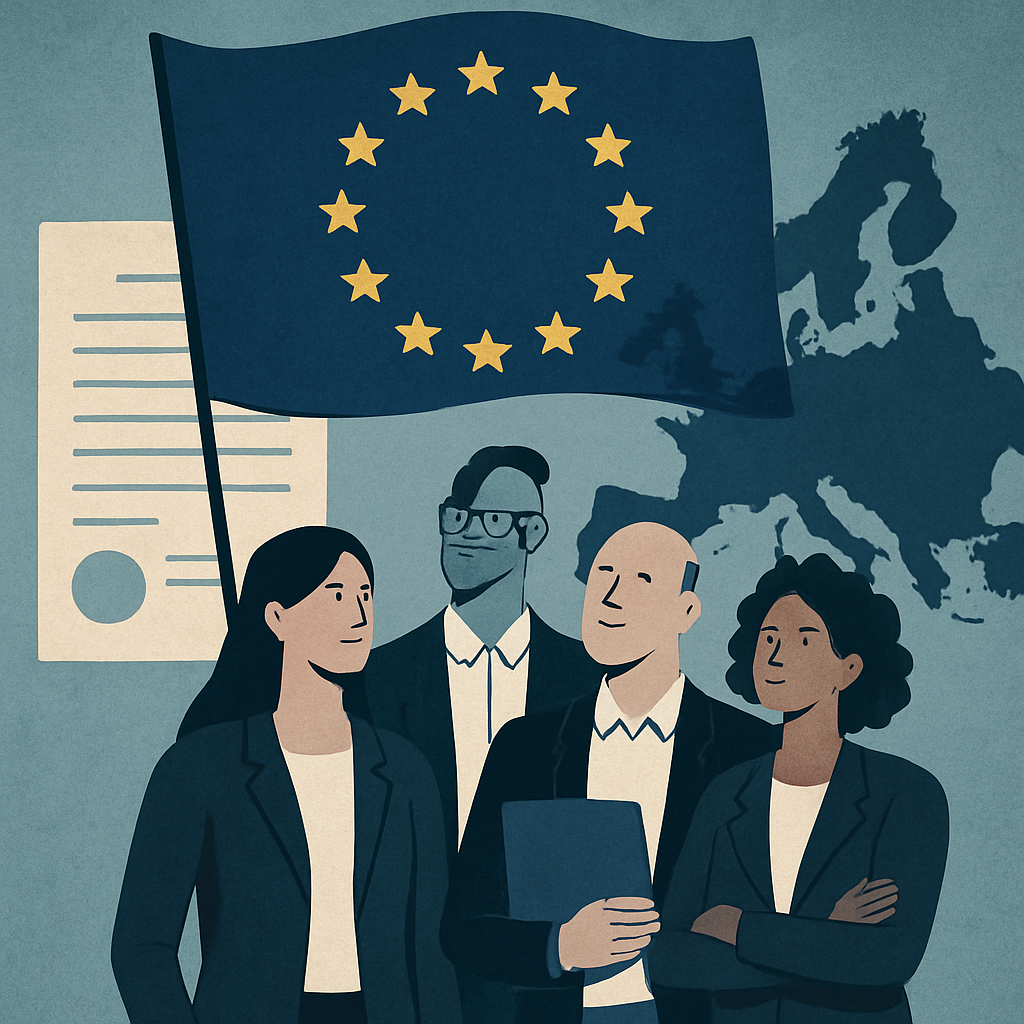
A coalition of Europe’s leading startup founders and venture capital investors is urging EU lawmakers to resist watering down proposed corporate law reforms known as “EU Inc.” If approved as currently drafted, EU Inc would allow companies to be incorporated under a single legal framework recognized across all member states—a structure supporters say could rival the U.S. Delaware C Corp system. But with critical negotiations underway, tech stakeholders want key elements preserved.
What EU Inc hopes to change
The EU Inc campaign aims to establish a unified corporate statute that cuts through national legal fragmentation. Under this plan, startups would use a “pan‐European” corporate form so that companies incorporated under EU Inc would operate under the same rules across the EU—eliminating a lot of the cross‐border friction many face today.
Currently, national laws differ greatly in areas like shareholder rights, taxation of stock options, company registration and governance. Because each country has its own rules, startups frequently tap complex legal workarounds to scale beyond borders. EU Inc promises a single set of corporate rules—interpretable in all EU markets—helping firms attract investment and hire across jurisdictions with less legal friction.
What’s at risk in current debates
Leading figures from Europe’s innovation economy warn that if negotiators remove certain features or weaken central provisions, the statute may become “unusable” for startups. The “EU Inc” open letter published recently highlights two non-negotiables: a single central registry for EU Inc businesses, and that employees must pay taxes on stock options only when they actually dispose of them—not upfront.
These provisions are seen as essential. A unified registry would simplify incorporation and legal transparency across borders. Tax rules on stock options influence startup compensation and employee incentives, and delays or upfront taxation are viewed as serious disincentives for talent.
Who’s backing and pushing this forward
The campaign has secured high-profile backing. On the investor side, big names like Accel, Sequoia, and Atomico are lending weight. Founders from prominent unicorns—companies such as Alan, ElevenLabs, Lovable, Mistral, and Synthesia—are publicly supporting the move. Some even operate globally or have dual headquarters, and see EU Inc as a way to reverse “forum shopping” for more favorable laws abroad.
Lawmakers are not alone in facing pressure. Various trade and legal groups have raised objections—Germany’s notaries have critiqued certain elements of the European Commission’s proposal. Meanwhile, negotiators in the European Parliament and Council still have work ahead of them before final approval. And with just about 100 days before the institutions pause for winter recess, time is running short.
Why founders and VCs are pushing now
The urgency stems from both opportunity and risk. Supporters argue that EU Inc could dramatically streamline cross-border scaling, making it easier for companies to raise capital and hire talent across Europe without being stymied by national regulatory disparities.
On the other hand, if the final law lacks core features like consistent taxation of options or unified governance tools, it may be ignored in favor of continued reliance on U.S. or non-EU legal forms. That could lock in Europe’s existing disadvantages in startup competitiveness.
This reform aligns with previous efforts to harmonize company law in the EU—a response to fragmentation that hinders growth. The model of a European corporate form has been under discussion for years, often stalled by national interests and legal complexity. But momentum behind EU Inc has increased recently, helped in part by widespread support from Europe’s top startup and VC community.
Analytical perspective: If EU Inc manages to retain its central registry and fair treatment of stock options in the final law, it could mark a turning point for Europe’s startup landscape—making it easier to create pan-European businesses that don’t feel constrained by borders. But if those elements are stripped out during negotiation, the statute risks becoming symbolic rather than transformative. What happens in these next months will matter for whether Europe merely talks about scaling globally or actually builds the legal scaffolding to do it.