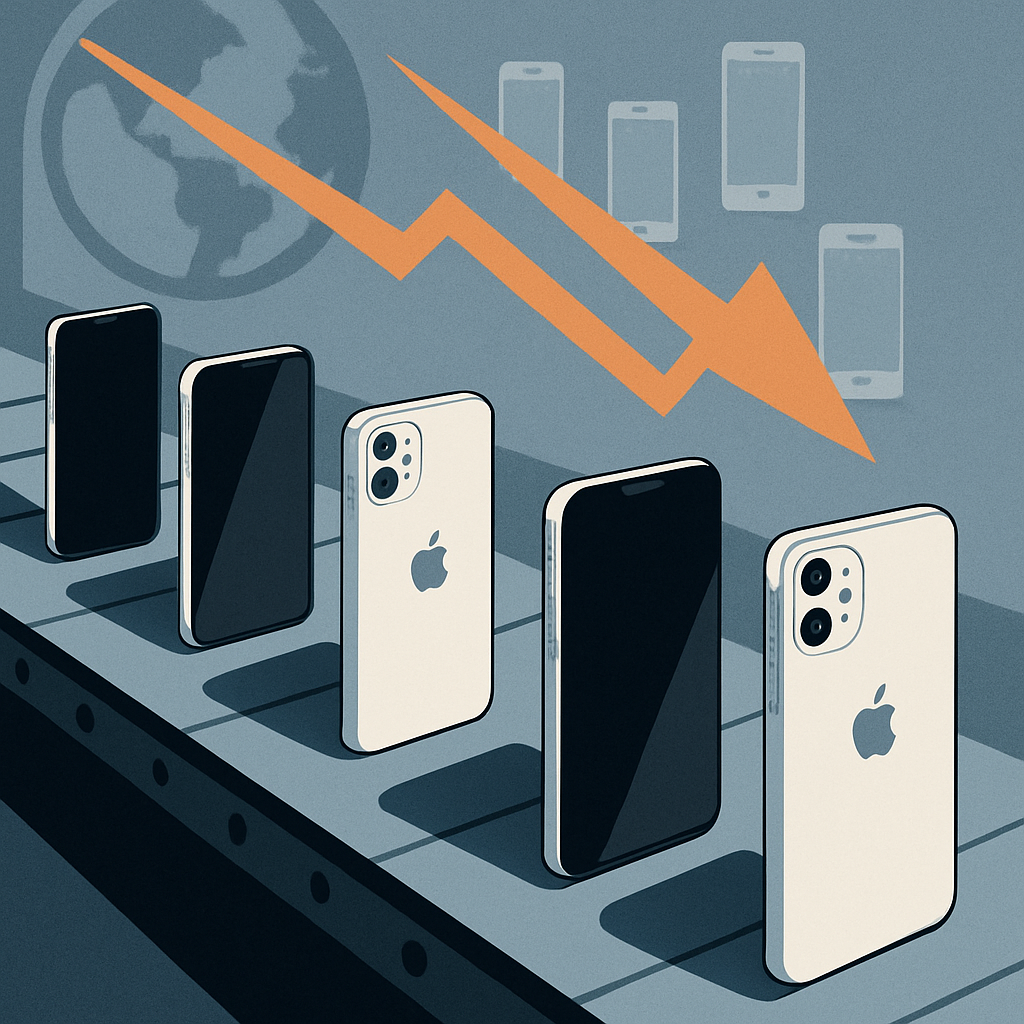
Apple has ramped up production in Q2 2026, producing around 52 million iPhones—a 14% increase over the same quarter in 2025—per a recent TrendForce report. This gain comes even as the global smartphone manufacturing sector contracted by roughly 8% year over year, with total production falling to approximately 275 million devices for the quarter.
How the Numbers Break Down
Globally, smartphone makers produced 275 million units in Q2 2026, an 8% drop from Q2 2025. That decline was not as severe as earlier forecasts suggested. As a result, TrendForce has raised its forecast for the full year 2026: production is now expected to reach about 1.07 billion units, up from a prior estimate of 1.05 billion. That would represent about a 14% year-over-year drop instead of the previously predicted 16% decline.
Apple stood out, producing 52 million iPhones and claiming roughly 19% of worldwide smartphone output—making it the second-largest manufacturer this quarter. Samsung led the pack with 62 million units produced, an increase of about 7%, translating to around 23% of global production.
Behind Apple and Samsung, Oppo shipped 30 million units (11% share), despite a 17% year-over-year drop. Xiaomi followed with 29 million units (about 10%), down 32%, then vivo with 21 million units (8%), and Transsion with 20 million (7%), each posting sizable year-over-year decline percentages.
What’s Powering Apple—and What’s to Come
Increased iPhone production appears to be driven by Apple’s pricing strategy for the iPhone 17 series, which helped sustain strong sales across the first three quarters. Meanwhile, consumers seem to be accelerating their purchasing timelines for smartphones—buying earlier than planned. At the same time, manufacturers are dialing back production cuts previously made in anticipation of weaker demand.
Looking ahead, TrendForce flags that price increases for the forthcoming iPhone 18 series are likely. How those adjustments might affect sales momentum is expected to be a key factor to watch through the rest of the year.
Apple’s comparatively strong performance in a shrinking global market underscores the power of product strategy and pricing during economic headwinds. Its ability to grow share while many competitors saw steep declines suggests momentum as we approach the holiday season—and underscores how critical the iPhone 18 launch could be for maintaining or accelerating that growth.