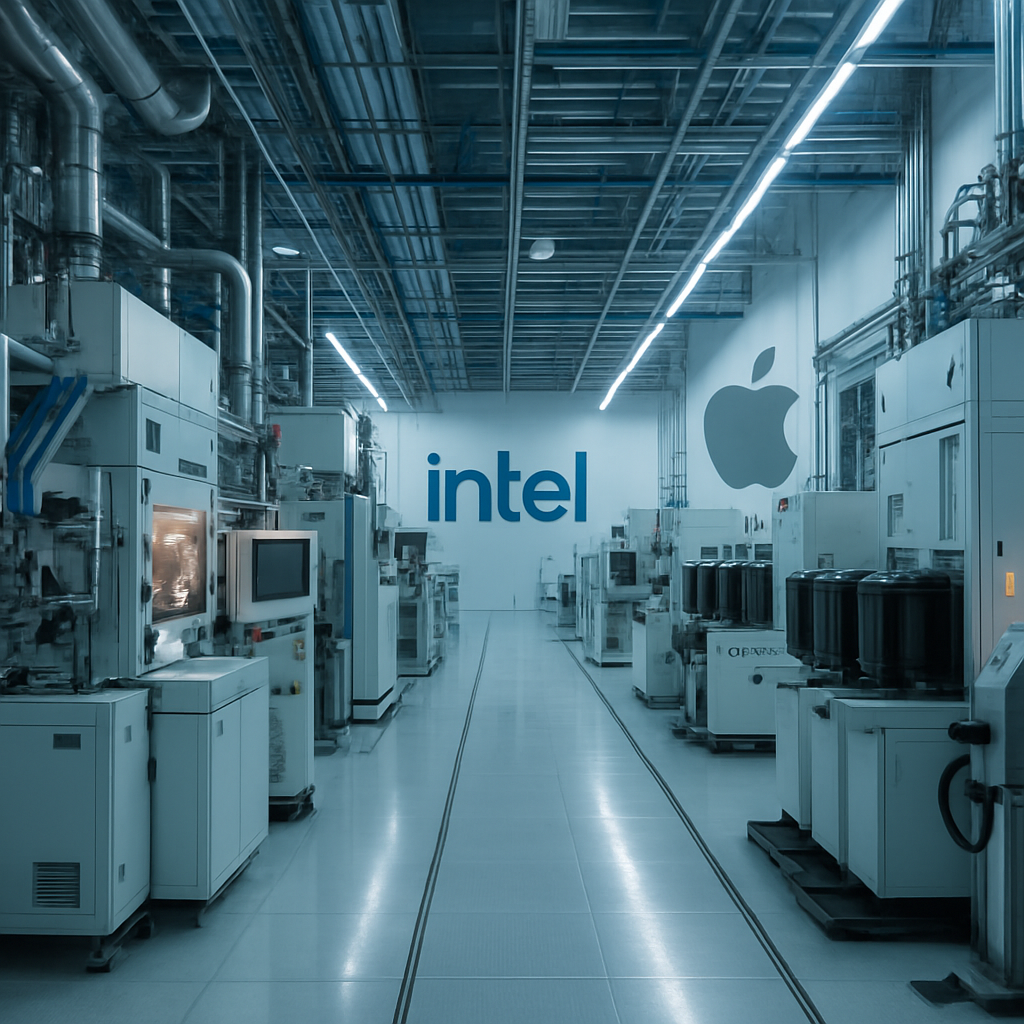
Intel once held Apple’s loyalty when it came to chips—but it lost that trust during Apple’s shift toward its own silicon in 2020. Since then, Taiwan Semiconductor Manufacturing Company (TSMC) has become Apple’s go-to partner, something Intel has found difficult to replicate. Apple’s move to designing its own processors and relying on TSMC for manufacturing didn’t just reshape Apple’s tech—it reshaped Intel’s standing. (Intel is now trying to regain ground, but trust is the biggest barrier.)
A shift in chip strategy and escalating trust
Back in the day, Apple negotiated with Intel over CPU design and production. Steve Jobs even tried to get Intel to build a mobile chip for Apple. Intel passed and Samsung got the deal—even though Apple had concerns about Samsung serving both as supplier and competitor. Meanwhile, at TSMC, the company focused on foundry services—not selling chips under its own name. That made Apple more comfortable. TSMC was also working closely with big players like Nvidia and Qualcomm, reinforcing its credentials without conflict of interest.
By 2011, designs were falling into place: Apple’s Jeff Williams told TSMC’s Morris Chang that Apple wanted it to handle all chip orders. Though the deal was later paused—with Intel in the mix—Apple ultimately chose TSMC. Chang believed that Apple’s priorities weren’t purely about manufacturing or technology; trust mattered. He saw that many thought TSMC was simply more reliable than Intel at meeting expectations and keeping secrets.
Intel’s struggle to rebuild trust under new leadership
Intel hasn’t been oblivious to the problem. When Lip-Bu Tan became CEO in March 2025, he introduced “no more blank checks”—tightening financial discipline. This meant pausing or cancelling fab projects in Ohio, Germany, and Poland until customers committed to orders. But for Apple, solid commitments from suppliers go a long way; seeing Intel commit deeply is just as important as what it says.
In another misstep, Intel told Apple it had already discussed with equipment vendors and implied Apple was already a client. That flew in the face of Apple’s preference for secrecy and discretion. Blurring those lines damaged Intel’s credibility. Apple still works with Intel—partly because of policy pushes to build chips domestically—but it continues to trust TSMC far more deeply. TSMC, for its part, purposely avoids becoming a competitor, which helps preserve its client relationships.
Today, CC Wei, TSMC’s CEO, openly places trust on par with technology and manufacturing capacity. For him, earning Apple’s confidence wasn’t accidental—it’s a chosen priority. Apple values TSMC’s ability not just to make chips, but to respect confidentiality, deliver on promises, and avoid conflicts. Intel, despite its efforts, hasn’t yet convinced Apple that it can do all of that at the same level.
Why this matters: For Apple, the trust built with TSMC has translated into smoother innovation, tighter integration, and fewer logistical or competitive headaches. For Intel, it’s a reminder that in high-stakes manufacturing, credibility may be just as important as cutting-edge process tech. Going forward, Intel must show consistency, discretion, and guarantees—not just claims—to compete. For the tech industry, as chip supply chains become strategic geopolitical tools, relationships like Apple-TSMC’s signal what partners need to prioritize.