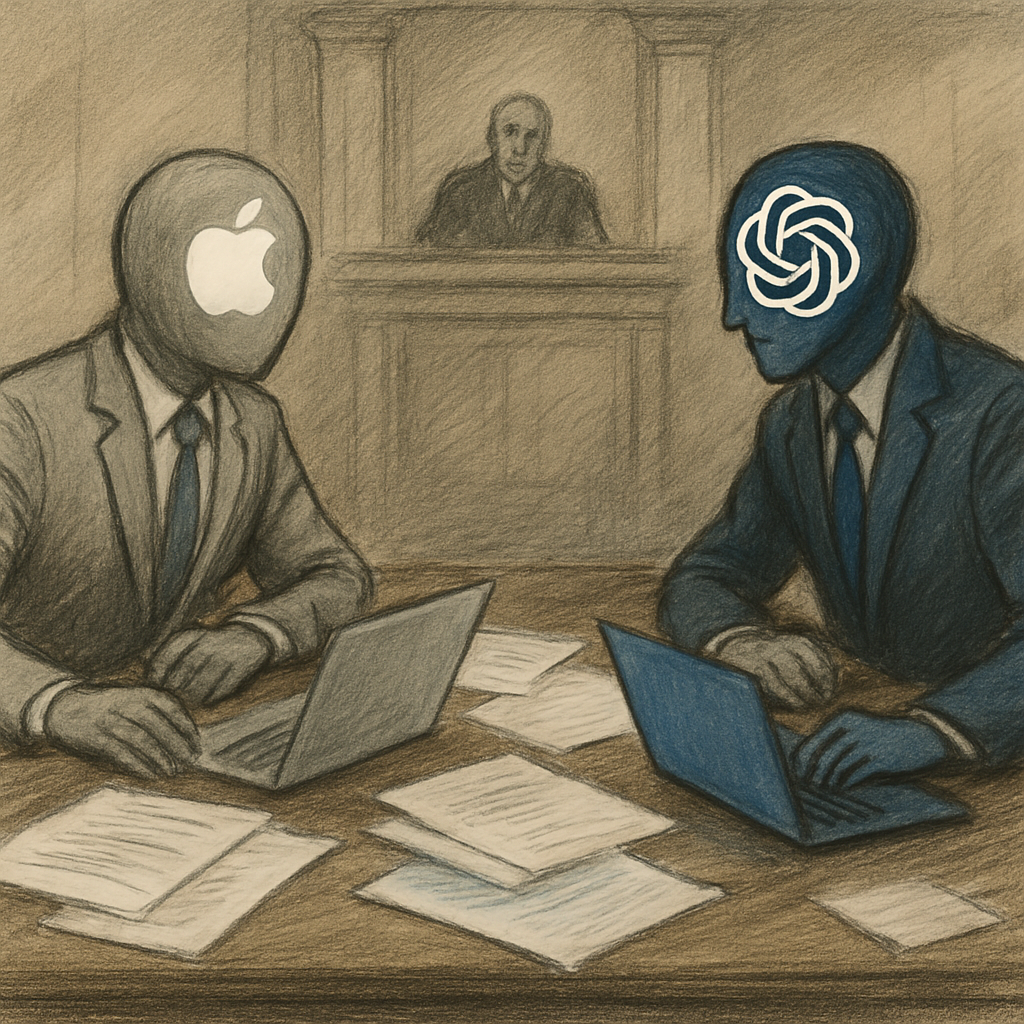
OpenAI has pushed back hard in its ongoing lawsuit with Apple, arguing that Apple’s own procedural flaws made its trade secrets fair game. In a recent response filing, OpenAI accuses Apple of inadequate protections that weakened its claims of confidential information theft. The case continues winding through complex legal territory, with both sides trading allegations over how internal documents were secured – and whether they even qualify as trade secrets.
OpenAI’s Counterclaims: Apple’s Protection Was Insufficient
Central to OpenAI’s defense is the assertion that Apple’s internal practices have left its sensitive data vulnerable. Key was the claim that Apple encourages staff to use personal iCloud accounts, does not enforce timely returns of company devices, and fails to compel departing employees to hand over internal files or properly transition responsibilities. According to OpenAI, these actions – or lack thereof – mean that former employees often retain access to internal materials, and that Apple’s trade secrets weren’t protected well enough to be legally enforceable.
OpenAI also strikes at what it sees as unfair consequences for employees who leave the company. The filing argues that it’s not unlawful for someone to resign from Apple and join a startup, especially when Apple has been slow to adopt AI. OpenAI frames Apple’s legal attack as blaming former staff for choices it views as inevitable, given Apple’s lag in embracing innovation.
Apple’s Legal Burden and Expert Opinion
Trade secret law places a high burden on plaintiffs to prove that they took reasonable steps to safeguard valuable internal information. Legal experts contacted said that Apple should face little trouble meeting that standard based on what’s publicly known so far. Courts tend to accept tight windows for returning devices and severing access; in some cases, employees must return devices within hours. If Apple can demonstrate defined processes were in place – and that any lapse came from employee noncompliance rather than organizational neglect – it may preserve its claim.
Experts also pointed out that if an employee is shown to have evaded exit interviews or failed to return devices, the company often gets the benefit of the doubt in court. OpenAI’s shifting narrative – first denying, then partially admitting involvement depending on forensic findings – could hurt its credibility in Judge’s eyes. Consistency in legal claims is seen as crucial.
The timeline remains: the next hearing is scheduled for early October. Apple will have to convincingly show that its internal safeguards and separation processes were sufficient, while OpenAI must prove that the protections were so lax as to render Apple’s trade secret claims void.
Why this matters: trade secret lawsuits are increasingly central to legal battles between big tech firms. What one company views as a proprietary edge, another may see as free knowledge once protections fail – especially with cloud services, personal device use, and employee turnover muddying the waters. This case could help redefine what legal expectations are around internal security, device handling, and employee transitions.