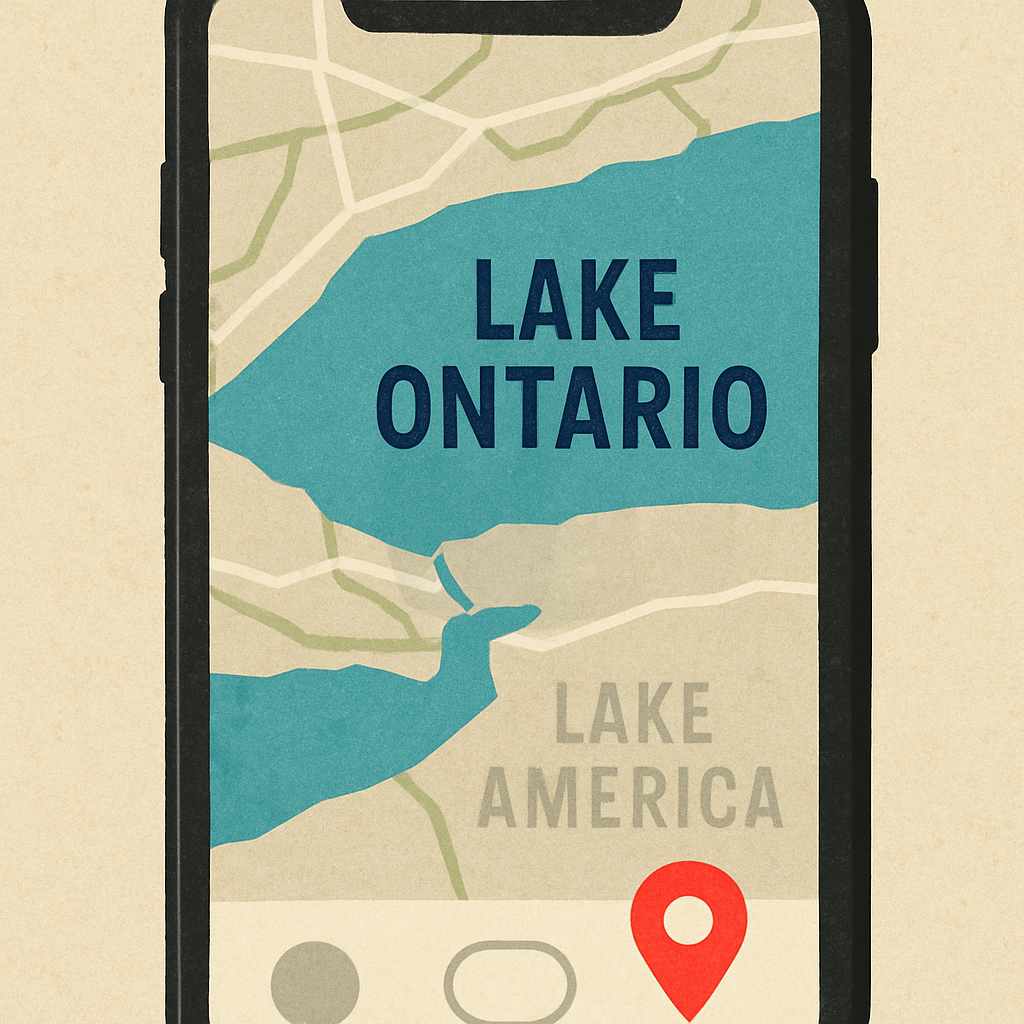
MapQuest has vaulted to the No. 1 navigation app in the U.S. following its decision to keep “Lake Ontario” as the official name on its maps, defying a presidential executive order directing the Department of the Interior to rename it “Lake America.”
The change order, issued by President Donald Trump, instructed updates to the U.S. Geographic Names Information System. While Google Maps complied—showing “Lake America” in the U.S., “Lake Ontario” in Canada, and both names elsewhere—MapQuest stood firm on preserving the original name. Apple Maps has not made a name change nor issued any formal response to date.
Surge in Downloads and Usage
The company’s act of resistance triggered a surge in downloads. In the U.S. this week, MapQuest rose to No. 4 among apps (excluding games) on the App Store, No. 8 overall (including games), and claimed the No. 1 navigation app spot. In Canada, MapQuest reached No. 2 overall. Market intelligence confirms the boost: the week beginning August 24 saw global downloads reach 184,000, and U.S. downloads hit 162,000—each more than ten times week-over-week gains. Day-by-day usage in the U.S. doubled (up 128%) between August 26 and August 30.
MapQuest’s leadership reports “hundreds of thousands” of new downloads since its public statement, and usage has shot up to 50x its normal levels. Total worldwide installs thus far in 2026 are 687,000—29% above the same period last year—with 97% of lifetime installs coming from the U.S. Since 2012, the app has been downloaded 24.4 million times.
Branding, Tools, and Context
To underscore its stance, MapQuest launched a playful online tool allowing users to rename Lake Ontario however they like, share the result, and continue the conversation. This mirrors a similar move made when the Gulf of Mexico was renamed by executive action to “Gulf of America” last year.
This clash over toponyms comes amid escalating economic tensions between the U.S. and Canada. The name change order followed stalled trade negotiations and was accompanied by new U.S. tariffs targeting $20 billion in Canadian imports—the kind of backdrop that tends to amplify reactions from users and businesses alike.
MapQuest itself is no stranger to change. Founded decades ago, it passed through the hands of AOL, then Verizon, before being acquired in 2019 by digital advertising firm System1. Its refusal to comply with the name change grew into one of the most visible examples yet of how corporate positioning—and user expectations around authenticity—can power real traction.
Why this matters: in a landscape where map apps often mirror official sources and government-mandated changes, MapQuest’s refusal to align signals that users care about more than just GPS routes—they want consistency, identity, and trust. This incident may define how platforms balance legal directives with public sentiment in geography and policy. Keep an eye on how Apple responds, how Google handles similar requests going forward, and whether other services adopt a stance of resistance or compliance.