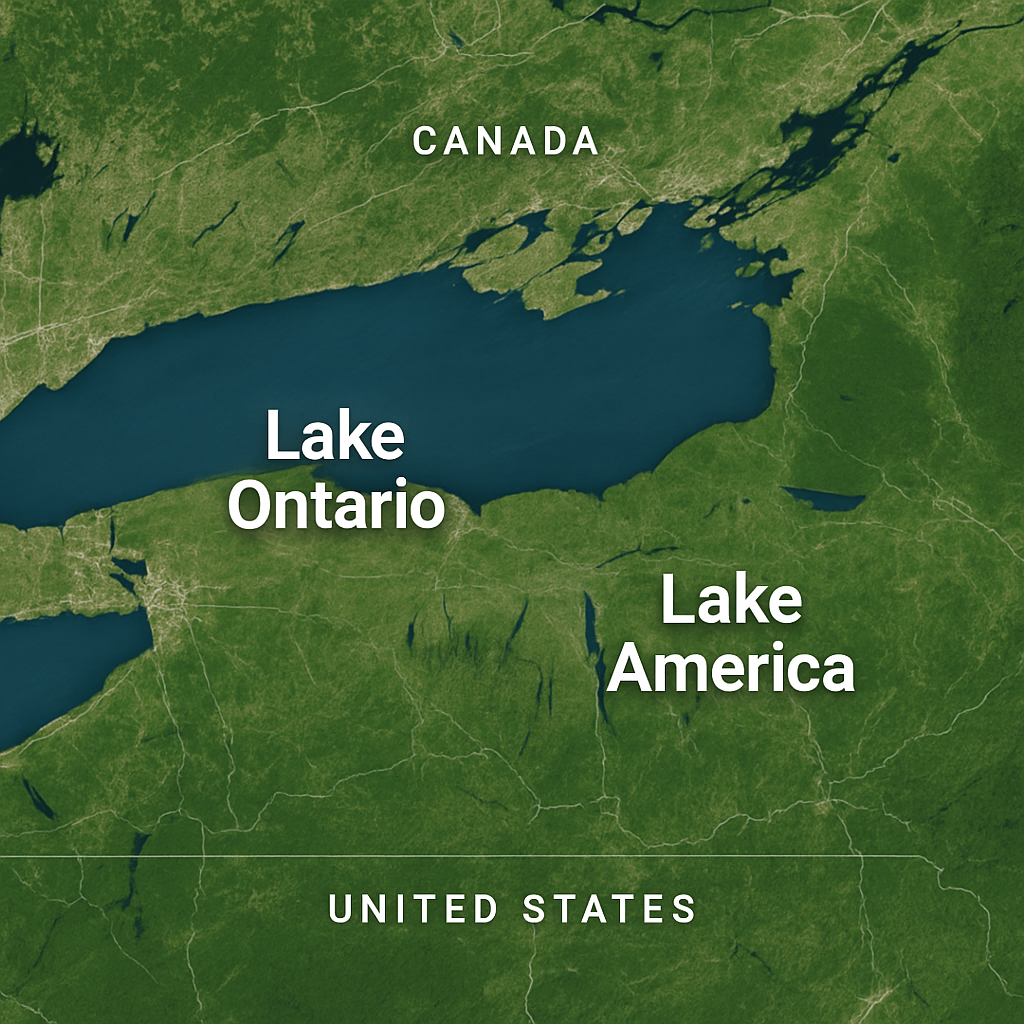
A recent executive order has instructed renaming Lake Ontario to “Lake America”—a directive that Google Maps has begun following for U.S. users. Apple Maps, however, continues to use the original name for all users, including those in the United States.
Google Maps splits naming by region
Under the new policy, Google Maps now displays three different names for the lake depending on the viewer’s location. In the U.S., the renamed “Lake America” is shown. Canadian users still see “Lake Ontario.” Users outside of North America see “Lake Ontario (Lake America)”—a dual label showing both the traditional and new names.
This system mirrors what transpired with last year’s renaming of the Gulf of Mexico. The U.S. government decreed it should be called the Gulf of America, and Google Maps adopted a similar regional labeling policy at that time.
Apple Maps holds ground—for now
Despite the executive order, Apple Maps has not aligned with the change. Even users in the U.S. see “Lake Ontario”—no renaming has been applied so far. Apple has historically tried to steer clear of political controversy over maps, but its handling of the Gulf of Mexico naming suggests it’s open to compromise under pressure.
With a new CEO at the helm—separate from key decisions made under previous leadership—it remains unclear whether Apple will adjust its labeling in response to the executive order or the public debate strong enough to force its hand.
The political and public reaction
The renaming move has stirred controversy. Many Canadians and international observers have responded with mockery. Canadian Premier Doug Ford even installed a billboard along the lake’s shoreline declaring it “Lake Ontario. Now and always.”
The underlying dispute highlights tensions between executive power, cartographic standards, and national identity—mirroring prior conflicts over geographic name changes mandated from the U.S. executive branch.
Why this matters: digital maps shape how people understand the world, and names carry deep symbolic meaning. Technology companies are now being forced to balance government directives with public expectations and identities. As Google adapts to the new executive order, Apple’s decision to stick with the traditional name may attract both praise and scrutiny. Anyone relying on Apple Maps for navigation or local history in the U.S. may need to verify which lake name their app is using—and keep an eye on how this tug-of-war over geography evolves.