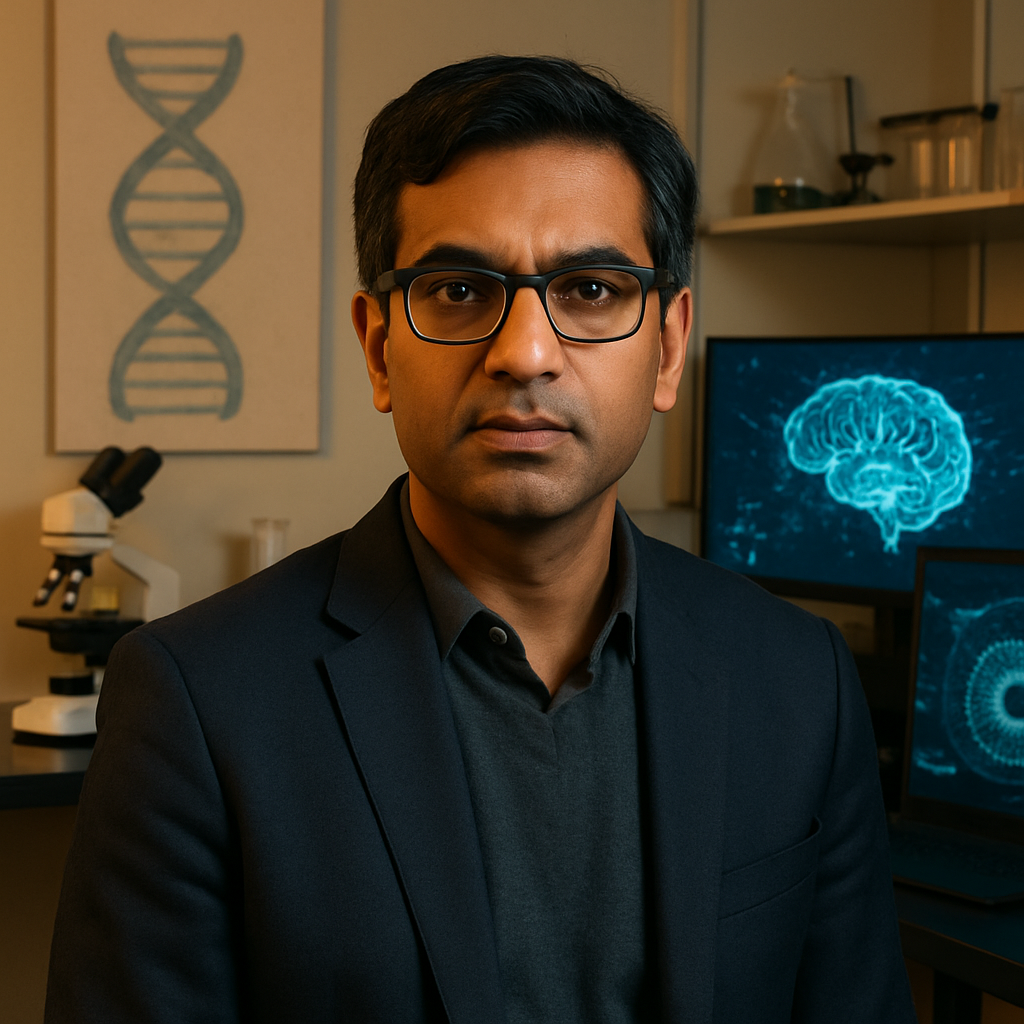
After overseeing a $4 billion life sciences investment practice at a16z, Vijay Pande has embarked on a new path. His fresh venture, VZVC—co-founded with investor Zach Werner—aims to depart from traditional high-volume investing. Rather than placing dozens of early-stage bets annually, the firm plans to make around five highly focused investments each year. It’s a model built for intimacy and depth instead of scale.
A decade of scale meets a change in strategy
Pande’s legacy at his previous fund involved making many bets across health, biotech, and AI-driven medicine. That approach scaled to nearly $4 billion under management. But amid increasing complexity and risk—especially as biological data proves difficult to access and standardize—he’s pivoted to a leaner, more curated portfolio. VZVC operates without associates, relying heavily on AI to manage operations and workflows.
A major challenge he highlights is that biology isn’t like text or code—you can’t simply scrape and unify massive datasets publicly. Nearly every startup ends up stewarding its own protected data, which leads to fragmentation. To confront this, Pande believes foundation models and atlases of biological information are becoming essential. When these become more mature, open-source alternatives could rival big players, much like LLMs have done in the AI world.
Precision, people, and what Pande is looking forward to
Pande emphasizes the value of precision medicine, where treatment is tailored not to population averages but to individual physiological readings. Advances in automation, robotics, proteomics, and AI have helped move that shift forward. Together, these tools are improving both target identification and drug design in ways that were hard to imagine just a few years ago.
At VZVC, Pande and Werner are selective about founders. Integrity, long-term commitment, and alignment are at the core. Rather than those racing for status in hot rounds, he’s drawn to founders willing to build over years, not just quarters. He points to firms like Thrive and Valor, which also run concentrated portfolios, as inspiration.
On what’s overhyped: AI’s potential in medicine excites him, but he cautions against overclaiming. The data must be robust. Where data is sparse or noisy—common in early biotech—the promises of disruption are much harder to deliver. Without adequate foundational data, even the cleverest model can fail to generalize.
This shift isn’t just business model tinkering. It reflects deeper changes in how biotech investors and founders think about building in an AI age. Pressure to scale, fund, and exit quickly is giving way—at least for some—with a focus on durability, scientific rigor, and real-world translation of tools like AI in health. For VZVC and for anyone interested in transformative healthcare, what’s happening now matters: these five bets a year could define how biotech evolves for the next decade.