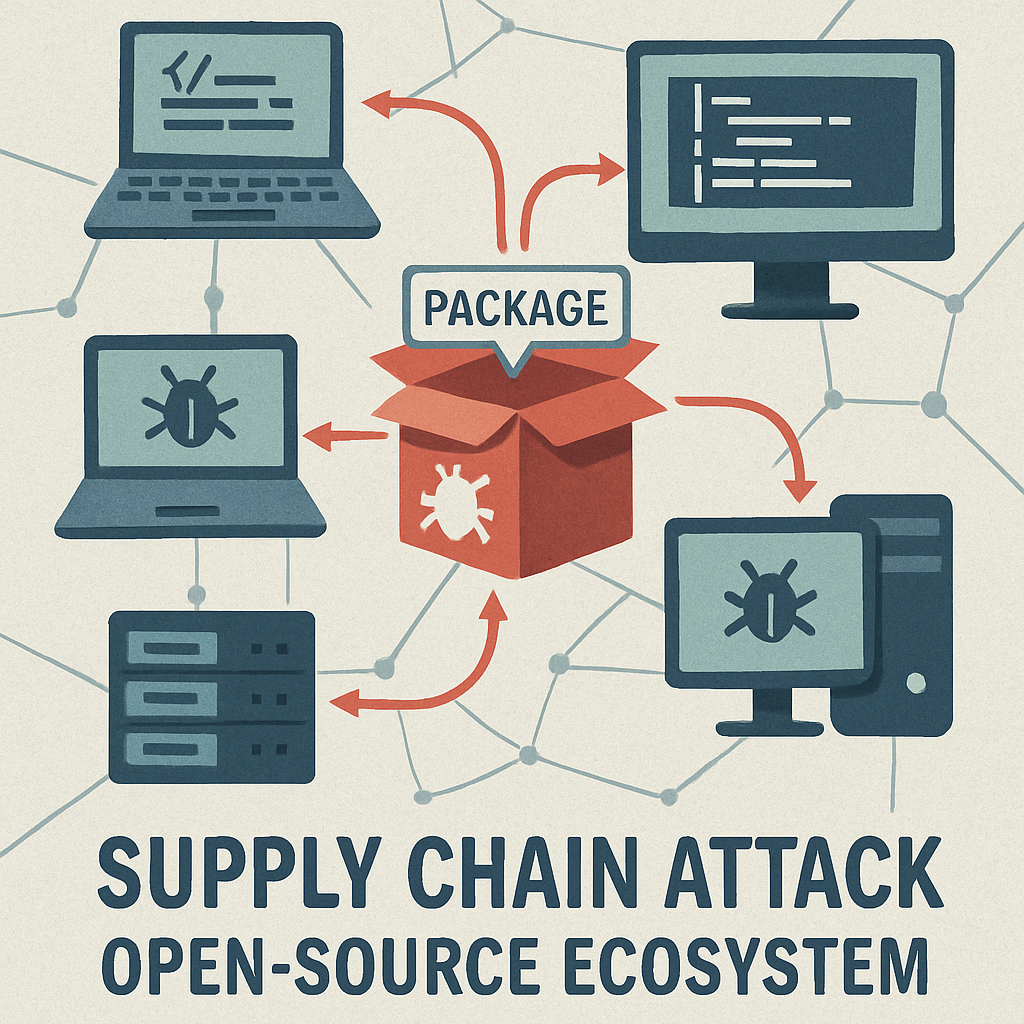
A recent supply chain attack has compromised the widely used Keyv library, leading to the infiltration of numerous npm packages and posing significant risks to developers and organizations relying on open-source software.
The attack began when malicious actors gained control over the maintainer account of Keyv, a popular key-value storage library. With this access, they released altered versions of Keyv and other associated packages, embedding malicious code that executes upon installation. This code is designed to steal sensitive credentials, including npm tokens, cloud service keys, and continuous integration (CI) secrets.
Security firms Microsoft and Socket have identified this campaign as a variant of the “Mini Shai-Hulud” attack, a self-propagating malware operation aimed at credential theft and further dissemination through compromised accounts. The scale of the attack is alarming; Socket reported 2,234 affected package artifacts across 444 unique packages, with the number continuing to rise as the malware spreads.
The compromised packages utilize install-time scripts to initiate the attack, allowing the malware to execute before the developer even uses the package. Once active, the malware searches for credentials that can grant publishing access to other packages, enabling a chain reaction of compromised releases throughout the npm ecosystem.
This incident underscores the vulnerabilities inherent in the open-source supply chain, where a single compromised maintainer account can have cascading effects across numerous projects and organizations. The attackers’ focus on stealing publishing tokens and credentials highlights the critical need for robust security measures in software development and distribution processes.
To mitigate the impact of this attack, developers and organizations should take immediate action:
- Identify and remove any installations of the affected package versions.
- Rebuild dependency lockfiles from trusted sources to ensure integrity.
- Review recent package changes and releases for unauthorized modifications.
- Rotate all potentially exposed credentials, including npm tokens, cloud service keys, and CI secrets.
- Implement stricter access controls and monitoring for package publishing processes.
As the open-source community continues to grapple with supply chain attacks, this incident serves as a stark reminder of the importance of vigilance and proactive security practices. Developers must remain cautious when integrating third-party packages and stay informed about potential threats to safeguard their projects and users.