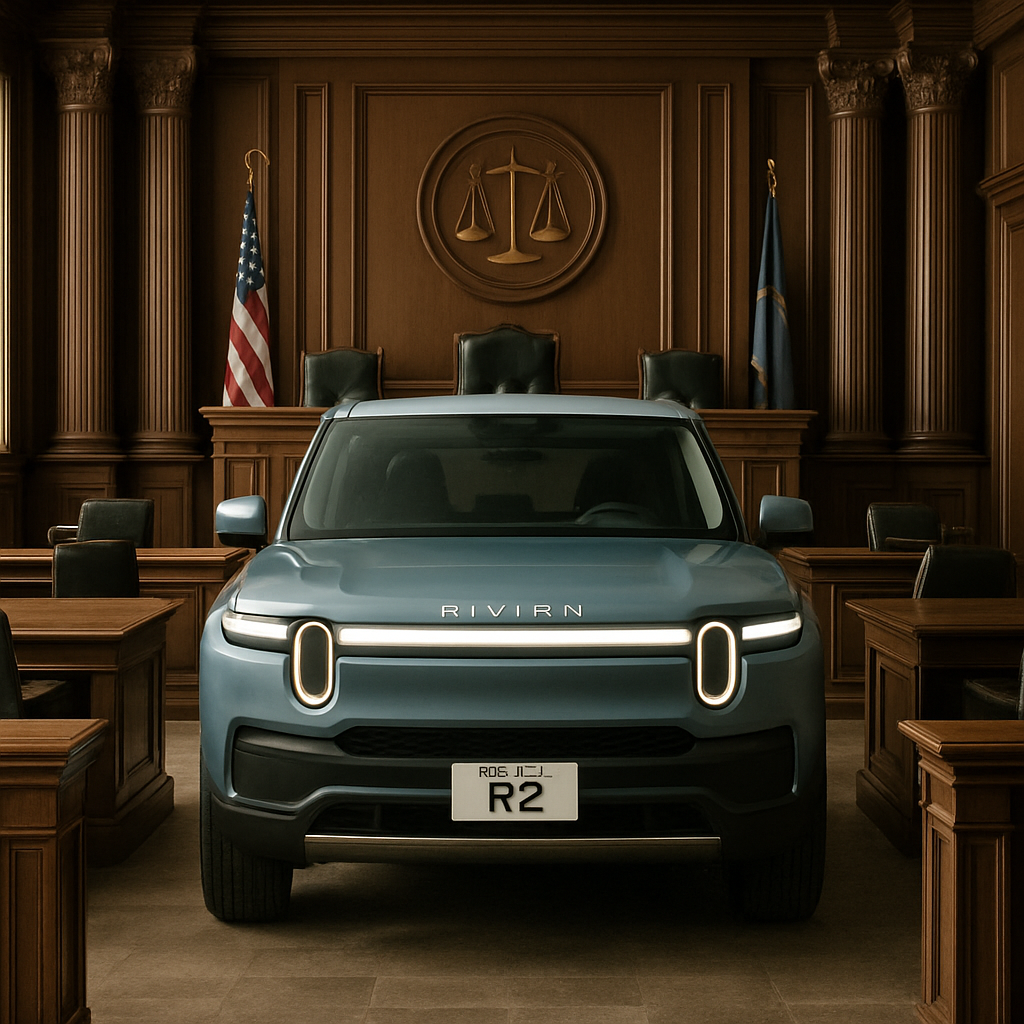
Electric vehicle manufacturer Rivian has initiated legal action against the U.S. government, aiming to recover tariffs paid under the Trump administration’s ‘Liberation Day’ taxes. These tariffs were later deemed unconstitutional by the Supreme Court.
In April, Rivian’s Chief Financial Officer, Claire McDonough, estimated that the company could reclaim tens of millions of dollars through this refund. This lawsuit aligns Rivian with numerous other companies pursuing similar reimbursements.
The legal filing, submitted to the U.S. Court of International Trade, lists the U.S. government, U.S. Customs and Border Protection (CBP), and its commissioner, Rodney Scott, as defendants. CBP was responsible for collecting these tariffs under the International Emergency Economic Powers Act (IEEPA).
CBP has acknowledged processing over $121 billion in potential and certified refunds but has not commented specifically on Rivian’s lawsuit. The Cato Institute recently reported that $71 billion had been disbursed, indicating potential challenges in the refund process for importers.
Rivian’s lawsuit seeks a court declaration that the tariffs were unlawful, a full refund with interest, and coverage of associated legal fees. The company emphasizes the necessity of this action to ensure proper reimbursement, as the Supreme Court’s decision does not automatically guarantee refunds for importers.
CEO RJ Scaringe previously noted that the tariffs could increase vehicle costs by several thousand dollars. By the end of 2025, Rivian had mitigated this impact to a few hundred dollars per vehicle.
As Rivian rolls out its mass-market R2 SUV, aiming to deliver 20,000 to 25,000 units by year’s end, the potential refund could bolster its financial position. However, profitability may not be achieved until 2028 due to significant investments in autonomous vehicle development.
This lawsuit underscores the broader challenges companies face in navigating trade policies and their financial implications. The outcome could set a precedent for other businesses seeking similar refunds and influence future trade regulations.