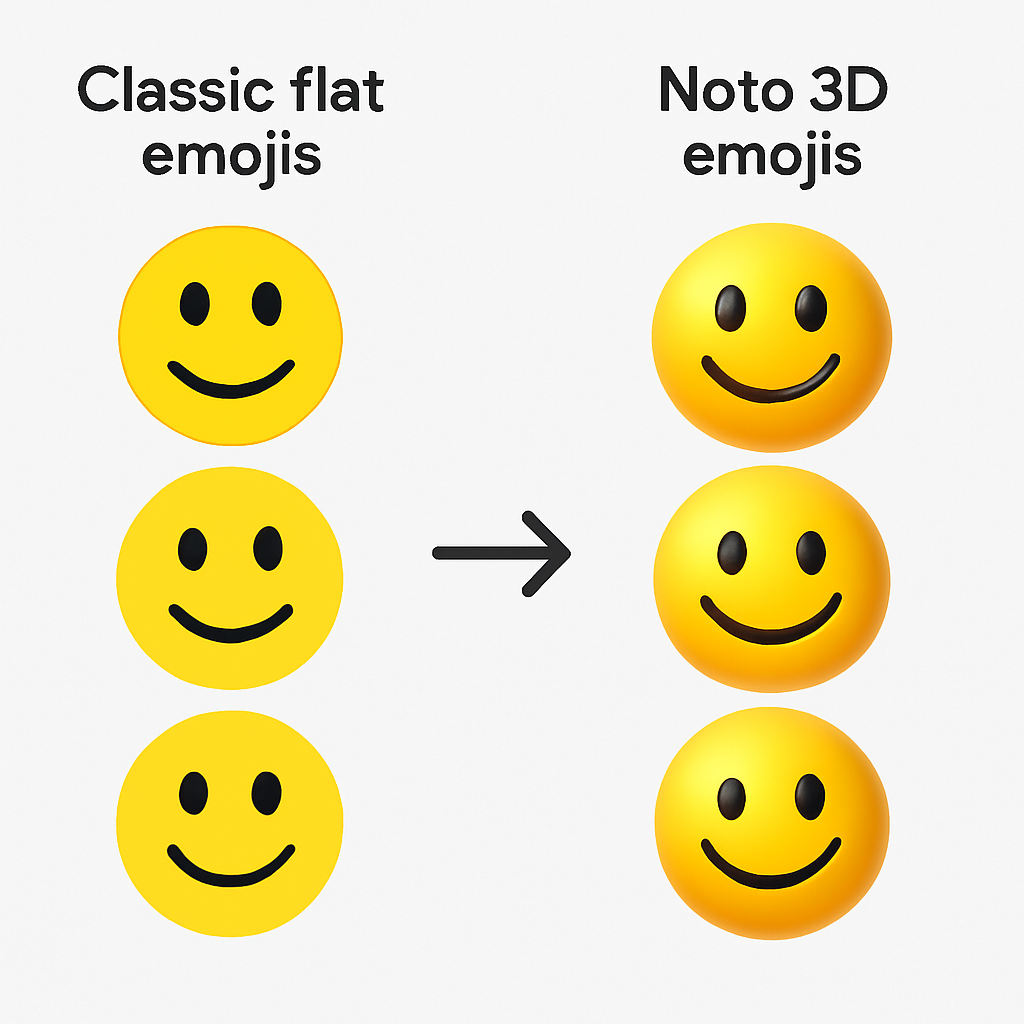
In celebration of World Emoji Day, Google has unveiled its new ‘Noto 3D’ emoji collection, marking a significant departure from its traditional flat designs. This comprehensive redesign encompasses all 3,977 emoji characters, introducing a three-dimensional aesthetic that aligns more closely with the styles found on iOS and Samsung devices.
The transition to 3D emojis aims to enhance cross-platform communication by reducing discrepancies in emoji interpretation. While this move promotes uniformity, it also signifies a shift away from the playful and distinctive style that has characterized Google’s emojis over the past decade. The new designs add physical depth, making them appear less cartoonish and more realistic.
Initially previewed at The Android Show, the ‘Noto 3D’ collection is set to debut on Pixel phones later this year with the release of Android 17, before expanding to other Google products. This rollout strategy ensures that Pixel users will be the first to experience the updated emojis, with broader availability to follow.
Despite the benefits of standardization, some users express nostalgia for Google’s unique emoji designs. The introduction of 3D emojis may lead to a loss of the company’s distinctive software identity, as the new style mirrors that of other major platforms. However, elements of the original designs remain visible, offering a blend of familiarity and modernization.
It’s important to note that the visibility of these new emojis depends on the device and applications in use. While Pixel phones and first-party apps like Gboard and Google Messages will showcase the 3D emojis, other platforms may default to their own styles. For instance, WhatsApp on Android adopts the iOS emoji style, regardless of the device’s native design.
As Google continues to refine its emoji offerings, the balance between uniformity and individuality remains a topic of discussion. The ‘Noto 3D’ collection represents a significant step towards cohesive digital communication, but it also prompts reflection on the value of maintaining unique design elements in a rapidly standardizing digital landscape.