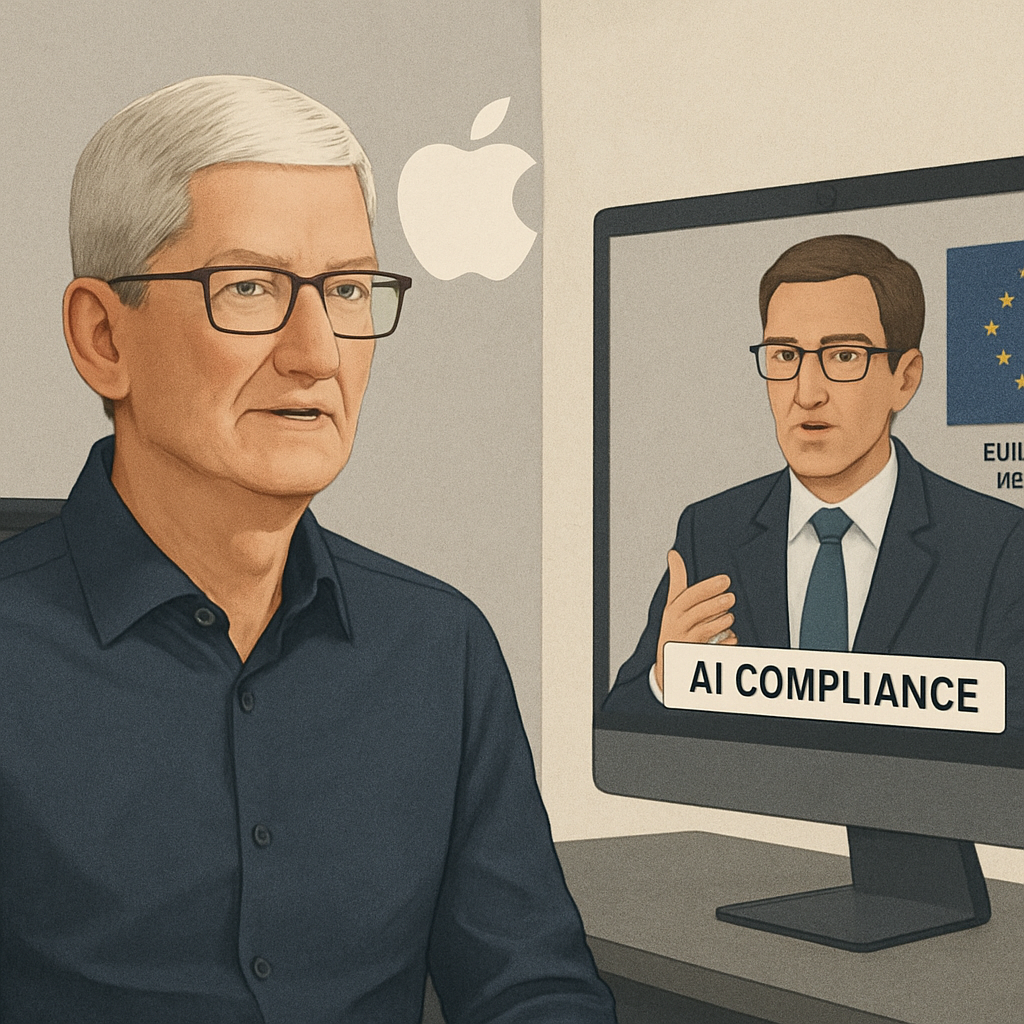
As Apple CEO Tim Cook prepares to transition to the role of Executive Chairman on September 1, he is already actively engaging in government relations, a key aspect of his forthcoming position. Recently, Cook held a virtual meeting with Henna Virkkunen, Executive Vice President of the European Commission, to discuss the launch of Apple’s new AI tools in the European Union.
During the 2026 Worldwide Developers Conference (WWDC), Apple introduced several innovations, including system optimizations, enhanced child safety features, and the Apple Foundation Models—a suite of advanced AI tools. However, due to the stringent requirements of the EU’s Digital Markets Act (DMA), these AI features have not been made available to users in the region.
The conversation between Cook and Virkkunen was described as constructive, focusing on how Apple can align its AI offerings with the DMA’s regulations. This dialogue underscores the complexities tech companies face when navigating varying international regulatory landscapes.
Cook’s direct involvement in these discussions highlights his proactive approach to government relations, a role he has embraced throughout his tenure. Notably, in 2019, Cook was appointed to the American Workforce Policy Advisory Board, reflecting his commitment to influencing policy at the highest levels. Additionally, he has participated in various governmental meetings, including a 2017 discussion with President Donald Trump on reducing government waste through technology.
As Cook steps into his new role, his extensive experience in governmental affairs positions him to effectively manage Apple’s interactions with policymakers worldwide. This strategic focus is crucial as Apple continues to expand its global footprint and navigate the evolving regulatory environment.
Looking ahead, the outcome of these negotiations will significantly impact Apple’s ability to introduce new technologies in the EU. The company’s willingness to adapt and collaborate with regulatory bodies will be essential in maintaining its market presence and fostering innovation within the constraints of regional laws.