Blue Origin is actively investigating the cause of the explosion that occurred during a static fire test of its New Glenn rocket on May 28, 2026, at Cape Canaveral, Florida. The company has yet to determine the exact reason for the incident.
CEO Dave Limp stated that preliminary analysis indicates the issue originated in the aft section of the rocket’s first stage. The investigation is utilizing extensive data from multiple camera angles and sensors to identify and address the root cause.
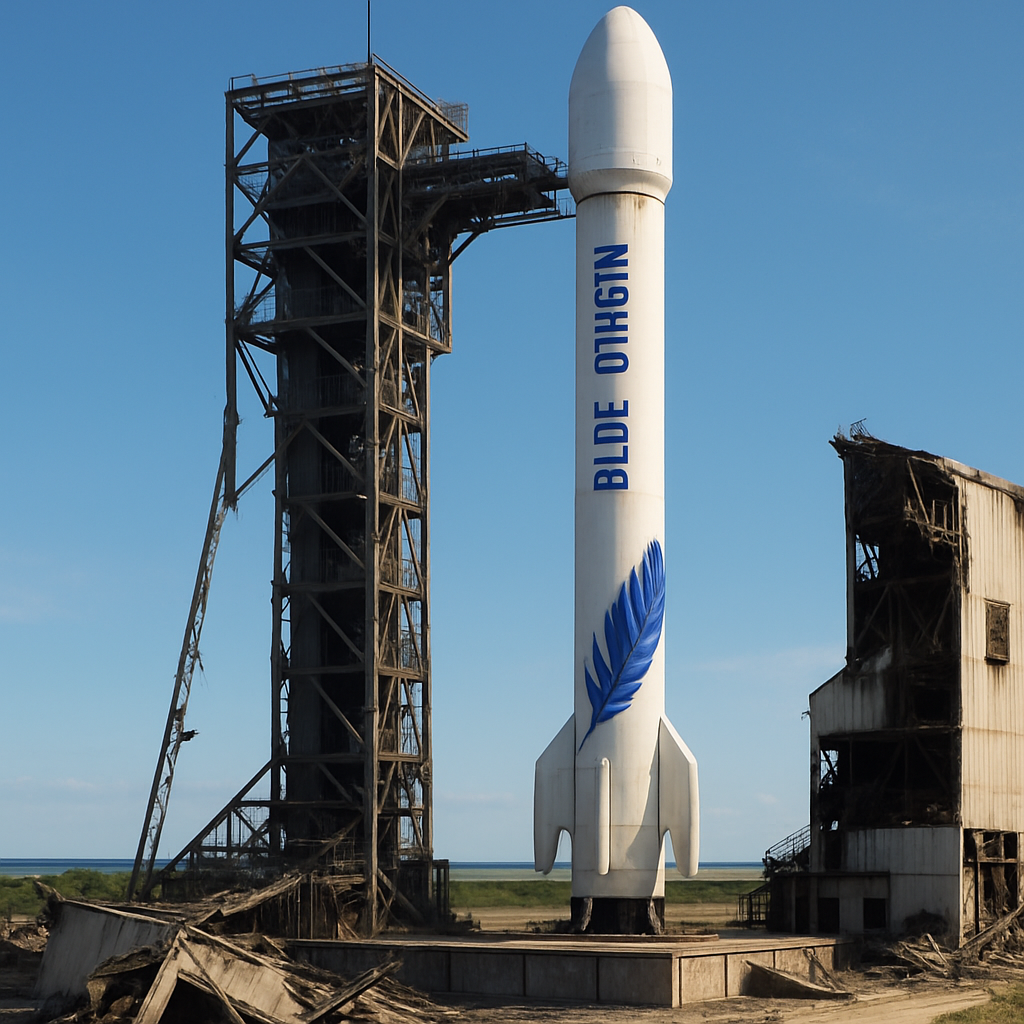
The explosion resulted in significant damage to the launch infrastructure, including the loss of a lightning tower and the transporter-erector used to move and position the rocket on the launch pad. Nearby buildings also sustained damage. However, critical facilities such as the on-site water tower, gas tanks, and rocket integration facility remained intact.
In response to the incident, Blue Origin plans to modify its launch operations by replacing the transporter-erector with a massive crane to position the New Glenn rocket on the launch pad. This change aims to expedite the return to flight and increase the launch cadence.
Despite the setback, Blue Origin remains committed to resuming New Glenn launches before the end of the year. The company had initially planned up to 12 launches in 2026 and is working diligently to minimize delays.
The New Glenn rocket, which first launched in January 2025, is central to Blue Origin’s ambitions in the commercial space sector. The company has been developing this heavy-lift vehicle for over a decade to compete with other industry players and support missions such as NASA’s Artemis program.
As Blue Origin continues its investigation and recovery efforts, the space industry will be closely monitoring the company’s progress. The outcome of this investigation will be crucial for the future of New Glenn and Blue Origin’s role in upcoming space missions.