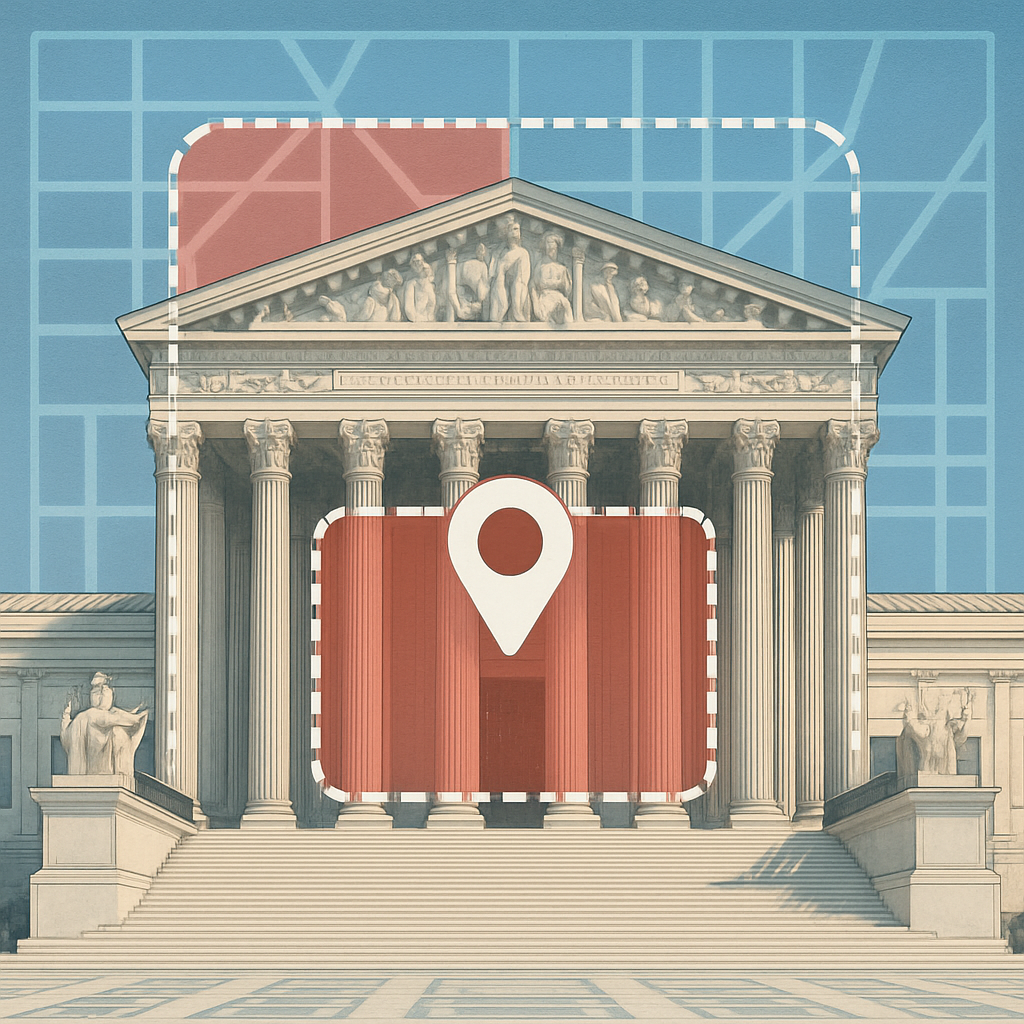
The U.S. Supreme Court has issued a landmark decision restricting the use of geofence warrants by law enforcement, marking a significant advancement in digital privacy rights. In a 6-3 ruling, the Court determined that individuals have a reasonable expectation of privacy concerning their cell phone location data, thereby necessitating a search warrant for authorities to access such information.
Geofence warrants enable law enforcement to request data from tech companies, like Google, to identify all devices within a specific geographic area during a particular time frame. This method has been employed to pinpoint potential suspects by analyzing location data stored by these companies. However, critics have long contended that this practice is overly broad, often capturing information from individuals unconnected to any criminal activity.
The Court’s decision emphasizes that users do not voluntarily share their location data with companies merely by using their services. Consequently, the third-party doctrine—which suggests that individuals forfeit privacy expectations when sharing information with third parties—does not apply in this context. Therefore, law enforcement must obtain a search warrant, supported by probable cause, to access geofence location data.
This ruling stems from the case of Okello Chatrie, who was convicted of a 2019 bank robbery in Virginia. Investigators utilized a geofence warrant to obtain location data from Google, identifying Chatrie as a suspect. Chatrie’s legal team argued that the warrant was unconstitutional, as it encompassed data from numerous individuals without specific suspicion.
While the Supreme Court did not entirely prohibit the use of geofence warrants, it mandated that such warrants must be narrowly tailored and supported by probable cause. This decision underscores the necessity for law enforcement to balance investigative techniques with constitutional privacy protections.
In recent years, the use of geofence warrants has surged, with thousands issued annually. This ruling is poised to significantly impact how law enforcement agencies utilize digital data in their investigations, reinforcing the importance of safeguarding individual privacy rights in the digital era.
As technology continues to evolve, this decision sets a critical precedent for the intersection of digital data and privacy. It highlights the judiciary’s role in adapting constitutional protections to modern technological contexts, ensuring that privacy rights are upheld amidst rapid technological advancements.