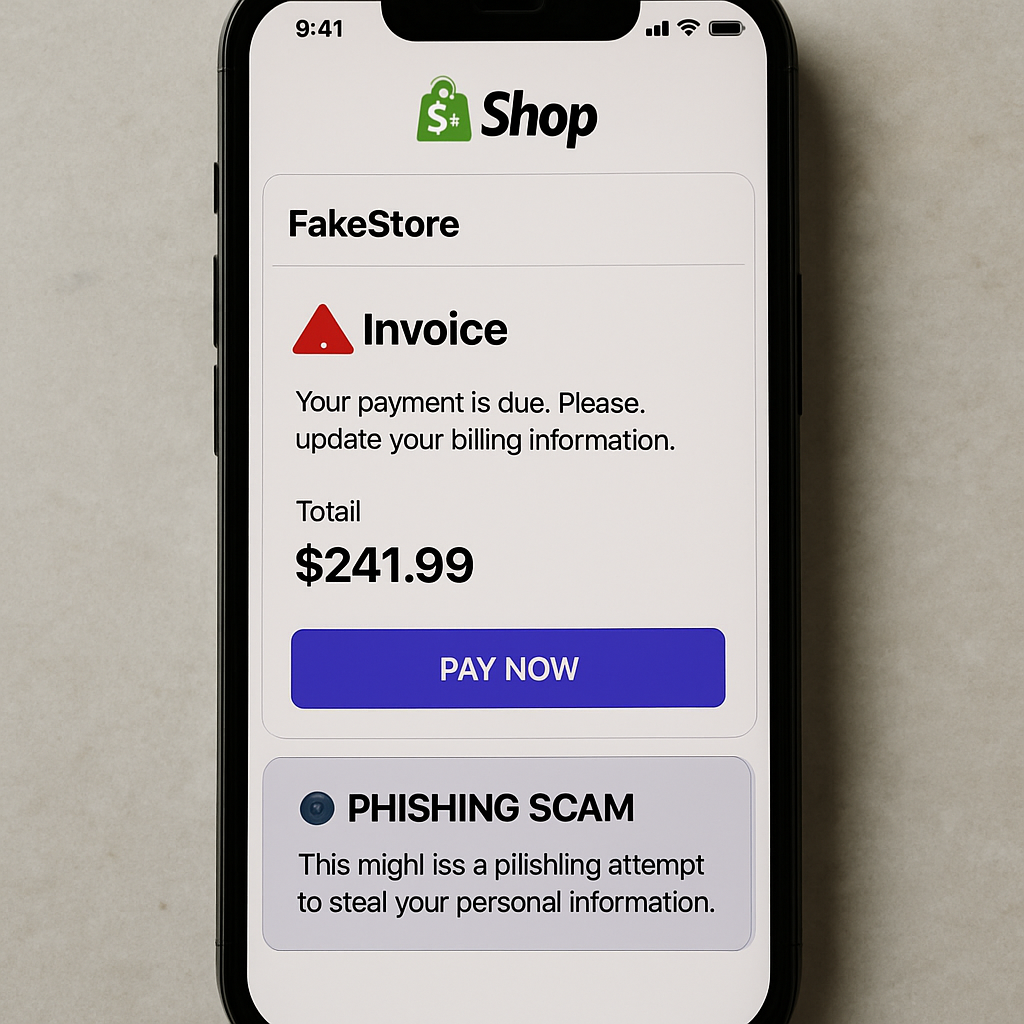
Cybercriminals have found a new avenue to deceive consumers by infiltrating the Shop app, Shopify’s popular order-tracking platform. This emerging scam involves inserting fraudulent invoices directly into users’ order histories, making them appear as legitimate purchases.
Traditionally, phishing attacks have relied on deceptive emails to trick individuals into divulging sensitive information. However, this novel approach leverages the trust users place in the Shop app, which consolidates order confirmations, shipping updates, and receipts from various retailers. By embedding fake purchase records within the app, scammers create a sense of urgency and authenticity that is more convincing than standard email-based schemes.
Victims typically encounter fictitious charges for high-value items or services, such as security software subscriptions, Apple gift cards, or expensive electronics. These fake orders often include a customer service phone number, urging users to call if they did not authorize the purchase. Upon calling, individuals are connected to fraudsters posing as support representatives, who then attempt to extract personal information, payment details, or even gain remote access to the victim’s device.
The exact method by which these fraudulent entries are inserted into the Shop app remains under investigation. Potential vectors include the manipulation of merchant workflows, exploitation of email parsing features, or other vulnerabilities within the app’s infrastructure. Regardless of the technique, the result is the same: users are presented with convincing, yet entirely bogus, purchase records within a trusted application.
To protect themselves, users are advised to exercise caution when encountering unexpected charges within the Shop app. It is crucial not to call any phone numbers listed in suspicious invoices. Instead, individuals should verify the legitimacy of the charge by contacting the retailer directly through official channels or consulting their bank statements. If personal information has been compromised, affected users should promptly reset passwords and notify their financial institutions to prevent potential fraud.
This development underscores the evolving tactics of cybercriminals, who continuously adapt their methods to exploit new technologies and user behaviors. As consumers increasingly rely on centralized platforms like the Shop app for managing their online purchases, it is imperative to remain vigilant and skeptical of unexpected notifications or charges, even within trusted applications.