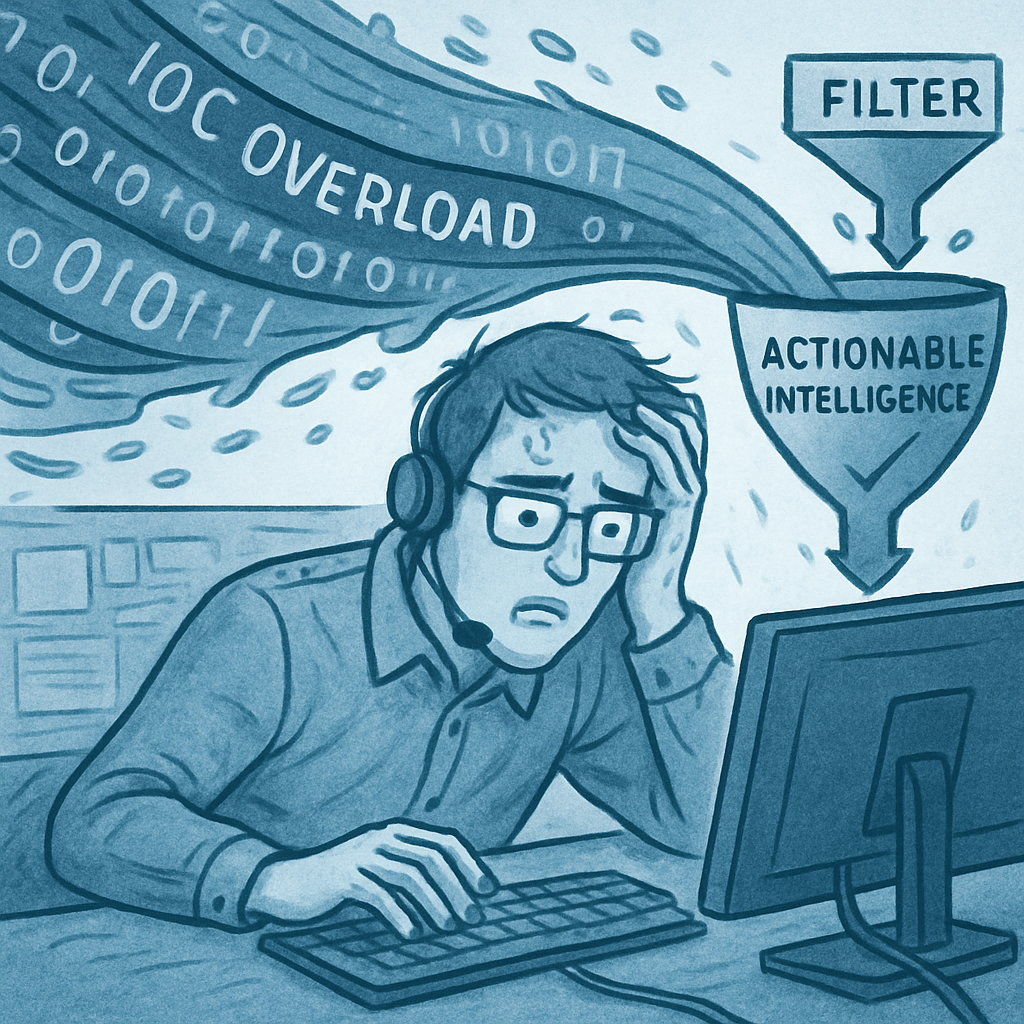
Security Operations Centers (SOCs) are inundated with vast quantities of Indicators of Compromise (IOCs) daily. While a high volume of IOCs might suggest comprehensive threat coverage, it often leads to operational inefficiencies and diminished response effectiveness.
Understanding the Challenge
IOCs, such as malicious IP addresses, domains, and URLs, are essential for identifying potential threats. However, their sheer volume can overwhelm SOC teams, making it challenging to discern actionable intelligence from mere data points. This overload can result in critical alerts being overlooked, increased false positives, and analyst burnout.
Distinguishing Between Data and Intelligence
Not all IOCs are created equal. For an IOC to be operationally valuable, it must be:
- Relevant to the organization’s specific threat landscape.
- Timely, reflecting current malicious activities.
- Accompanied by sufficient context and confidence levels.
- Presented in a format compatible with existing security tools.
- Integrated into clear detection, investigation, or response workflows.
Without these attributes, IOCs remain mere data points, contributing to noise rather than enhancing security posture.
The Pitfalls of Feed Fatigue
Introducing multiple threat intelligence feeds without proper prioritization can lead to ‘feed fatigue.’ This phenomenon manifests as:
- Analysts losing trust in enrichment results due to low-value data.
- Teams disabling or tuning down detections to manage alert volumes.
- Security engineers diverting time to maintain integrations instead of enhancing coverage.
Consequently, the SOC’s detection capabilities may degrade, even as the perceived ‘threat coverage’ metrics appear robust.
Strategies for Effective IOC Management
To mitigate the challenges associated with IOC overload, SOCs should consider the following approaches:
- Prioritize Quality Over Quantity: Focus on integrating high-fidelity threat intelligence feeds that provide relevant and timely IOCs, reducing the influx of low-value data.
- Implement Contextual Enrichment: Enhance IOCs with contextual information, such as threat actor profiles, attack vectors, and targeted industries, to aid in accurate threat assessment.
- Automate Triage Processes: Utilize automation tools to filter and prioritize IOCs based on predefined criteria, allowing analysts to focus on high-priority threats.
- Regularly Review and Tune Feeds: Continuously assess the effectiveness of integrated feeds, removing or adjusting those that contribute to noise without adding value.
- Foster Analyst Development: Invest in training programs to equip analysts with the skills to discern and act upon the most pertinent IOCs efficiently.
By adopting these strategies, SOCs can transform the deluge of IOCs into actionable intelligence, enhancing their ability to detect and respond to genuine threats promptly.
In conclusion, while the availability of extensive IOCs can be beneficial, their unfiltered integration into SOC workflows can hinder rather than help. By emphasizing quality, context, and strategic management, SOCs can optimize their operations, ensuring that they remain agile and effective in the ever-evolving cybersecurity landscape.