Qualcomm has announced two new platforms aimed at advancing the development of AI-powered wearable devices: the Snapdragon Reality Elite and the Scalable Turnkey AI-Ready Toolkit (START). These initiatives underscore Qualcomm’s commitment to leading the evolution beyond traditional smartphones.
Snapdragon Reality Elite: Enhanced Performance for Mixed Reality
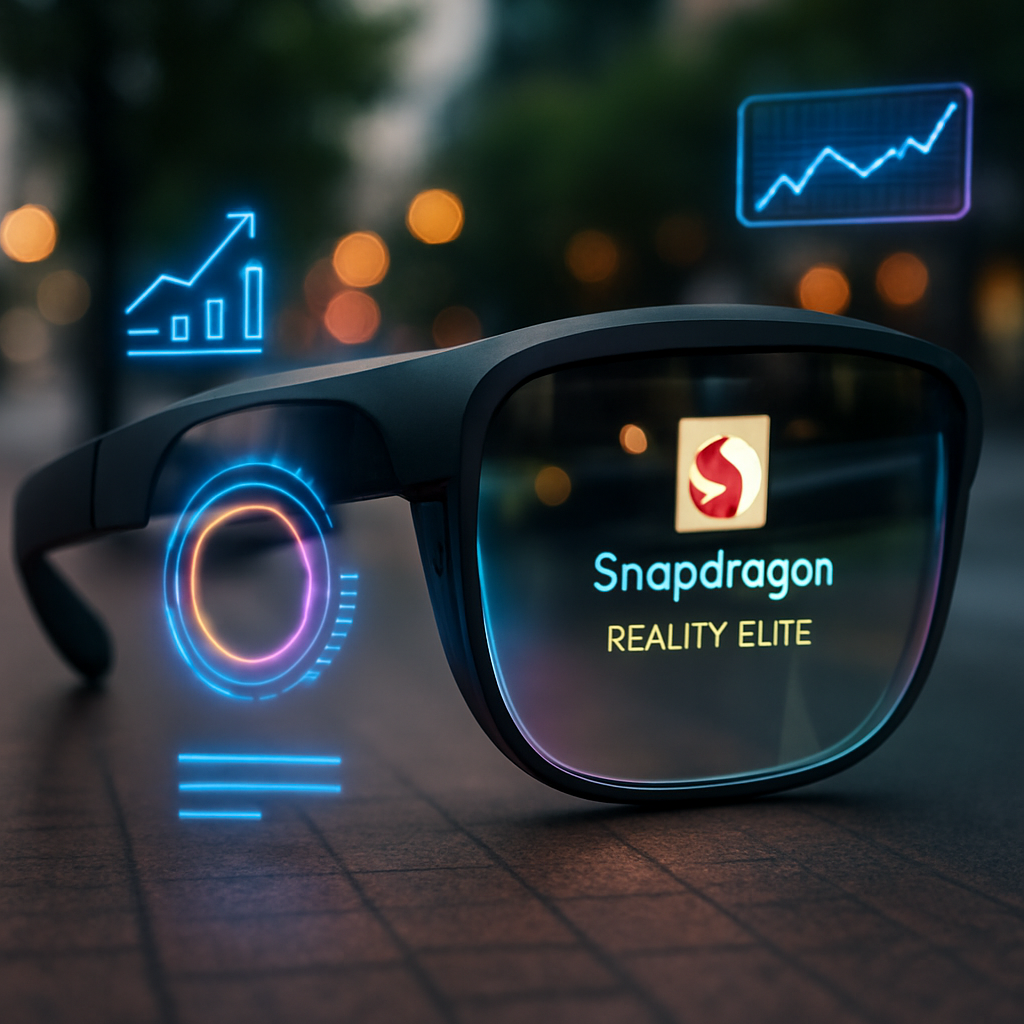
The Snapdragon Reality Elite platform is designed to power mixed reality (MR) glasses, offering significant performance enhancements over its predecessors. Qualcomm reports up to a 60% increase in GPU performance, a 30% boost in CPU performance, and a 160% improvement in NPU performance compared to previous XR platforms. This advancement enables the platform to run a 3-billion-parameter language model at 45 tokens per second, facilitating swift and responsive AI interactions.
Additionally, the platform supports 4.4K resolution per eye at 90 frames per second, providing sharper and smoother visual experiences. This high resolution and frame rate are crucial for reducing motion sickness and eye strain, common issues in extended headset use. The Snapdragon Reality Elite is tailored for both standalone video-see-through (VST) headsets, which overlay digital content onto a camera feed of the real world, and lightweight, tethered optical-see-through (OST) glasses that integrate digital imagery directly into the user’s field of view.
Notable devices set to utilize this platform include XREAL’s Project Aura, showcased at Google I/O earlier this year, and an upcoming device from Play for Dream.
START Toolkit: Accelerating AI Wearable Development
Complementing the Snapdragon Reality Elite, Qualcomm introduced the START Toolkit, a comprehensive solution comprising an AR chip, a software platform, companion applications, and a white-label program. This toolkit is designed to expedite the development and market entry of AI wearable devices, starting with smart glasses.
The white-label program offers three reference designs: an audio and camera setup akin to Meta’s Ray-Ban smart glasses, a monocular display, and a binocular display. Eyewear manufacturers such as Inspecs and O’Neill, owned by TitanFlex, are among the initial partners in this program. Qualcomm plans to extend the START Toolkit’s support to additional form factors in the future.
These announcements align with Qualcomm CEO Cristiano Amon’s vision of a future where AI wearable devices, including jewelry, camera-equipped earbuds, pins, and watches, play a central role in personal computing. Amon highlighted the potential for various form factors to emerge as companies seek to gather real-world data to power AI agents, suggesting a transformative shift in the tech landscape.
Qualcomm’s strategic focus on AI wearables positions the company at the forefront of the next computing paradigm. By providing robust platforms like Snapdragon Reality Elite and the START Toolkit, Qualcomm is not only facilitating innovation among hardware manufacturers but also challenging the dominance of traditional smartphone makers. As the industry explores diverse form factors and applications, Qualcomm’s initiatives could significantly influence the trajectory of personal computing devices in the coming years.